


On 25 September 2026 the India anti-dumping elevator guide rails investigation opened, covering T-shaped solid rails up to 127 mm wide from China. Complete elevators sit outside its scope. That single distinction, and the HS code behind it, decides whether an India-bound elevator order is affected at all.
What the India Anti-Dumping Elevator Guide Rails Case Covers
The India anti-dumping elevator guide rails case was opened by India’s Directorate General of Trade Remedies, the body that runs trade-remedy investigations for the Ministry of Commerce and Industry. It follows an application from Savera India Riding Systems Company Private Limited, supported by N. Liftee Engineers. The initiation notice is published on the Directorate General of Trade Remedies site, in the Gazette of India, and under case number AD/OI/046/2026.
The product definition is narrow, and the exclusions carry as much weight as the inclusions. Only T-shaped solid guide rails are named, so any India anti-dumping elevator guide rails duty would land on a rail line rather than on a lift.
| Item | Inside the case | HS heading |
|---|---|---|
| T-shaped solid guide rails, all types, cross-section up to 127 mm | Yes | 8431 31 00 · 8431 39 10 · 8431 39 90 |
| Cold-drawn guide rails | No, excluded | Excluded by the notice |
| Hollow guide rails | No, excluded | Excluded by the notice |
| Fishplates and rail joints | No, outside scope | Not part of the product under consideration |
| Complete elevators | No | 8428 10 |
Two lines in that table settle most buyer questions. The case names guide rails, not elevator units, and the rail definition stops at 127 mm cross-sectional width while removing cold-drawn rails, hollow rails and fishplates. On the face of the notification, an India anti-dumping elevator guide rails file is about a component line, not about the finished machine.
The investigation periods are fixed in the notice. Dumping is examined from 1 April 2025 to 31 March 2026. Injury is examined across 2022-23, 2023-24, 2024-25 and that same 2025-26 window. Those dates matter the moment a supplier is asked to produce shipment records for a specific year, and they are the first thing an India anti-dumping elevator guide rails review will request.
Does the India Anti-Dumping Elevator Guide Rails Case Cover Complete Elevators?
No. A complete elevator falls under HS 8428 10, a heading the notice does not list. The India anti-dumping elevator guide rails scope is built on rail headings instead, which is a different customs line with a different duty history.
Three situations still bring an ordinary elevator buyer close to the file. The first is invoicing. If guide rails are broken out as a separate commercial invoice line, they stop looking like part of an elevator package on paper, and a customs broker will assess them as rails. The second is spare parts.
Rails ordered on their own, to replace worn rails in a lift already running, are exactly the goods the notification describes. The third is documentation. If the paperwork names a rail line without context, the customs file reads as a rail import, because that is what the documents say.
None of this is a reason to change a project. It is a reason to keep the invoice and the packing list describing the same thing, and to know which line a rail item lands on before the shipment sails. If the rail line and the elevator line never separate on paper, the India anti-dumping elevator guide rails question does not reach the order at all.
The 37-Day Window: What Happens Next
The notification sets two clocks rather than one. Comments on the product scope and the proposed product control number method are due within 15 days. Information from interested parties is due within 37 days, filed through the SETU portal that DGTR uses for trade-remedy cases. Both deadlines run from the initiation date, which is why the India anti-dumping elevator guide rails calendar moved quickly through the first week of October 2026.
| Stage | What it means for a buyer |
|---|---|
| Initiation, 25 September 2026 | The case exists and is public; no duty exists yet |
| First 15 days | Comments on product scope and the PCN method are filed |
| Within 37 days | Interested parties file information through the SETU portal |
| After the record closes | DGTR reviews the evidence and issues its findings |
| If duties are imposed | They apply from the date of the duty notification, not before |
Nothing on this page predicts an outcome. The India anti-dumping elevator guide rails case is open and no preliminary finding has been published. A buyer who plans on the assumption that duties will arrive, or that they will not, is guessing. A buyer who keeps the paperwork clean is not exposed either way.
If a rail shipment leaves China before any duty notification is issued, the duty does not reach it. If a project is still at quotation stage, there is time to fix the invoice structure rather than renegotiate a contract later.
For an independent record of the case, the Global Trade Alert database logs the initiation under case number AD/OI/046/2026.
5 Safe Checks Before Your Next India Order
Five checks cover the practical ground. None of them requires a lawyer, and all of them make the next India shipment easier to defend if the India anti-dumping elevator guide rails case reaches a finding.
- Confirm the HS code on the invoice. Complete elevators travel under 8428 10. Rails travel under 8431 31, 8431 39 or 7308 90. The code you write decides which world your shipment enters.
- Check whether guide rails appear as a separate line. If they do, read the description as a broker would, without the rest of the elevator project in mind.
- Write the duty and landed-cost terms into the contract. Know who pays if the tariff position changes between order and arrival, and put it in writing rather than in an email.
- Plan lead time and spare rails together. Spare rails bought alone are single-line rail imports. Ordering them with a complete unit keeps the paperwork consistent.
- Keep one document file. Invoice, packing list, bill of lading and technical sheet should describe the same goods the same way. Gaps between them are what slow a clearance down.
Two of those checks are pricing questions rather than compliance questions. Knowing what an elevator price in China actually includes tells you which items sit inside the unit price and which would be invoiced separately. A companion read, the 12 items a complete quotation must contain, is the quickest way to spot a gap before you sign.
How Chinese Factories Quote Guide Rails vs Complete Elevators
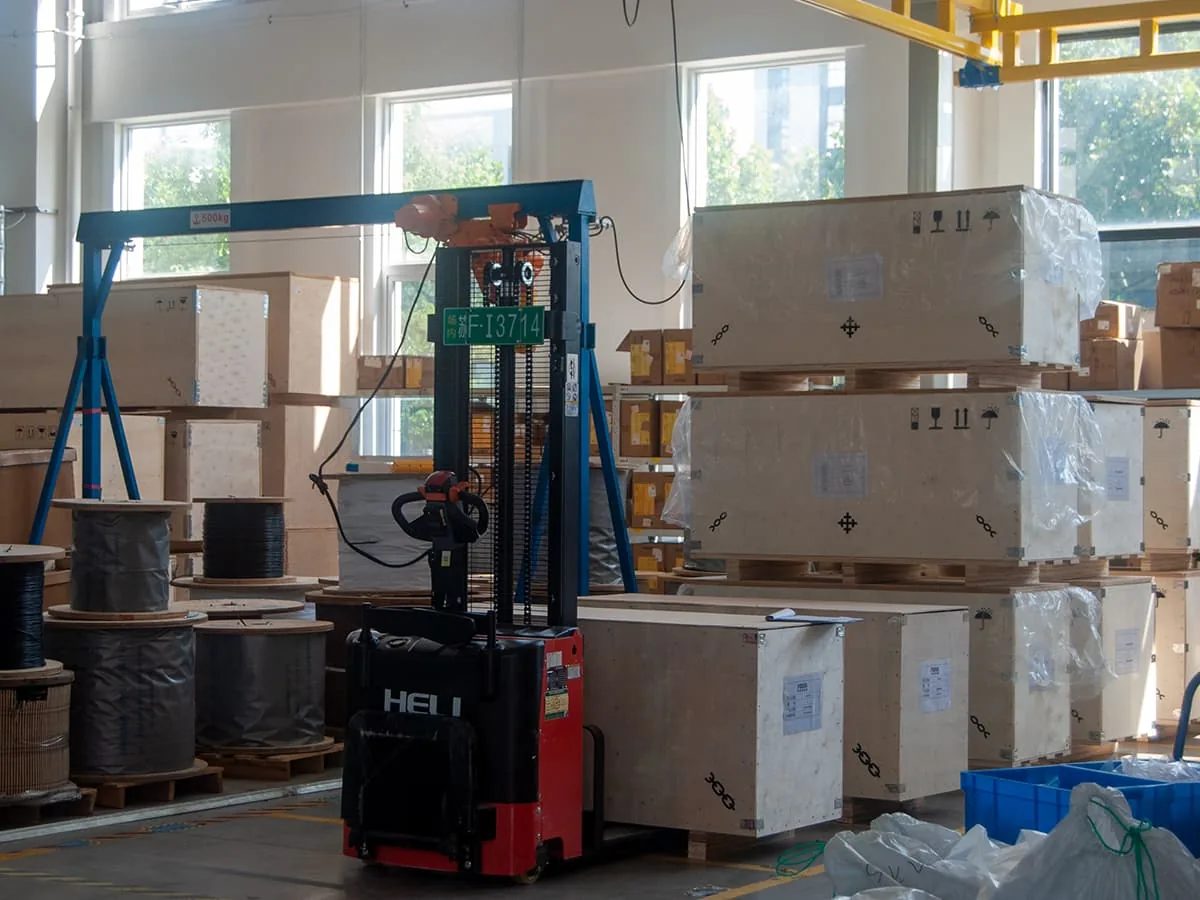
A complete elevator is quoted as one package. Rails, car frame, doors, controller and traction machine are priced together, and the invoice describes a machine rather than a list of steel sections. That is the normal shape of an export order, and it is why the India anti-dumping elevator guide rails question arrives mostly from buyers sourcing components rather than complete lifts.
Rails only become a standalone item in three cases: a replacement order for a lift already installed, a project where the customer sources rails locally and buys the rest from China, and an aftermarket spare-parts purchase. In each of those, the rail line stands alone and the customs code follows it. If a factory separates the rail line from the lift line for convenience, the India anti-dumping elevator guide rails exposure follows the rail line.
BST Express Elevator quotes complete elevators and escalator packages under HS 8428 10, with guide rails travelling as part of the unit rather than as a separate invoiced line. Because the rails stay inside the machine on paper, an India anti-dumping elevator guide rails order placed with BST Express Elevator is assessed against one heading, 8428 10, and not against the three rail codes the case names.
For buyers who need the wider regional picture, importing elevators into South Asia covers port, documentation and lead-time habits across the region, and the six steps of buying elevators from China sets out the sequence from inquiry to loading.
Frequently Asked Questions
Do importers pay anti-dumping duty on complete elevators from China to India?
Not under this case. The India anti-dumping elevator guide rails investigation names guide rails, and complete elevators are classified under HS 8428 10, which the notice does not list. Any duty would follow from a later duty notification and would apply to the goods that notification names.
Which guide rails does the case actually cover?
T-shaped solid guide rails of all types and dimensions, up to and including 127 mm cross-sectional width. Cold-drawn rails, hollow rails and fishplates are expressly outside the product under consideration, so the India anti-dumping elevator guide rails scope is narrower than the words “guide rails” suggest.
What HS code do elevator guide rails use?
The notice lists 8431 31 00, 8431 39 10 and 8431 39 90, with some imports falling under 7308 90 90. Buyers should confirm the code with their customs broker against the actual product, since the same shipment can be read two ways if the invoice is vague.
What changes after the 37-day information window closes?
The record closes and DGTR moves to its findings. Comments on product scope and the product control number method are due at 15 days, which is why the earlier deadline is the one that matters to suppliers who want the India anti-dumping elevator guide rails scope defined correctly.
How can a buyer check the case status independently?
DGTR publishes the case file under AD/OI/046/2026 on its own site, and independent trackers such as Global Trade Alert log the same initiation. Both are a better source than a second-hand summary, including this one.
An India-bound order does not need to change shape because of this case. It needs an invoice, a packing list and an HS code that describe the same goods, and a supplier who can explain which line each item sits on. BST Express Elevator quotes complete units with that structure in writing, and answers scope questions about guide rails before a purchase order is raised rather than after the container leaves.
[…] well: invoiced on their own line they fall under a different heading than a finished lift, and the India guide rail anti-dumping case turns on exactly that […]
[…] Where a component such as guide rails is invoiced separately, the heading moves with it – what the India guide rail case changed for importers shows how that split is […]