


An elevator quotation checklist is the list of items a supplier must put in writing before a buyer can compare offers on equal terms: scope, specification, standards, drawings, delivery terms, payment, inspection and warranty. Leaving out any one of them turns a low price into an unknown risk.
Most importers gather three or four quotations for the same building and still cannot tell which one is genuinely cheap, because the documents describe different machines, different boundaries and different risk. This is the checklist BST Express Elevator hands to buyers before any figure is treated as final: 12 items a usable quotation has to contain, the wording that belongs against each one, and the gaps that show a quotation is not ready to be compared yet. The published price ranges themselves are covered separately in the guide to the elevator price in China.
Why a Written Elevator Quotation Checklist Matters
A quotation is a contract in draft. Once the deposit is paid, the document that was exchanged before the order becomes the scope of work, and anything it failed to mention becomes a change order, a delay or an argument at the destination port. Buyers who price two elevators from two suppliers without aligning the documents are not comparing products at all — they are comparing the omissions each supplier happened to leave out.
The practical test is simple. Take any quotation and ask whether a third party could build the machine from that document alone: which drive, which doors, which control system, which standards, which port, which payment step, which warranty. If the answer is no, the quotation is a number, not an offer. The 12 points below are the minimum that makes it an offer, and they are the same points that make an import purchase from China predictable instead of hopeful.
The 12-Point Elevator Quotation Checklist
The table below is the working version of the elevator quotation checklist. Each row is an item that must appear in the quotation itself rather than being available on request, because an item promised verbally cannot be enforced later.
| # | Item | What must be in the quotation |
|---|---|---|
| 1 | Scope of supply | Machine, doors, controller, rails, ropes, car and landing fittings, and an explicit list of what the buyer supplies |
| 2 | Machine specification | Rated load, rated speed, number of stops, travel, car and shaft sizes, door type and finish |
| 3 | Applicable standards | Design and safety standard, certification held, and the market the certificate is valid for |
| 4 | General arrangement drawings | Plan and section with pit depth, headroom, reaction loads and shaft tolerance |
| 5 | Component brand list | Named makes and models for drive, door operator, controller, ropes and safety gear |
| 6 | Packing and delivery terms | Incoterm, named port, packing method, and who pays freight, insurance and unloading |
| 7 | Lead time | Production weeks and shipping weeks stated separately, with the trigger that starts the clock |
| 8 | Payment schedule | Percentage and trigger for each instalment, plus the currency and the receiving account |
| 9 | Inspection and test records | Factory test list, what the buyer may witness, and which certificates travel with the goods |
| 10 | Installation and supervision | Who installs, what supervision is included, and how travel and living costs are handled |
| 11 | Warranty and spares | Warranty period, response time, and the recommended spare parts list for the first year |
| 12 | Validity and exclusions | How long the price stands, what taxes and duties are excluded, and what voids the figure |
Three groups sit inside the twelve. The first group of the elevator quotation checklist fixes what is being bought, the second fixes how it is paid for and moved, and the third fixes what happens after the machine leaves the factory. A quotation that is strong in one group and silent in another is the usual shape of a cheap offer, and the usual place an elevator quotation checklist catches it.
Scope, Specification and Standards (Items 1–4)
Scope of supply. The most common dispute in elevator import is not quality but boundary. One supplier quotes the machine alone and leaves the rails, the fire rated landing doors and the car interior to the buyer; another includes them and looks 20 percent more expensive until the missing items are priced. The first item on the elevator quotation checklist has to draw that line explicitly, in a list, on both sides of it.
Machine specification. Load, speed, stops, travel, car size and shaft size are the six figures that define the product. If the quotation gives a load and a speed but no car dimensions, this elevator quotation checklist item is unmet: the buyer is quoting a class of machine rather than a machine, and the delivered unit may meet the number while missing the requirement. Car sizes are worth pinning down against the guide to elevator car dimensions so the entry, the stretcher or the pallet actually fits.
Applicable standards. The quotation should name the design code it is built to and the certificate it carries. For the European market the reference is the EN 81-20 and EN 81-50 pair behind the CE marking; the paperwork itself is explained in the guide to elevator CE certification. For North America the equivalent reference is ASME A17.1, published by ASME. A copy of the certificate and the declaration of conformity should be attached, not promised — the standard on the elevator quotation checklist is a document, not a statement.
General arrangement drawings. Shaft width, depth, pit depth and headroom decide whether the machine can be installed at all, and the loads the structure must carry decide the cost of the building work. The GA drawing is the document that lets the civil contractor price the shaft and lets the buyer on the elevator quotation checklist check that the offer matches the building. Standard figures to compare against are set out in the guide to elevator shaft dimensions.
Commercial, Delivery and Payment Terms (Items 5–8)
Component brand list. Two quotations can both say “1.75 m/s passenger elevator”, one built with a recognised gearless machine, the other with an unbranded drive that fails in year three. This elevator quotation checklist item is the one buyers skip most often: named makes and models for the traction machine, door operator, controller, ropes and safety gear are the only way to compare running cost and spare-part availability before the order rather than after it.
Published data from a global benchmark such as KONE is a useful reference when checking whether a specified drive matches the class of machine being quoted. BST Express Elevator names every make and model in the quotation for exactly this reason.
Packing and delivery terms. The Incoterm decides who pays the freight, who carries the risk in transit and who clears the goods. FOB, CIF and DAP produce three different prices from the same factory, so the elevator quotation checklist requires the term and the named port in the document, together with the packing method — sea-worthy wooden crates, moisture barrier and container loading plan.
Buyers can read more on the passenger elevator range for the packing used on standard units. The full sequence behind that plan – crate sizes, lashing and the closing documents – is set out under how the goods are packed and loaded.
Lead time. Production time and shipping time should be stated separately, because a delay in either has a different fix. The quotation should also name the event that starts the clock — receipt of the deposit, approval of the shop drawings, or confirmation of the finish schedule. A single number such as “45 days” without a trigger is not a commitment, and an elevator quotation checklist should reject it until the trigger is written down.
Payment schedule. Each instalment needs a percentage and a trigger: commonly 30 percent on order, 70 percent against a copy of the bill of lading, or a confirmed letter of credit at sight. The currency, the receiving account name and the account bank should all match, because mismatched payment details are the fraud signal this elevator quotation checklist item exists to catch.
Inspection, Installation and After-Sales (Items 9–12)
Inspection and test records. The quotation should list the factory tests the machine will pass and state whether the buyer or an agency may witness them. Test bench records, the load test, the safety gear test and the certificates that travel with the shipment are what an elevator quotation checklist asks for by name. The quality system behind those records is normally certified to ISO 9001, and the certificate number belongs in the quotation. Photographs of packed goods being opened for final inspection are part of this step.
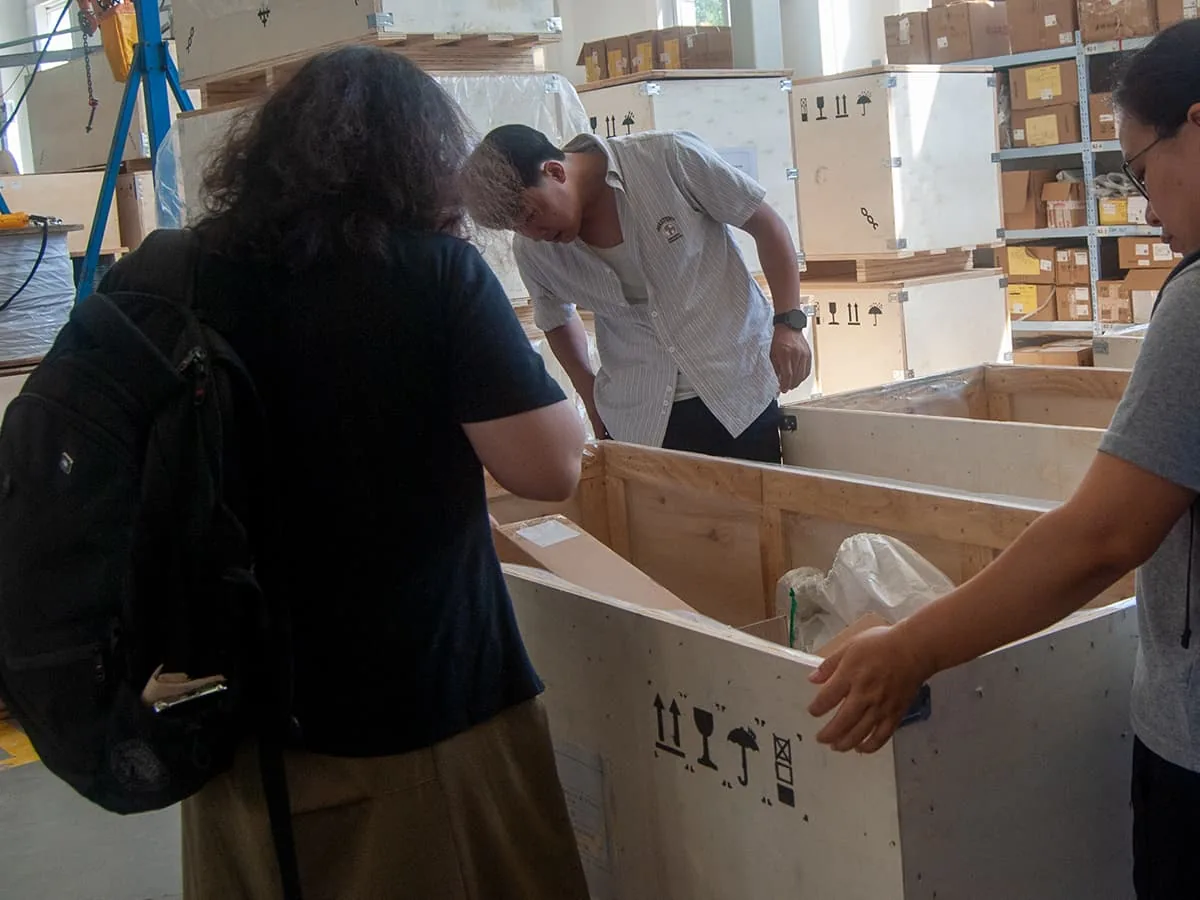
Installation and supervision. Installation is the single largest variable after the machine. The quotation has to say whether a supervisor travels to site, what the buyer provides, and how flights, visas, accommodation and a daily rate are handled. Where local labour installs the unit, the elevator quotation checklist still requires the supervision hours included. BST Express Elevator quotes supervision separately from the machine, so the two costs never hide inside each other.
Warranty and spare parts. A warranty period of 12 or 24 months from commissioning, a stated response time for a technical issue, and a recommended spare parts list for the first year of operation are what turn after-sales from a promise into a plan on the elevator quotation checklist. The list should name the wear items — door rollers, button contacts, oil seals — with their part numbers.
Validity and exclusions. Steel and shipping rates move, so a quotation normally stands for 30 days. The document should also say what is excluded: import duty, destination charges, civil work, power supply, and any local code upgrade. An exclusion written down is a cost the buyer can plan; an exclusion discovered later is a dispute — the closing line of the elevator quotation checklist for a reason.
Red Flags That Fail the Elevator Quotation Checklist
Certain patterns recur in quotations that cause trouble later, and an elevator quotation checklist is built to catch them. They are not proof of bad faith, but each one removes a piece of the protection the checklist exists to provide.
- A price given before anyone has asked about shaft size, pit depth or headroom.
- Car dimensions and door type left out while load and speed are given.
- No named brands for the drive, door operator or controller.
- An Incoterm with no named port, or “delivery” with no term at all.
- Payment details pointing to a different account name from the company in the quotation.
- A certificate mentioned but never attached.
- Lead time given as one number with no trigger event.
- No validity period, so the price can be reopened after the deposit.
Any single flag on the elevator quotation checklist is worth a question. Three or more together is worth a second supplier.
What the Elevator Quotation Checklist Does Not Cover
An elevator quotation checklist controls the document, not the performance. Three things sit outside it and still decide whether the project works: the quality of the installation, the availability of service in the destination market, and the honesty of the load assumptions the machine was sized against. A flawless quotation for a machine rated at 1000 kg will not rescue a project where the building actually moves 1600 kg a trip, and no clause in the document will install the unit better than the crew on site.
It also does not remove the need to check the supplier behind the paper. A complete quotation from a trader who disappears after the deposit is worth less than an incomplete one from a factory that still answers the phone in year two. Buyers should confirm who actually builds the machine, whether the certificate is held in the factory’s own name, and whether the unit is a standard model or an unbranded frame dressed up to look like one — checks the elevator quotation checklist cannot make for them.
Comparing Two Quotations on the Same Checklist
Once both documents carry the twelve points, comparison becomes mechanical rather than a matter of impression. Spread the two quotations into a single table, one column each, and read down the elevator quotation checklist rows in the order above. The differences that matter will surface at scope, at delivery terms and at warranty long before they show at the headline figure.
Two rules keep the comparison honest. First, price the missing scope before judging the difference: add the landing doors, the car interior or the rails that one supplier left to the buyer, at the buyer’s own cost, and the gap between the two offers often closes or reverses. Second, check against the elevator quotation checklist that both machines are the same product — the same rated load, the same rated speed, the same drive type and the same standards. A cheaper figure produced by a lower load rating is not a cheaper elevator; it is a different one.
Where the specifications genuinely match and the scope aligns, the remaining difference is real and worth negotiating. Where they do not match, the low quotation has simply answered a different question, and the answer is a machine the buyer never asked for. That is why the elevator quotation checklist belongs on the desk before the deposit rather than in the file afterwards, and why the twelve points are worth the extra hour they take to read.
How BST Express Elevator Builds a Quotation
A quotation from BST Express Elevator is issued with the GA drawing attached, the 12 items above set out in writing, the certificate copy included, and the excluded scope listed rather than left to be discovered. That structure exists because buyers comparing offers against the same elevator quotation checklist can see where a cheaper figure has come from, and because the same document then becomes the reference the factory builds to.
The order of work behind a quote is fixed: shaft details and the load list in, dimensions checked against the building, the model and finish confirmed, then production weeks quoted from the deposit through to container loading. The seven stages of an elevator lead time show which of those weeks can still be compressed and which cannot. Buyers who want the piece that sits on top of the machine itself can read the range on the elevator manufacturer page, and any clarification or drawing request goes through the contact page.
Frequently Asked Questions
What is an elevator quotation checklist?
It is the list of items a quotation must contain before two offers can be compared fairly: scope of supply, machine specification, applicable standards, drawings, component brands, delivery terms, lead time, payment schedule, inspection records, installation, warranty, and validity. It is a buyer’s tool, not the supplier’s price list.
How many items should an elevator quotation include?
Twelve items are the practical minimum for an import order. Fewer than twelve usually means a boundary, a term or a certificate has been left out, and the cost reappears later as a change order, a delay or an argument at destination.
Why does the quotation need the Incoterm and the port?
FOB, CIF and DAP place the freight, the insurance and the risk on different parties, so the same machine produces three different prices. Without the term and a named port the figure cannot be compared with another supplier’s or budgeted for by the importer.
Should a quotation include the GA drawing?
Yes. The general arrangement drawing carries the shaft size, pit depth, headroom and reaction loads, and those figures decide both installation and the civil work cost. A quotation without a GA drawing cannot be checked against the building it is meant for.
How long should an elevator quotation stay valid?
A validity of about 30 days is normal, because steel and shipping rates move. A quotation with no validity period can be reopened after the deposit is paid, which removes the price protection the buyer thought had been agreed.
Read the elevator quotation checklist against the next three quotations and the cheapest offer is usually the one with the shortest list. BST Express Elevator issues every quotation with the GA drawing, the certificate copy and the 12 items above in writing, so buyers compare the same machine, the same boundary and the same risk — and can send a shaft drawing to request a quotation that answers all twelve.
[…] you which items sit inside the unit price and which would be invoiced separately. A companion read, the 12 items a complete quotation must contain, is the quickest way to spot a gap before you […]
[…] the packing inside it. The commercial terms that govern the rest of the journey are set out in the elevator quotation checklist, which is worth reconciling against the packing list before the box is […]
[…] on an export order. The commercial terms that govern the rest of the journey are set out in the elevator quotation checklist, and the importer’s registered details belong on that checklist for a Saudi […]
[…] rated current of the feeder, the earthing arrangement, and the position of the isolator. An elevator quotation checklist that lists only the first one leaves the electrician to guess the rest, and the guesses are what […]
[…] three cannot, and the gap between them is where most schedule arguments start. Work through the twelve-point quotation checklist alongside them and the two documents cover both the money and the […]
[…] Incoterms decide more than freight, and the full comparison for an African project sits in importing elevators from China to Africa. The line-item structure that keeps freight and equipment on separate rows is in the elevator quotation checklist. […]
[…] disputes trace back to a quotation that quietly left something out. The breakdown of the 12 items a complete quotation must contain is the quickest way to spot the gaps before you […]
[…] to the certificate package. A quotation that lists them explicitly, in the form set out in this elevator quotation checklist, is the one to compare […]