


An elevator lead time is the gap between a confirmed order and a crated unit leaving the factory. For standard passenger and freight models from BST Express Elevator, that elevator lead time runs 25 to 35 working days after drawing approval; custom cars, unusual capacities and peak-season slots push the same elevator lead time to 45 to 60 working days.
What the Elevator Lead Time Covers, and What It Leaves Out
The clock starts when two things exist at once: a signed order with the deposit received, and shop drawings approved by the buyer. From that day the factory books material, cuts the car and door panels, wires the controller, runs the tests and packs the crate. Anything that comes before drawing approval, such as the site survey, the quotation round and the finish schedule, sits outside the elevator lead time and is not counted against the factory schedule.
Sea transit, customs clearance and site installation sit outside it as well. A quotation that blends production days into sailing days hides the only date a project manager can still control, which is the day the crate leaves the loading bay. Ask for the two dates separately and write both into the purchase order.
| Boundary | What the buyer receives | Who owns the delay |
|---|---|---|
| Before day 0 | Approved drawings, finish schedule, deposit receipt | Buyer and factory |
| Day 0 to day 35 | Crated unit, test report, packing list, stage photos | Factory |
| Loading day | Container number, bill of lading, ISPM-15 stamp | Factory and forwarder |
| Sea transit | Arrival notice | Carrier |
| After arrival | Cleared goods on site | Importer |
Elevator Lead Time by Model: What to Expect on a Quotation
Model choice moves the elevator lead time more than factory size does. A passenger car in a catalogue finish can be built inside the same window every month; a panoramic cabin with curved glass, or a car lift sized around one particular vehicle, needs its own jigs and its own test slot. The ranges below are the planning figures BST Express Elevator quotes for export orders, counted in working days after drawing approval.
| Model | Typical working days | What moves the number |
|---|---|---|
| Passenger elevator, catalogue finish | 25-35 | Car, doors and controller built in one factory |
| Freight or goods elevator | 25-35 | Load class and platform size |
| Hospital elevator, 1600 mm car | 30-40 | Deep car, wide door, bed-buffer fittings |
| Panoramic elevator | 30-40 | Curved glass and its steel frame |
| Car elevator | 35-45 | Platform length, traction or hydraulic drive |
| Home or villa elevator | 30-40 | Shaft profile, pit depth, single-phase option |
| Escalator | 30-45 | Truss length, balustrade type, indoor or outdoor build |
| Moving walk | 35-50 | Pallet width, overall length, incline |
Read the table as a range rather than a promise, and ask which end of it the factory is quoting against. Two suppliers can both say 30 days and mean different things: one counts working days from drawing approval, the other counts calendar days from the deposit and quietly includes the holiday shutdown. The written definition matters more than the number attached to it, and the model also drives what the unit costs, as set out in this elevator price guide for China-built lifts.
The Seven Stages That Fill the Elevator Lead Time
Every unit passes through the same seven stages, and a schedule that skips one of them will slip. The day counts below describe a standard passenger unit running on a 25 to 35 working day elevator lead time; add the model allowance from the table above for anything outside that window.
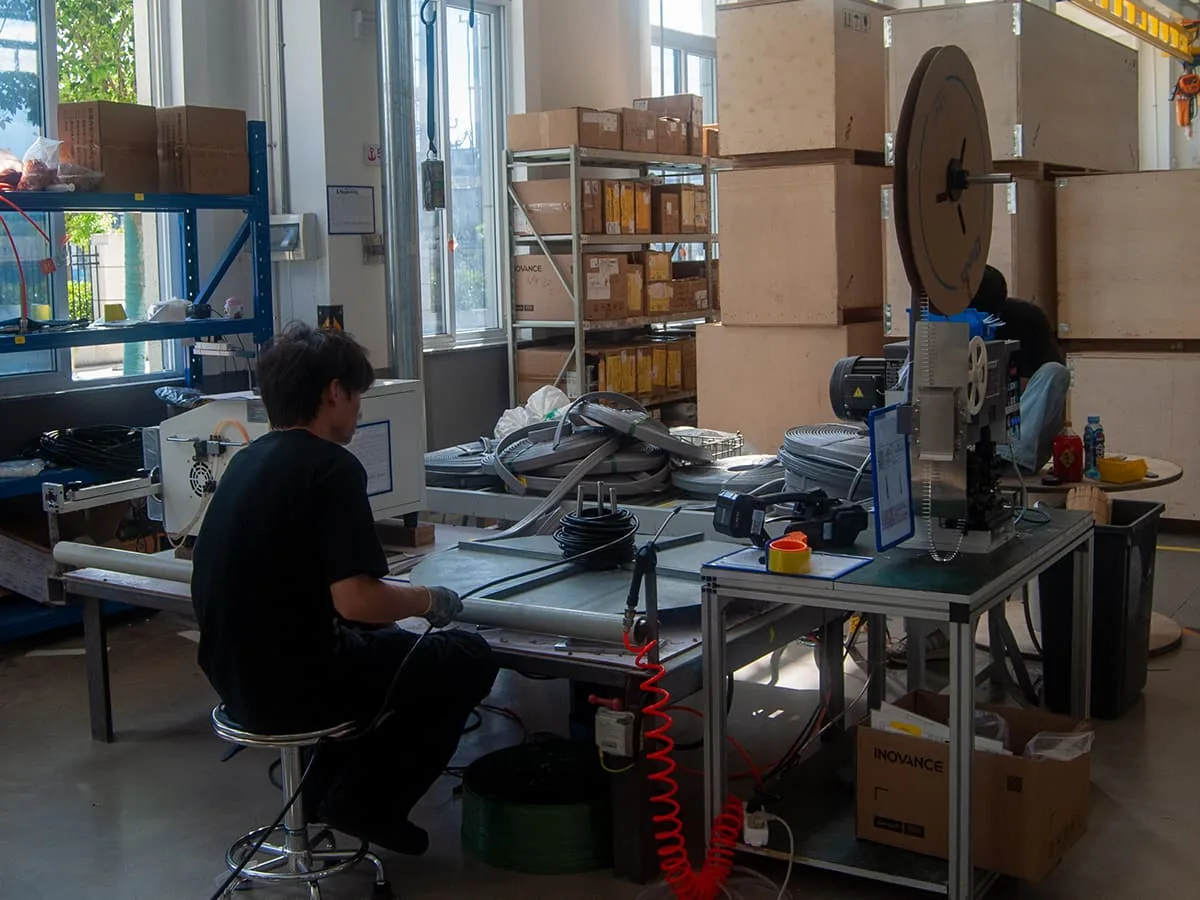
- Days 0-3, engineering release. Drawings locked, car and door dimensions signed off, controller configured for the local power supply.
- Days 4-10, material release. Sheet steel, guide rails, machines and door operators pulled from stock or ordered, finish confirmed in writing.
- Days 11-20, fabrication. Rails cut to length, car and landing door panels folded and welded, sling and platform assembled.
- Days 21-25, car assembly. Panels hung, wiring looms run, machine and ropes fitted to the frame.
- Days 26-28, controller build. Cabinet wired to drawing, drive parameters loaded, travel limits and door timing set.
- Days 29-32, test and inspection. Load test, safety gear test, door cycle count, written report issued with photographs.
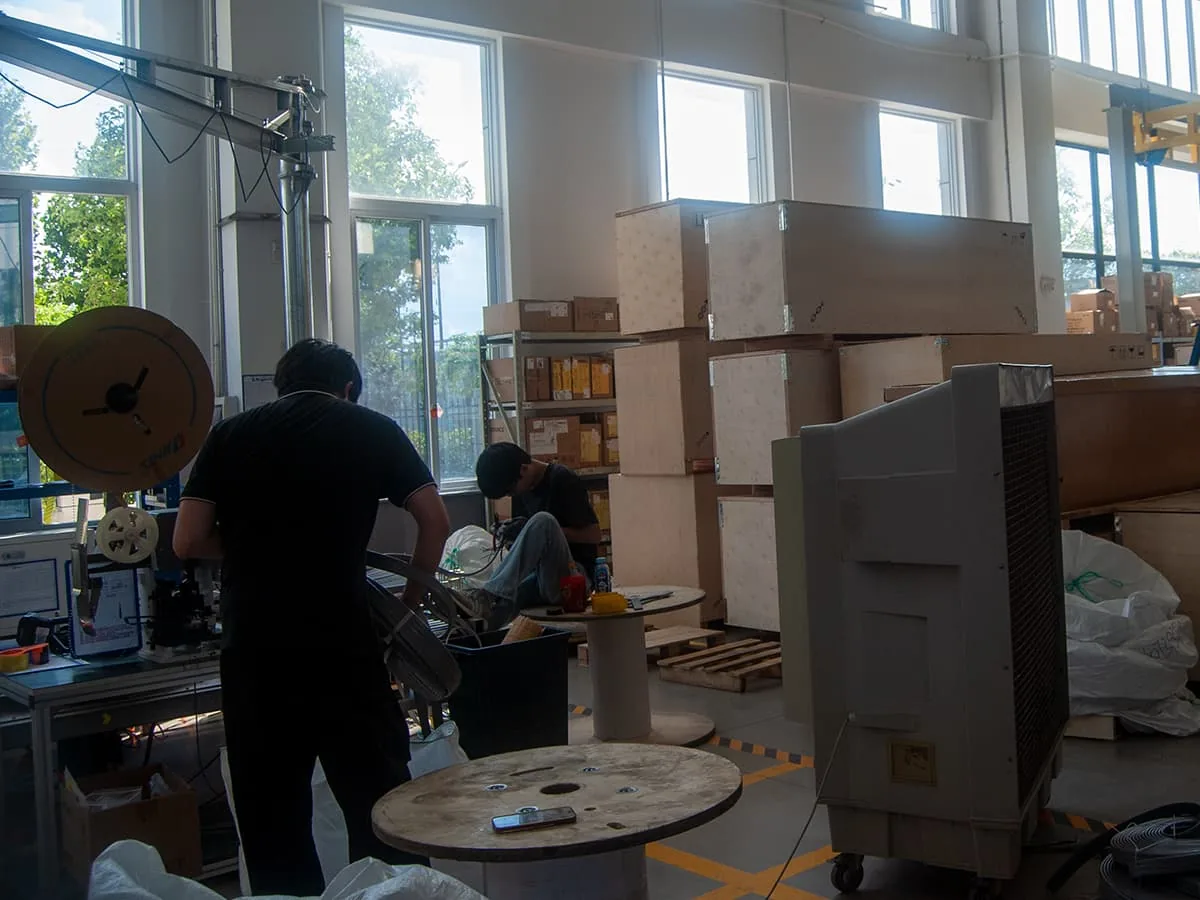
- Days 33-35, packing and handover. Crate braced, loose parts bagged and listed, ISPM-15 marking applied, container booked.
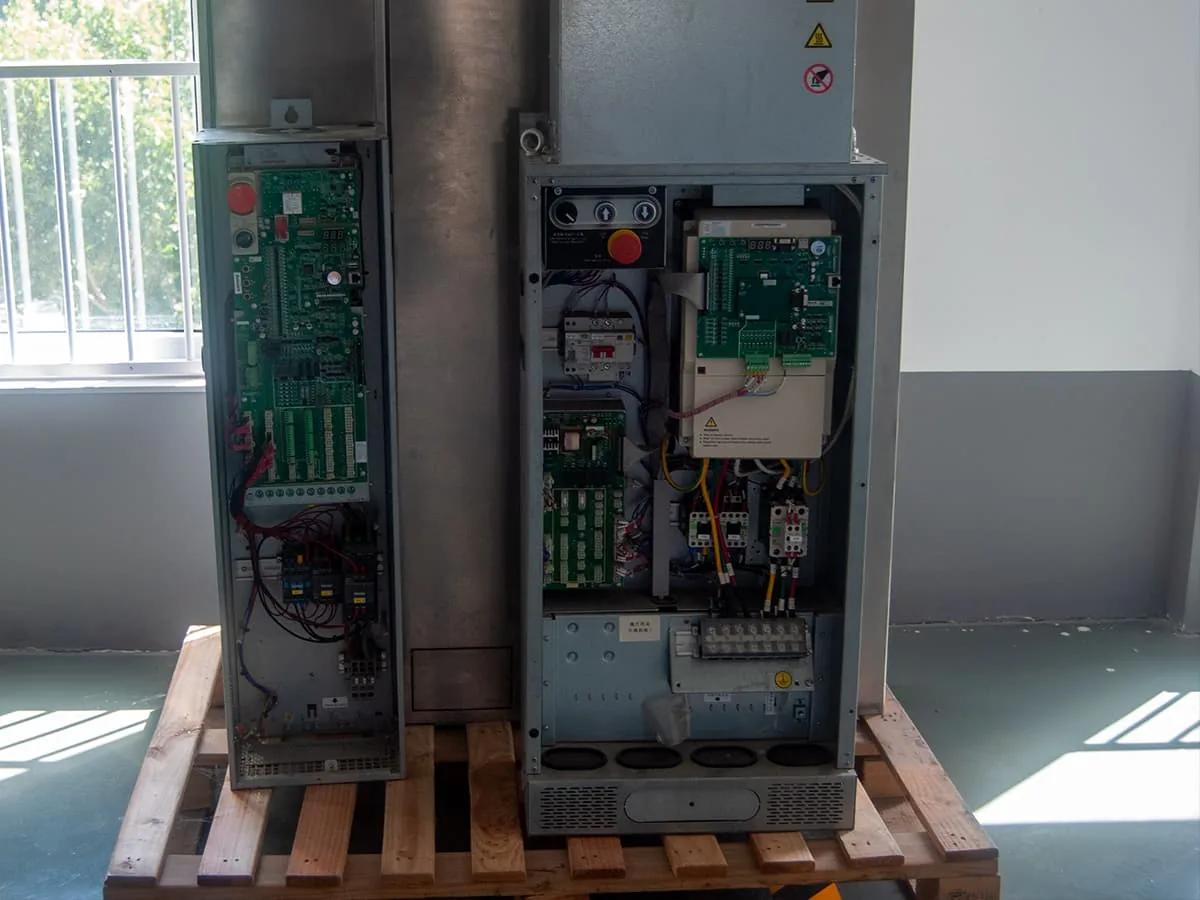
Two of those stages decide the date more often than the other five: material release and testing. One missing rail length or one door operator on back order restarts stage two, and a failed safety gear test sends the car back to stage four to wait for a fresh test slot.
How Elevator MOQ Shapes the Order Before the Clock Starts
There is no meaningful minimum order quantity for an elevator. One unit is a normal order at BST Express Elevator, because the car, doors, machine and controller are built to the order rather than taken off a shelf. Where an MOQ does appear is in finishes and special parts: one powder-coat colour, one etched stainless pattern or one imported door operator can carry a supplier minimum of several hundred kilos of sheet, or a batch of twenty handles.
The difference shows up in the schedule rather than in the price list. When the finish you want shares a batch with another buyer, the factory folds it into the next run and the clock still starts on drawing approval. When it needs a batch of its own, the elevator lead time only starts once that material lands, which can add one to three weeks ahead of day zero.
Deposit, Balance and the Day the Count Begins
Payment on an export lift usually takes one shape: 30% deposit after drawing approval, the balance against the bill of lading. The deposit does not buy a place in the queue on its own; it buys one together with the approved drawing, because no factory will release material to a car whose internal dimensions are still being argued over.
Buyers who wire the deposit before the drawings are signed often believe they have saved a week. They have only moved money, and the elevator lead time still starts on the day the drawing comes back approved. The safer order is drawing approval first, deposit within a few days, and a purchase order that names both dates alongside the Incoterm, which decides who books the container and where risk passes, as set out in the ICC Incoterms rules.
Watch for the factory that wants the balance before loading rather than against the bill of lading. That shifts the risk of a late vessel onto the buyer and removes the last lever available if the crate does not match the approved drawing. It is a cash-flow signal, not a quality signal, but it changes how the last two weeks of the schedule behave.
What Pushes an Elevator Lead Time Past 45 Days
Six causes account for almost every overrun, and all six are cheaper to fix at the drawing stage than at stage five.
- Late drawing approval, especially when the shaft has been built to a different size than the survey assumed.
- A finish that needs its own batch: non-standard glass, etched stainless, or a colour outside the standard range.
- Non-standard capacity or speed, which needs a new machine selection and sometimes a new test rig setting.
- Peak season, when every factory in the region is loading for the same shipping window and test slots fill weeks ahead.
- Site power that does not match the controller: a 415 V build ordered for a 380 V supply is caught at stage five, which is far too late.
- A test failure that needs new parts, which restarts stage four and costs a full test slot.
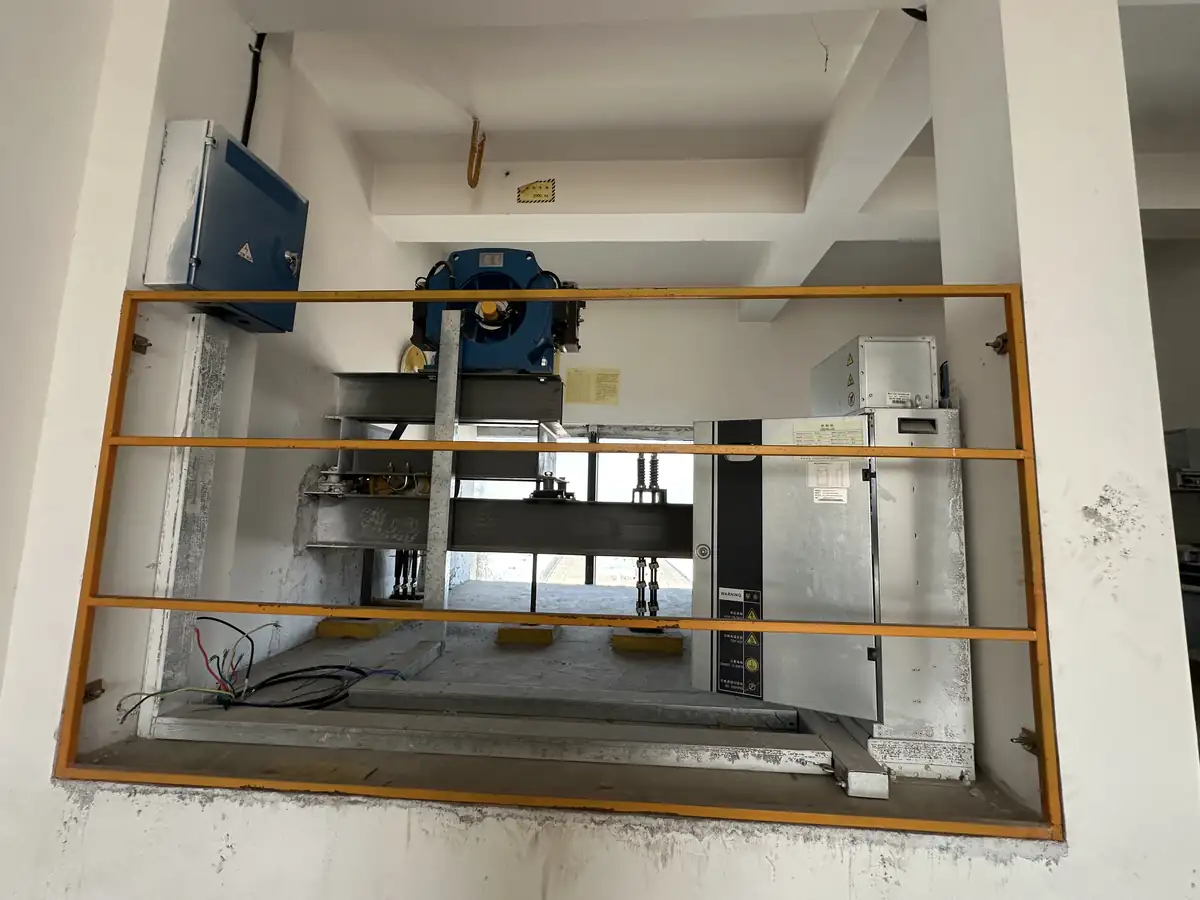
BST Express Elevator builds the voltage question into drawing approval precisely because of the fifth item: a mismatch found during testing adds more to the elevator lead time than anything else on that list, and it is the one cause that is entirely avoidable on paper.
Why Shipping Transit Is Not Part of the Elevator Lead Time
Sea transit starts after the crate leaves the loading bay and answers to a different calendar. From Shanghai, transit runs one to two weeks to a Southeast Asian port, two to three to the Middle East, four to six to West Africa and four to seven to Latin America, depending on routing and the number of transhipments.
Port performance varies enough that any planning figure should be checked against the carrier schedule and against published infrastructure data such as the World Bank transport programme. The loading sequence itself, from crate bracing to the bill of lading, is covered in this guide to shipping an elevator in a container.
| Destination region | Weeks at sea | What changes it |
|---|---|---|
| Southeast Asia | 1-2 | Direct sailings from Shanghai and Ningbo |
| Middle East and Gulf | 2-3 | Relay through one hub port |
| South Asia | 2-3 | Congestion at discharge port |
| West Africa | 4-6 | Fewer direct services, longer dwell |
| Latin America | 4-7 | Routing and transhipment count |
Adding the two halves gives the only date a buyer really needs: the day the crate can be cleared at the destination port. A 25 to 35 working day build plus four to six weeks at sea is a nine to twelve week project measured from drawing approval to site, and that is the figure to give a building owner who asks when the lift will run.
How to Shorten the Elevator Lead Time on Your Project
Most of the available saving sits with the buyer, not the factory, and none of it costs extra.
- Approve drawings within 48 hours and return every comment in the same file.
- Keep the car and doors in a catalogue finish, and spend the custom budget on the landings.
- Confirm the site supply before the controller is configured; the voltage and generator requirements are the usual culprit.
- Order the standard capacity, and put any load increase into a second unit rather than a redesign.
- Ask for the test report format up front so inspection does not wait on paperwork.
- Book the container when the crate is packed, not when the order is placed.
Applied together those six moves take two to three weeks out of a standard elevator lead time at BST Express Elevator, and the only cost is a faster reply to the drawing file.
Comparing Three Suppliers on Elevator Lead Time
The same unit can be quoted at three different speeds depending on who is selling it, and the fastest number is rarely the one that holds. A factory that builds the car, doors and controller on one site controls its own test slot; a trader resells a slot it does not own; a brand subsidiary quotes a global schedule that starts once the order reaches a regional office.
| Supplier type | Quoted elevator lead time | When the clock really starts | Main risk |
|---|---|---|---|
| Factory, one site | 25-35 working days | Drawing approval plus deposit | Peak-season test slots fill early |
| Trader or agent | 25-30 days | When the trader forwards the order | Two calendars in series, one number quoted |
| Brand subsidiary | 45-70 days | Regional order entry, then global queue | Documentation rounds before release |
Ask each one the same three questions and the comparison becomes honest: which event starts the elevator lead time, who holds the test slot, and which calendar the days are counted on. A trader can answer all three correctly and still add a week of handover, which is a fair cost rather than a deception, as long as the buyer knows it is being paid.
Site Delays That Get Blamed on the Elevator Lead Time
The crate arrives on the date promised and still sits in a warehouse, because the shaft is not ready. Those weeks are then reported as the elevator lead time, which is unfair to the factory and useful to nobody at the next project meeting. Four site conditions decide whether the unit can be installed the week it lands.
- The shaft. Plumb within tolerance, pit depth and headroom built to the approved drawing, and the landing openings at the stated size.
- The power. Three-phase supply of the right nominal voltage and frequency at the machine room, with the protective earth in place before commissioning.
- The access route. A doorway wide enough for the largest crate, and a floor that will take the pallet truck in the week of delivery.
- The pit and the pit ladder. Drained, dry and finished, so the installer is not the first trade to work in it.
None of these belong to the factory schedule, and all of them are checked on day zero when the drawing is approved. That is the point in the elevator lead time when a survey drawing costs nothing to correct and a built shaft costs a month.
FAQ: Elevator Lead Time Questions Buyers Ask
What is a normal elevator lead time from China?
A standard passenger or freight model runs 25 to 35 working days after drawing approval. Hospital, panoramic and car models add one to two weeks, and custom capacities in peak season can reach 45 to 60 working days.
Does the elevator lead time include shipping?
No. It ends when the crated unit leaves the factory. Sea transit to most destinations adds one to seven weeks depending on the port pair, and it is quoted as a separate line.
Can I shorten the elevator lead time by paying more?
Only slightly. Rush slots are limited by test capacity rather than by money. The reliable gains come from approving drawings in 48 hours, keeping a catalogue finish and confirming the site power early.
What deposit starts an elevator order?
30% after drawing approval, with the balance against the bill of lading. Paying before approval moves money without starting the clock, because the factory still cannot release material.
Is MOQ a problem if I need only one elevator?
No. A single unit is a normal order, since the car, doors, machine and controller are built to the order. Minimums apply to finishes and special parts, not to the number of units.
Verify These Six Numbers Before You Sign
A quotation that answers all six of these can be compared with another quotation. One that answers three cannot, and the gap between them is where most schedule arguments start. Work through the twelve-point quotation checklist alongside them and the two documents cover both the money and the calendar.
- The elevator lead time in working days, with its start event named.
- The seven stage dates, so a slip can be located instead of argued about.
- The deposit percentage and what it is paid against.
- The test report contents, including load test, safety gear test and door cycle count, checked against a recognised code such as the ASME A17.1 elevator and escalator safety code.
- The transit weeks for your own port pair.
- The packing list, so loose parts arrive inside the crate rather than after it.
BST Express Elevator issues the seven stage dates with every quotation and runs assembly, controller build and testing on one site, which is why standard models hold a 25 to 35 working day elevator lead time instead of drifting into a second month. Buyers who check the six numbers before signing usually find the elevator lead time they were quoted is the one they get. The factory profile behind those dates is on the elevator manufacturer page, and a specific project can be scheduled through the contact form.
[…] The stage-by-stage day counts behind that window, and what moves them, are covered in this guide to how long an elevator takes to build. Carriers release space against a weekly cut-off, and a missed cut-off costs a full week rather […]
[…] in China everything it needs. If you are working backwards from a building completion date, read how elevator lead time is actually measured before the shaft drawing is signed […]
[…] Maersk adds a second layer. Its notices price against the price calculation date at booking confirmation, which for a non-FMC shipment is the scheduled departure of the first water leg, and the charge does not apply to spot bookings at all. A buyer comparing carriers has to compare the date basis as well as the amount, or the cheaper headline can produce the more expensive invoice. The production side of that calendar is set out in how elevator lead time is measured. […]
[…] load test means a counterweight change or a brake adjustment, and both add days — which is why elevator lead time is measured from a passed test rather than from the order […]
[…] a drawing instead of assuming it. It takes an hour on site and it is the difference between a lead time that holds and one that restarts. It is also the one elevator installation requirements document […]