


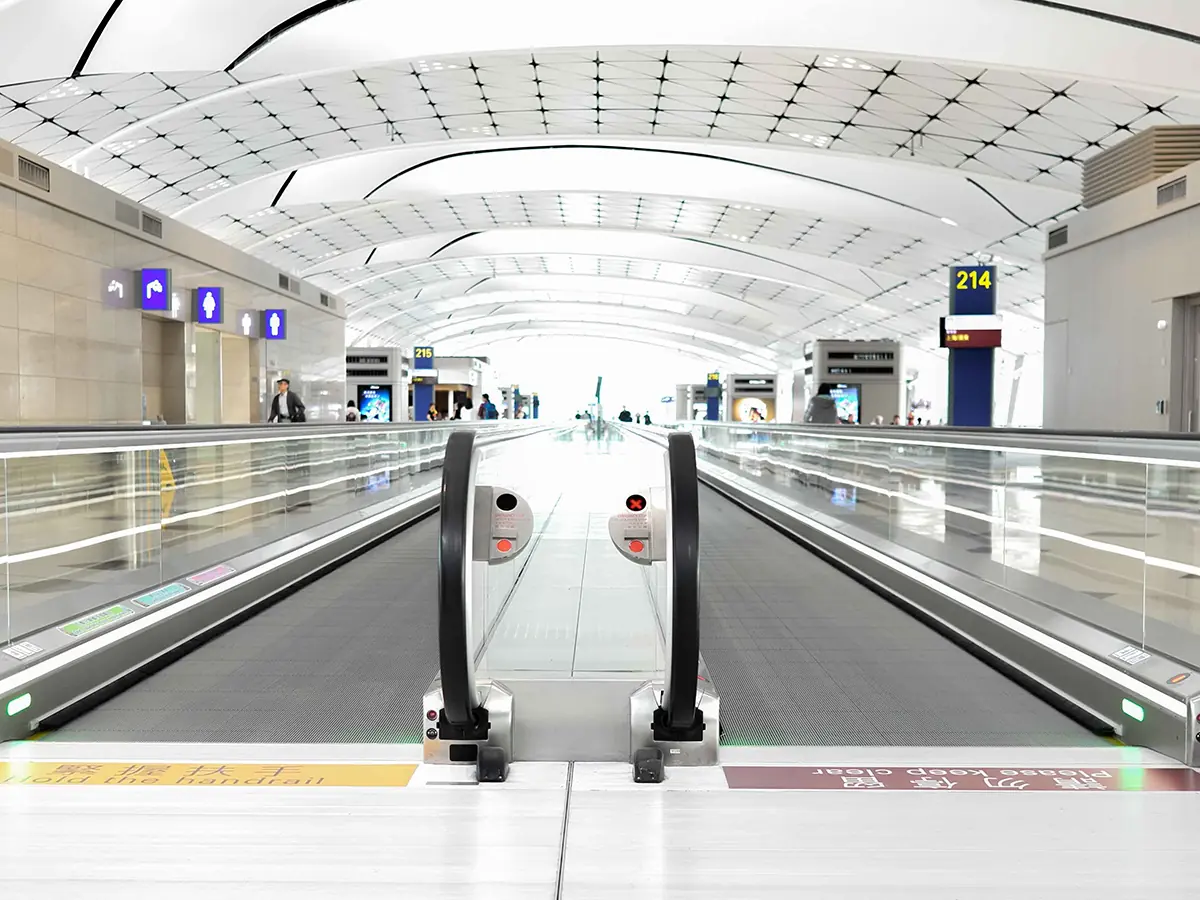
Moving walks transport passengers in airports and terminals. This guide helps you choose a moving walk manufacturer in China.
Why Choose a Moving Walk Factory in China
Chinese factories build passenger conveyors at factory pricing with CE certification. Customization options include inclination, width, speed and length. A dependable moving walk manufacturer in China will confirm your incline, width and passenger volume before proposing a configuration.
Step 1 – Define Inclination and Width
Inclination: 0 degrees (horizontal), 10-12 degrees (ramped). Width: 800 mm (single passenger), 1000-1200 mm (luggage). Speed: 0.5 m/s standard. Specify these three values to the moving walk manufacturer in China so the pallet and drive can be quoted correctly. The full set — incline, width, speed, length and support spacing — is set out in the five moving walk dimensions that decide a project.
Step 2 – Indoor vs Outdoor Installation
Indoor units use standard finishes. Outdoor units need weather-proof construction with corrosion-resistant materials and sealed mechanical components.
Step 3 – Length and Configuration
Single units can exceed 100 meters. Multiple units can be linked for longer distances. Landing platforms and handrail returns are configurable. Ask the moving walk manufacturer in China whether one continuous unit or linked sections suit your corridor length and building joints.
Why Bsite Express Elevator
Bsite Express Elevator Co., Ltd. is a genuine elevator manufacturer and factory in China based in Suzhou. As a moving walk manufacturer in China, we supply CE-certified passenger conveyors with custom configurations and export support to 60+ countries.
FAQ
What inclination options are available? 0 degrees (horizontal) or 10-12 degrees (ramped).
Can units be connected for long distances? Yes – multiple units can be linked for 100+ meter installations.
What is the typical lead time? 30-45 days after drawing confirmation.
How do I verify a moving walk manufacturer in China? Ask the moving walk manufacturer in China for CE certificates, ASME-compliant test reports and references from airport or mall installations and ask for a live video factory tour before signing.
Moving walk standards are covered by ASME A17.1. For airport terminal installations, see Schindler Moving Walks.
Applications in Various Settings
Moving walks serve multiple applications beyond airports: shopping malls, convention centers, hospital complexes, metro stations, and large retail facilities. Horizontal moving walks (0° inclination) are ideal for long corridors, while inclined models (10-12°) connect different levels in buildings without full elevator capacity. Choosing between them comes down to slope, cart traffic and width, set out in which machine fits which traffic. Where the traffic is inclined rather than flat, the guide to choosing an escalator manufacturer in China covers step width, rise and duty.
Technical Specifications
Standard moving walks feature: step/pallet width 800-1200mm, speed 0.5 m/s, length up to 100m per section, and capacity of 6,000-12,000 passengers per hour. Safety features include emergency stop switches, handrail speed sensors, and skirting protection.
Installation and Commissioning
Professional installation is critical for moving walk performance and safety. Installation typically takes 4-8 weeks depending on length and complexity. Key steps include foundation preparation, truss installation, step assembly, handrail installation, electrical connections, and safety testing. A qualified manufacturer provides commissioning support and operator training.
Cost Considerations
Moving walk costs vary based on length, inclination, width and features. Standard horizontal moving walks typically cost less per meter than inclined models. Budget should include installation, commissioning, operator training and first-year maintenance. A well-maintained moving walk provides 20-25 years of reliable service. A moving walk manufacturer in China with its own production line can itemize these costs transparently and offer a packaged commissioning, training and spare-parts plan.
Troubleshooting Common Issues
Common moving walk issues include step misalignment, handrail synchronization problems, motor overheating, and electrical faults. Regular maintenance prevents most issues, but when problems occur, remote diagnostics can identify faults quickly. Choose manufacturers with responsive technical support and readily available spare parts to minimize downtime.
Safety Features and Compliance
Moving walks include multiple safety features: emergency stop buttons at regular intervals, handrail speed sensors, step gap detectors, skirting protection, and fire service operation modes. These features must comply with local safety codes and are subject to regular inspection. Ensure your manufacturer provides complete safety documentation and certification.
[…] the guide to importing elevators from China, and the supplier side is covered in the checklist on choosing a moving walk manufacturer in China. Projects that also need vertical transport can compare the figures with elevator shaft dimensions […]
[…] detail behind the flat option, see moving walk dimensions. For the commercial side, the guide to choosing a moving walk manufacturer in China covers procurement, and its counterpart on choosing an escalator manufacturer covers the stepped […]