

An EC-type examination is the EU conformity assessment step in which a Notified Body examines one lift design and issues an EU-type examination certificate for it. For an importer, that certificate is the evidence that a model was assessed against Directive 2014/33/EU before any unit of that model was built.
This guide is written for buyers who are handed a certificate and have to decide what it actually proves. It covers what an EC-type examination does and does not cover, who is allowed to issue one, the six checks that take ten minutes to run, when a certificate has to be extended, and what the January 2027 machinery transition changes for lift imports.
What an EC-Type Examination Actually Covers
An EC-type examination looks at a design, not at your order. A Notified Body reviews the technical documentation for one lift model, checks that design against the essential health and safety requirements set out in Annex I of Directive 2014/33/EU, and, where the harmonised standards are not applied in full, examines a specimen or an installed unit as well. The output is an EC-type examination certificate that names the model it covers.
That scope is narrow on purpose. The EC-type examination certificate states that a design was assessed. It does not state that the units loaded into your container were built to that design, that the components inside them carry the certificates quoted in the technical file, or that the installer will commission them correctly. Those are separate obligations under the same Directive, and they are where most importers get caught.
An EC-type examination is also a route rather than a standalone requirement. For a complete lift the Directive offers several conformity assessment procedures, and type examination sits alongside quality-assurance and unit-verification routes. Your supplier will have chosen one. Knowing which one they used tells you what the certificate in front of you is worth.
Who May Issue One: Notified Bodies and the NANDO Register
Only a body notified under Directive 2014/33/EU may issue an EC-type examination certificate for a lift. Notified bodies are designated by EU member states and published by the European Commission. Each entry carries the body’s four-digit identification number, the legislation it is notified under, the procedures it is allowed to perform, and the product scope that designation covers.
That register is the only authoritative source for the two questions that matter. Which bodies may assess my product, and is the body whose certificate I am holding actually entitled to have issued it? A commercial testing house that is not in the register may still produce a genuine test report, but it cannot produce an EC-type examination certificate under EU law, and such a certificate only has legal effect if the body was notified for that act, that procedure and that product range at the time of issue.
The European Commission has issued a formal warning about unregulated certificates, often sold as voluntary certificates, from bodies that are not acting as notified bodies. Under EU law those documents are not a recognised way to prove compliance, and the Commission states plainly that certificates must not themselves bear a CE marking. If a supplier sends you a document stamped with a CE logo, that is a warning sign rather than a reassurance.
How an EC-Type Examination Runs, Step by Step
The EC-type examination procedure is defined in the Directive and follows the same shape for every model. The installer or manufacturer applies to a single Notified Body of their choice, supplying the plan of the lift, the drawings and control circuit diagrams, the instructions for use, and a written declaration that the same application has not been lodged with another body.
The Notified Body then reviews the technical documentation for the EC-type examination, checks the design against the essential requirements, and carries out the examinations and tests needed to confirm that the requirements are met. For a new design, this stage is where most of the calendar time sits.
If the design passes, the body issues the EC-type examination certificate and its annexes, and keeps a copy of the certificate together with the technical documentation and the evaluation report. The installer then continues into a production or verification module, which is what covers the individual units that actually ship.
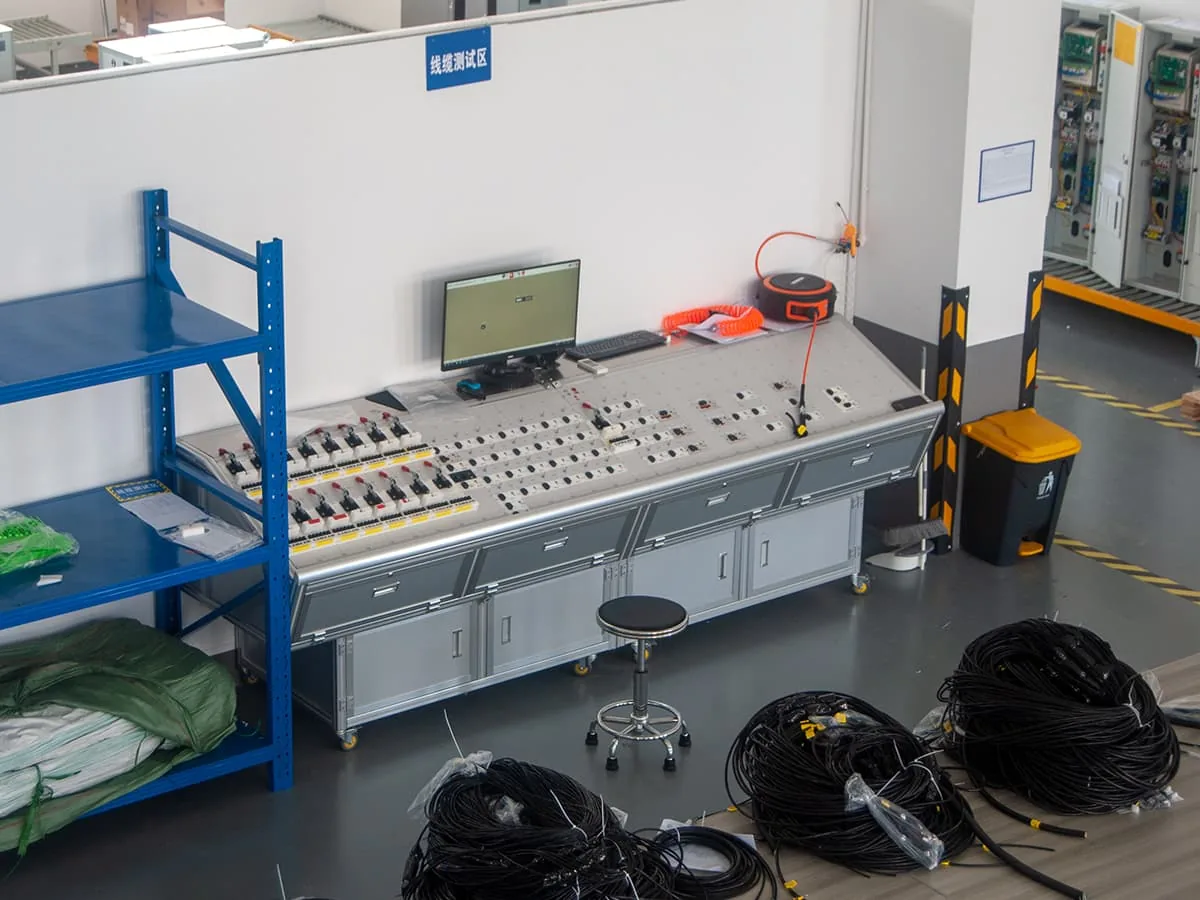
Component and cable test area at the factory: the evidence behind an EC-type examination is built from records like these, not written up afterwards.
One practical consequence follows from this sequence. A first-time EC-type examination of a new design takes months, while a model that already holds a certificate can be quoted and shipped far faster. If a supplier promises a CE-marked bespoke lift in weeks, ask which certificate the unit will be built under, because the answer cannot be one that does not exist yet.
The Six Checks an Importer Should Run on a Certificate
None of the six EC-type examination checks below needs special software, and all of them can be run on the documents a supplier sends before a deposit. Taken together they separate a certificate that protects you from one that only looks like it does.
Check 1: The Body Is Still Notified
Take the body named on the certificate, find it in the European Commission’s notified body list for Directive 2014/33/EU, and confirm that the designation is current rather than withdrawn or suspended. Notifications change. A certificate issued by a body that has since lost its designation is a problem you inherit, not one the supplier inherits. A step-by-step version of that check is set out in the guide to the notified body for elevators certificate.
Check 2: The Four-Digit Number Matches
Notified bodies carry a four-digit identification number, and it should appear where the procedure requires it. Alongside this, confirm that the legal entity named on the certificate is the entity that was notified. Group affiliates and branch offices are notified separately, so a certificate from an affiliate of a notified group is not the same document.
Check 3: The Certificate Names Your Model, Not a Family
An EU-type examination certificate covers a described type. Check that the description, the drawing numbers and the annexes match the model you are buying. A certificate for a 630 kg passenger lift does not carry a 1,600 kg goods lift, and a change in drive type, door arrangement or control system can fall outside the approved type.
Check 4: The Directive and Standards Cited Are Current
The certificate should cite Directive 2014/33/EU and the harmonised standards applied, typically EN 81-20 and EN 81-50 for lifts. Standards are revised, and certificates that rely on superseded versions are worth questioning. This is also the place to watch the 2027 machinery transition described below.
Check 5: The Declaration of Conformity Quotes the Same Certificate
The EU declaration of conformity is the document the lift is actually placed on the market with, and it has to identify the lift, the manufacturer or installer, the applied standards and the Notified Body involved. If the certificate number on the declaration does not match the certificate you were sent, one of the two documents is not describing your lift.
Check 6: The Technical File Is Available With It
The certificate is a summary; the technical file is the substance behind it. Ask for the file index at minimum, and confirm that the installer will keep the certificate, the technical file and the declaration available to national authorities for the period the Directive requires. A supplier who cannot produce the index for their own EC-type examination is unlikely to produce the file in a customs or market-surveillance enquiry.
| Check | What you look at | What a failure means |
|---|---|---|
| 1. Body still notified | NANDO entry for 2014/33/EU | The certificate has no standing today |
| 2. Body number matches | Four-digit number and legal entity | The issuing entity was not the notified one |
| 3. Model is named | Type description, drawings, annexes | Your order sits outside the approved type |
| 4. Standards are current | Directive and EN 81-20 / EN 81-50 references | The presumption of conformity is weakened |
| 5. Declaration matches | Certificate number on the declaration | The declared lift is not the certified one |
| 6. Technical file exists | File index and retention statement | Nothing to show an authority on request |
When a Certificate Has to Be Extended or Replaced
The maintenance duty sits with the installer. Any modification to the approved type, including variations not described in the original technical documentation, has to be reported to the Notified Body, which then decides whether the certificate remains valid, whether an addition is issued, or whether a fresh application is needed. A redesign that quietly moves outside the approved type leaves the units shipping without a valid route to the marking.
The Directive does not print a fixed expiry date on an EC-type examination certificate. What it does fix is how long the paper has to stay available. The installer keeps the certificate with its annexes, the technical file and the declaration of conformity at the disposal of national authorities for ten years after the lift has been placed on the market, and the Notified Body keeps its own copy of the certificate, its annexes and the evaluation report for fifteen years from the date of issue.
In practice, the triggers importers meet most often are a change of supplier for the drive or controller, a change of car size that moves the load rating, and a switch of door operator. Each is a real change to the approved type, and each is worth a written confirmation from the supplier that the existing EC-type examination still covers the unit being quoted.
What Changes on 20 January 2027
The Lifts Directive refers to the Machinery Directive 2006/42/EC for its safety requirements. On 20 January 2027 the new Machinery Regulation (EU) 2023/1230 becomes applicable and replaces that Directive, and from that date the essential health and safety requirements of the Machinery Regulation apply to lifts and safety components for lifts. The European Commission has published guidance on the transition covering product conformity, conformity assessment certificates, cited standards and the presumption of conformity under the Lifts Directive.
A second moving part for any EC-type examination is the standards list. EN ISO 8100-1:2026 was published on 17 June 2026 but had not, at the time of writing, been cited in the Official Journal of the European Union, so it does not yet carry a presumption of conformity. Until it does, EN 81-20 and EN 81-50 remain the references that matter on a lift certificate.
For a buyer ordering now, the practical question is not which text applies next year. It is whether the EC-type examination certificate you are shown today will still be the right one at the moment your units are actually placed on the market, and whether the supplier has the file to support that answer in writing.
Unregulated “CE Certificates” and Other Red Flags
Most invalid paperwork does not look forged. It looks like a certificate from a commercial laboratory that tested a component and issued a document with a CE-looking mark, which is why the Commission’s own warning matters so much. The document may be a real test report. It is simply not a conformity assessment certificate, and an importer who relies on one instead of a real EC-type examination has placed a product on the market without the assessment the law requires.
Three signals are worth acting on. A body that does not appear in the notified body list for Directive 2014/33/EU. A four-digit number that traces to a body notified under an unrelated directive. And a number shown next to a CE mark on a route that involves no Notified Body at all, which indicates the marking was applied without anyone working through the procedure.
How BST Express Elevator Prepares the File
BST Express Elevator is an elevator manufacturer in Suzhou, China that builds eight families, passenger, panoramic, hospital, freight, car, escalator, moving walk and dumbwaiter, in a single plant, and keeps the EC-type examination file for its CE-marked models rather than placing the burden on the buyer.
Every CE-marked order from BST Express Elevator ships with the EC declaration of conformity for the quoted model, the component certificates behind it and the technical file index, so the six checks above can be run against the serial number before the balance is paid. Passenger lifts from 400 kg to 2,500 kg and freight elevators are documented to EN 81-20 and EN 81-50.
Because the drive, the controller and the doors are produced in-house, a change that would force a fresh EC-type examination is caught at the drawing stage rather than after the units are packed. That is the practical difference a factory-direct supplier can offer on documentation: the technical file, the component certificates and the declaration all come from the same plant that built the lift.
That documentation is not assembled after the fact. BST Express Elevator builds 8 elevator families in one plant in Suzhou and documents passenger lifts from 400 kg to 2,500 kg to EN 81-20 and EN 81-50, so the technical file and the component certificates come from the same production line. Buyers who need the certificate, the Declaration of Conformity and the file index for a quoted model can request the BST Express Elevator document pack under Directive 2014/33/EU before placing a deposit.
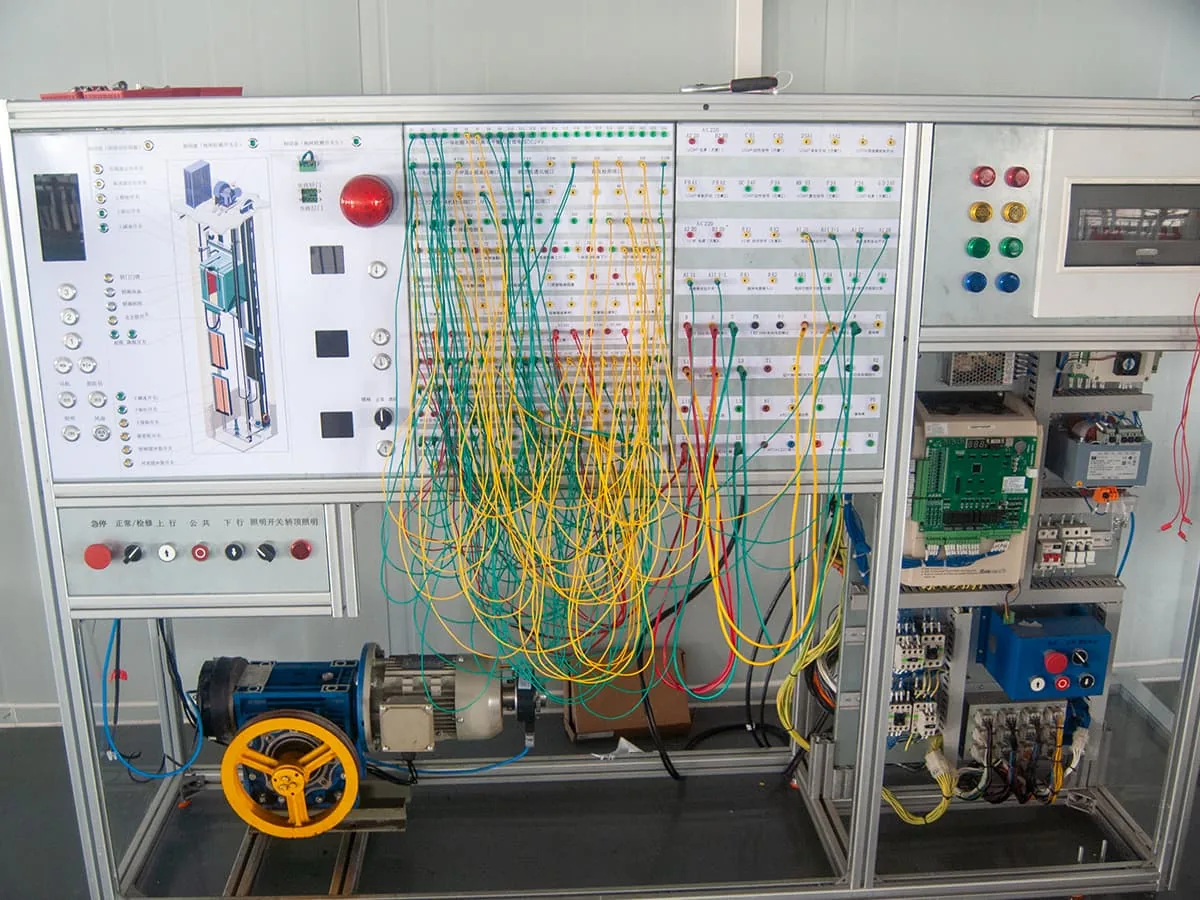
The control cabinet test bench at the BST Express Elevator factory, where drives and control circuits are wired and powered before shipment.
If you are comparing suppliers on documentation, the useful next step is to ask each one for the certificate, the declaration and the file index for the exact model quoted, then run the six checks side by side.
You can see how the rest of the process fits together in our guide to buying elevators from China, read the wider picture in the CE certification overview, or see how documentation is prepared at an elevator factory in China. Buyers who want the full document pack for a specific model can request a quotation with the drawing set and the certificate.
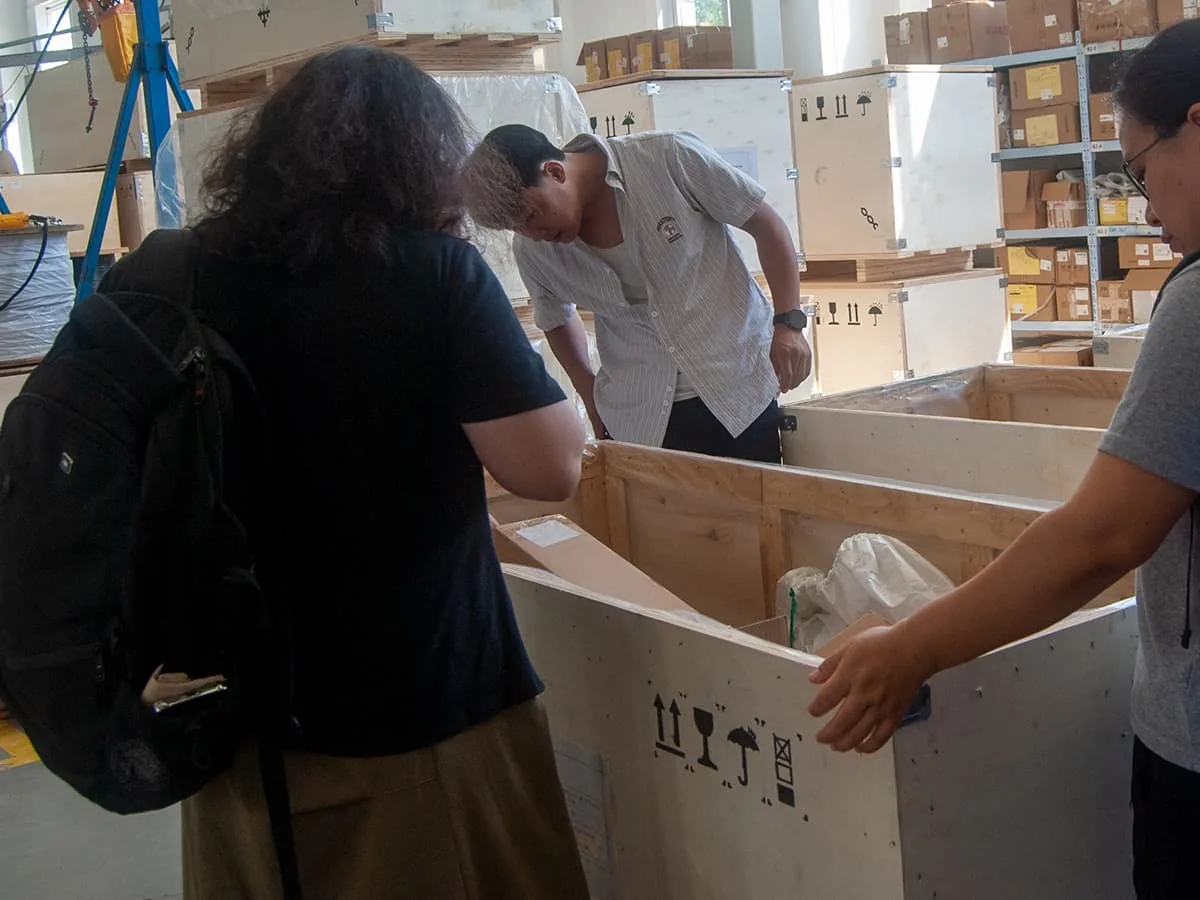
Final packing inspection at the factory, where each unit is checked against the order before the container is loaded.
Frequently Asked Questions
What is an EU-type examination certificate?
What is an EU-type examination certificate? It is the document a Notified Body issues after assessing one lift design against Directive 2014/33/EU. It covers a described type rather than individual units, and it is the certificate that later production or verification modules refer back to.
Who is allowed to issue an EC-type examination certificate for a lift?
Who is allowed to issue an EC-type examination certificate for a lift? Only a body notified under Directive 2014/33/EU and listed in the European Commission’s notified body register. A commercial laboratory outside that register can issue a test report, but not a conformity assessment certificate.
How long is an EC-type examination certificate valid?
How long is an EC-type examination certificate valid? The Directive does not set a fixed expiry date on the certificate itself. It does require the certificate and technical file to be kept available for ten years after the lift is placed on the market, and the Notified Body to keep its copy for fifteen years from issue.
Does the certificate cover my whole order?
Does the certificate cover my whole order? No. The EC-type examination certificate covers the approved type. The individual units are covered by the production or verification module the supplier chose, and their conformity is documented through the declaration of conformity and the component certificates in the technical file.
What happens to the certificate in 2027?
What happens to the certificate in 2027? From 20 January 2027 the Machinery Regulation (EU) 2023/1230 replaces the Machinery Directive referenced by the Lifts Directive, and its essential health and safety requirements apply to lifts. Certificates and files issued before the change remain relevant, but the standards and requirements cited on new assessments move with the transition.
References
Directive 2014/33/EU on lifts and safety components for lifts, including Annex IV on EU-type examination, is published on EUR-Lex. The European Commission’s lifts page sets out the transition to the Machinery Regulation and the harmonised standards position. The Commission’s notified body register (NANDO) is the authoritative list of bodies notified for 2014/33/EU.
[…] elevator CE certification, the correct answer is therefore a package: component certificates, an EC-type examination certificate for the model, and a Declaration of Conformity for the installed […]
[…] documents an importer is asked to hold, elevator CE certification sets out the complete pack, and EC-type examination for elevators covers the type examination step in […]
[…] selling into Europe works with a Notified Body rather than issuing its own paperwork – see EC-type examination for elevators for what that check involves. The relevant harmonised standards sit with CEN-CENELEC, and the lift […]
[…] that: it is issued against a component type rather than the car in your container, which is why the EC-type examination file and the unit test report answer different […]
[…] EC type-examination certificate that covers a standardised car but not the bespoke one on the drawing is the classic […]