

As of November 2026, EN 81-20:2020 is still the standard cited in the Official Journal of the EU for the Lifts Directive, and it is still the only route to presumption of conformity. EN ISO 8100-1:2026 was published on 17 June 2026 but has not been cited.
That single gap, between published and cited, is what most buyer conversations get wrong. Searches for EN ISO 8100 return confident claims that it replaces EN 81-20 from a date in July 2026, or that a 2023 edition exists, or that lifts were pulled out of the Machinery Regulation. None of those three things is true.
This page sets out what applies today, the six dates that actually matter, what changed technically rather than just in numbering, and what happens to a CE certificate that was issued against EN 81-20. It is written for the person holding the purchase order, not for the committee member.
Contents
- What applies today
- The six dates, and the three that are wrong
- Published, cited, and why the gap is the whole story
- What EN ISO 8100 actually changed
- Why 20 January 2027 matters more than the standard
- What happens to the certificate you already hold
- Six questions for the tender
- What BST Express Elevator issues, and on which basis
- Frequently asked questions
What applies today
Three documents decide whether a lift can be placed on the EU market this month. Only one of them currently gives a manufacturer anything to stand on.
| Document | Status in November 2026 | Legal effect |
|---|---|---|
| EN 81-20:2020 with EN 81-50:2020 | Cited in the Official Journal | Presumption of conformity with the Lifts Directive |
| EN ISO 8100-1:2026 with ISO 8100-2:2026 | Published, European version recorded 17 June 2026, not yet cited | None on its own, until the citation appears |
| Machinery Regulation (EU) 2023/1230 | Applies from 20 January 2027 | Replaces the Machinery Directive, and rewrites the safety requirements behind the Lifts Directive |
Presumption of conformity is a narrow, technical thing, and it is worth being precise about it. A harmonised standard that has been cited in the Official Journal gives a manufacturer the legal assumption that the product meets the essential health and safety requirements it covers.
That assumption is what a notified body and a market surveillance authority work from. Without it, conformity is still possible, but it has to be demonstrated case by case, with no automatic cover.
EN ISO 8100-1:2026 is a complete, published, 191-page standard. It is not a draft, and it is not provisional. What it does not yet have is a citation, and the citation is the only thing that turns a standard into a legal assumption. The European Commission’s lifts page states the position in four words: published, but not yet cited.
So a supplier who states that a lift complies with EN ISO 8100 today is not lying about the design. The lift may well meet it. The supplier is making a claim with no presumption behind it, which becomes the buyer’s problem at customs, at commissioning, or at the first insurance inspection. The four CE certification routes are built around cited standards, and none of them route around the citation.
The six dates, and the three that are wrong
Six dates carry the entire EN ISO 8100 transition. Each one is verifiable on an official page, and each one means something different to a buyer.
| # | Event | Date | What it changes for a buyer |
|---|---|---|---|
| 1 | CEN ratifies the European version | 1 March 2026 | Nothing yet. It fixes the text that will later be cited. |
| 2 | ISO 8100-1:2026 published, stage 60.60 | 27 March 2026 | You can buy and read the standard. It has no legal effect in the EU. |
| 3 | European Commission records the EN version as published | 17 June 2026 | The clock starts, but the citation has still not happened. |
| 4 | National bodies publish, for example BS EN ISO 8100-1:2026 | 30 June 2026 | National publication is not European citation. Two different acts. |
| 5 | Machinery Regulation (EU) 2023/1230 applies | 20 January 2027 | The safety requirements behind the Lifts Directive change on this date, cited or not. |
| 6 | Conflicting national standards withdrawn | June 2029 | End of the 36-month overlap. After this, EN 81-20 alone is not enough. |
Note what is missing from that table: a citation date. It has not happened. The consolidated list of harmonised standards for lifts is where the citation will appear, and its most recent implementing decision, (EU) 2025/2383 of 25 November 2025, still lists EN 81-20:2020 and EN 81-50:2020 without EN ISO 8100 anywhere in it.
The three dates that circulate and are wrong
The first is 1 July 2026, widely quoted as the day EN 81-20 was replaced. It is Estonia’s national adoption date, recorded in that country’s own standards bulletin. It has no European significance, and a national body adopting a standard is not a citation.
The second is 2 July 2026. It has no source at all. The publication that used it has since acknowledged the error.
The third is not a date but a document: a 2023 edition of EN ISO 8100-1. There is no such edition. The 2019 edition exists, but it was never a harmonised standard under the Lifts Directive, so it never conferred presumption of conformity either.
| Claim in circulation | What is actually true |
|---|---|
| EN 81-20 was replaced on 1 July 2026 | 1 July 2026 is Estonia’s national adoption date. No European act falls on it. |
| The replacement date is 2 July 2026 | No source exists. The publication that used it has retracted it. |
| A 2023 edition of EN ISO 8100-1 exists | It does not. The 2019 edition was never a harmonised standard. |
| Lifts are excluded from the Machinery Regulation | Wrong. The exclusions in Article 2, points (a) to (q), do not mention lifts. |
The practical cost of these four errors is asymmetric. A buyer who believes EN 81-20 expired will demand a standard the supplier cannot yet legally rely on, and may reject a conforming lift. A buyer who believes lifts left the Machinery Regulation will miss the change that actually lands on 20 January 2027.
Published, cited, and why the gap is the whole story
Publication and citation are separate acts performed by different bodies for different purposes, and the EN ISO 8100 transition is where that distinction becomes expensive.
ISO publishes. CEN adopts the text as a European standard. National bodies then publish their own identical versions. EN ISO 8100 followed exactly that path between March and June 2026. None of it creates presumption of conformity. Only the European Commission can do that, by citing the standard in the Official Journal, normally through an implementing decision that lists standards and dates together.
A citation decision usually carries three pieces of information for each standard: the reference and title, the date from which presumption of conformity applies, and a date of cessation, after which the presumption for the superseded standard stops. Sometimes it carries restrictions, limiting which clauses give the presumption.
That structure explains the sequence buyers will actually live through. Between citation and June 2029, both standards run in parallel, and a manufacturer may work to either. After June 2029, the presumption attaches only to the EN ISO 8100 series, and an EN 81-20 certificate stops being a complete answer.
Until the citation appears, exactly one of those two states is available. There is no third state in which a supplier can adopt EN ISO 8100 early and still keep the legal cover of EN 81-20.
A lift can still be designed to EN ISO 8100-1:2026 today, and there are good technical reasons to want to. What cannot be done today is to present the citation as though it already existed. A statement that a lift complies with EN ISO 8100 is, in November 2026, a statement about the design and nothing more, and buyers who check will find that out at the least convenient moment.
What EN ISO 8100 actually changed: this is not a renumbering
EN ISO 8100-1 is not EN 81-20 with a new cover. The 2026 revision pulls in subjects that the 2014-era text either handled by reference or did not handle at all, and several of them touch hardware a buyer specifies. The European lift association’s clause-by-clause comparison of EN ISO 8100-1 and EN ISO 8100-2 against EN 81-20 and EN 81-50 is the fastest way to see the scale of it.
| Subject | What changed from EN 81-20 to EN ISO 8100-1 | Where a buyer feels it |
|---|---|---|
| Programmable safety systems | PESSRAL gives way to circuits rated under the functional safety framework, with SIL levels rather than a lift-specific annex | Controller choice, and the evidence the supplier has to produce for it |
| Cybersecurity | Addressed as a safety matter, because a remote connection can now reach a safety function | Remote monitoring and IoT options, and who is responsible for them |
| Automatic rescue operation | Set out as its own requirement rather than a national add-on | Whether the lift brings passengers to a floor on power failure, and at what cost |
| Suspension | Non-wire-rope suspension, including coated belts, is covered explicitly | Machine selection, and pulley diameters in the shaft layout |
| Doors | Vertical sliding car and landing doors are treated in more detail | Freight and goods lifts where that door type is common |
| Car area | The relationship between rated load, area and head count is revised upward in defined cases | Usable car size for the same rated load |
| Pit working platform | Requirements for a platform used during maintenance are formalised | Pit depth and the equipment shipped with the lift |
| Hand trapping | Additional protection requirements between moving parts | Door and gate detailing on goods lifts |
| Brake monitoring | Monitoring of the machinery brake becomes an explicit requirement | Whether a second, monitored brake circuit is needed |
| Cables | Fire classification of cables is specified | Cable schedule, and the fire test reports a supplier must hold |
One structural change in EN ISO 8100 matters even more to a building project than any single clause. The requirements that describe the interface with the building, the shaft, the pit, the headroom and the machine space, are moved out of the main body of the text and into an annex.
That is a presentational change with real consequences. An engineer who reads only the numbered clauses will find less about shaft geometry than before, not because the requirements were dropped but because they were relocated. Tender documents copied from an old template will quote clause numbers that no longer exist. Anyone opening EN ISO 8100 for the first time should read the annex list before the clause list.

For a machine roomless layout the annex question is not academic. MRL designs place equipment in the shaft that a machine room used to contain, and the space, access and rescue requirements for that equipment are precisely what moved. Anyone comparing an MRL elevator quotation against an older drawing set should check which document the dimensions came from.
Why 20 January 2027 matters more than the standard
The date with real legal force is not a standards date at all, and it is not the date on which EN ISO 8100 becomes law. Machinery Regulation (EU) 2023/1230 applies from 20 January 2027, and it rewrites the safety requirements that sit behind the Lifts Directive.
The Lifts Directive is not repealed by it. Lifts keep their own directive. But Annex I of the Lifts Directive refers the essential health and safety requirements onward, and from 20 January 2027 the content they point to is the Regulation’s Annex III rather than the old Machinery Directive’s Annex I.
This is where the claim that lifts were excluded causes damage. The exclusions listed in Article 2 of the Regulation run from point (a) to point (q) and cover things such as certain household appliances, weapons, and means of transport. Lifts are not among them. A lift is not excluded; it is simply regulated by its own directive, which now borrows its safety requirements from the Regulation.
That borrowing is why the standard transition and the regulation date cannot be separated. From 20 January 2027, a lift needs to meet EHSRs whose wording changed, and EN 81-20:2020 was written against the old wording. The Commission’s technical guideline on the move from the Machinery Directive to the Regulation sets out how the two instruments are meant to interlock.
The way the industry reads that problem is a hybrid: EN 81-20:2020 as the base, plus the specific clauses of EN ISO 8100-1:2026 that carry the new requirements, plus the relevant clauses of the functional safety standard for lift control systems. The clause set that is generally quoted is 4.10.1.1.5, 4.10.1.1.6, 4.12.4, 6.2.2 point g), 6.2.4 points k) 7), v) and w), together with Table 25, and clauses 5 and 6 of ISO 8102-20:2022.
That combination is a reading of how the presumption will be preserved across the gap, not a citation. The European lift association sets out the clause correspondence in its note on the Regulation’s impact on EN 81-20, and LIFTjournal’s analysis is the clearest public account of why a hybrid is being proposed. Both are worth reading in full before a tender freeze.
For a buyer, the practical instruction is simpler than the analysis. Ask any supplier what happens to the certificate between January 2027 and the citation, and treat an answer of “nothing changes” as a warning.
What happens to the certificate you already hold
A CE certificate for a lift is not a single sheet. It is a set of documents, and the standard version appears in more than one of them.
The declaration of conformity names the harmonised standards applied. The type-examination certificate names the standard it was issued against, together with any annexes that define which configurations are covered. The risk assessment records the basis it was carried out on. The instruction handbook and the accompanying documents carry a compliance statement tied to the same version.
When the underlying standard changes, notified bodies have been clear that certificates issued against EN 81-20 and EN 81-50 will need to be revised and reissued. Where the annex that defines the coverage of the certificate changes, that can mean additional documentation, and in some cases supplementary testing. No notified body has said the opposite, and no route exists to hold a certificate on EN 81-20 once presumption for EN ISO 8100 becomes exclusive.
Three things follow for a buyer facing the EN ISO 8100 transition, and all three are cheap now and expensive later.
First, check the standard version printed on the certificate, not the version printed in the brochure. Second, check which notified body issued it, because reissue timing will differ between bodies and the queue is likely to lengthen as 2029 approaches. Third, check whether the annex coverage on the certificate actually matches the configuration ordered.
An EC type-examination certificate that covers a standardised car but not the bespoke one on the drawing is the classic version of this problem, and the standard transition will expose it rather than create it.
Six questions for the tender
These six questions are written to be answerable in writing, by any supplier, without a meeting. A supplier who cannot answer them in writing has not yet worked out where the documents stand. None of the six requires fluency in EN ISO 8100, which is the point of asking them.
| Question | A solid answer looks like | Treat this as a warning |
|---|---|---|
| 1. Which standard version does the declaration of conformity name? | A dated version, matching the certificate | “The latest standard” with no number |
| 2. Can I see the certificate, with the annexes? | Full document, coverage annexes included | The front page only |
| 3. Which notified body, and what is the expiry? | A four-digit body number and a date | “The factory is certified” |
| 4. How does the certificate cover my car size and door type? | Named annex, or a written route to extend it | “It covers everything” |
| 5. What happens to this certificate from 20 January 2027? | A described process with a responsible party | “Nothing changes” |
| 6. Who pays for reissue, and who is responsible by June 2029? | A named party and a stated basis | Left blank, or put on the buyer |
Question five is the one that separates suppliers who have read the transition from those who have read a summary of it. The honest answers are all of the form “here is the process, here is who does what, here is what it costs”.
Question four is the one that saves money. Most certificate disputes are not about the standard at all, they are about coverage: a certificate valid for a standard configuration, attached to a project that is not standard.
What BST Express Elevator issues, and on which basis
BST Express Elevator issues its CE documentation against EN 81-20:2020 and EN 81-50:2020, because as of November 2026 that is the version with presumption of conformity. EN ISO 8100 will replace that basis, on a date no one has yet published. Stating a date early would put the buyer’s file at risk, and the version that matters is the one printed on the certificate, not the one in the catalogue.
The document set that ships with an order has four parts, and the standard version appears in each of them for a reason. The declaration of conformity names the harmonised standards applied. The type-examination certificate names the standard and its coverage annexes. The risk assessment records the basis it was carried out on. The instruction handbook carries the compliance statement. When the basis moves to EN ISO 8100, all four have to move together, and a part-migrated set is worse than an old one.
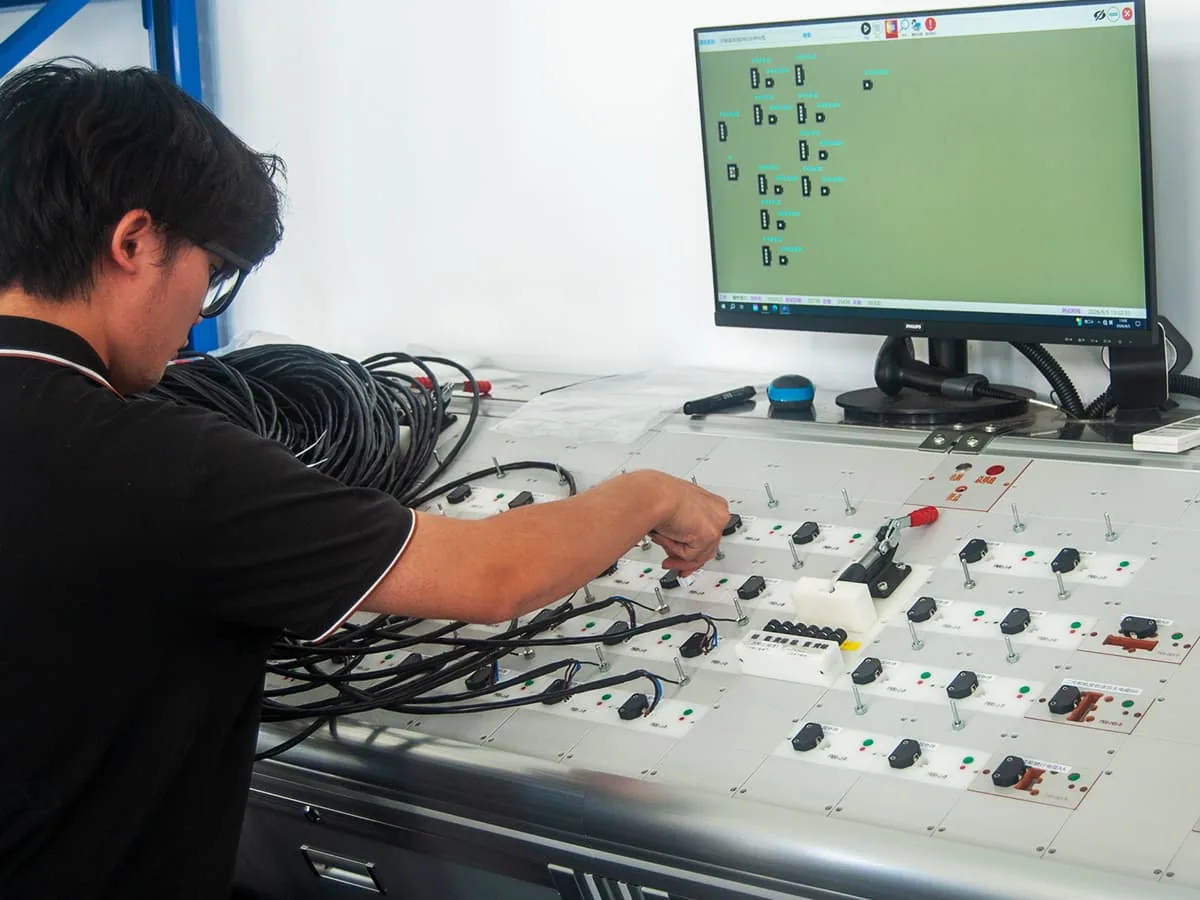
Two figures are worth writing down. When a certificate is revised for the transition, the additional documentation is assembled from records kept during production, which is why BST Express Elevator keeps per-unit test records on the 2,000 kg and 5,000 kg goods lifts as well as on the 400 kg passenger units. Reconstructing that evidence after shipment is the expensive path.
The second is the overlap itself. From the citation to the June 2029 cessation there are roughly 36 months in which both standards function, and a lift ordered in 2027 will very likely be serviced long after only one of them is presumption-bearing. BST Express Elevator states the standard version on the maintenance documentation for that reason, so the next owner inherits the same basis.
Where the configuration departs from the certificate annexes, the route is a written extension rather than a verbal assurance. That applies to unusually large cars, vertical sliding doors on goods lifts, and to fire-rated landing doors under EN 81-58, where the door certificate and the lift certificate are separate documents that both have to line up. The same applies to any option that changes a safety function, because that is where the EN ISO 8100 requirements bite hardest.
For projects shipping into eastern Europe, where an EU-notified certificate is often the entry condition rather than a preference, the sequence is worth fixing early. Importing elevators into eastern Europe turns on documents that are cheaper to correct before production than after arrival.
One clarification about scope, because it comes up in every enquiry that mentions the transition. EN ISO 8100 governs lifts. Escalators and moving walks sit under a different regime entirely, which is why escalators have their own type-examination position and are not covered by the Lifts Directive at all.
Frequently asked questions
Is EN 81-20 still valid in 2026?
Yes. EN 81-20:2020 remains the cited harmonised standard under the Lifts Directive and still confers presumption of conformity as of November 2026. It has not been withdrawn, and the 36-month transition that ends in June 2029 has not started, because it begins from the citation date.
Can a supplier claim compliance with EN ISO 8100 today?
A lift can be designed to EN ISO 8100-1:2026, and many new designs are. What a supplier cannot do is present that as presumption of conformity, because EN ISO 8100 has not been cited in the Official Journal. The claim has no legal assumption behind it until the citation is published.
When will EN ISO 8100 replace EN 81-20?
Legally, when the citation appears, and then fully in June 2029 when the presumption for the superseded standard ceases. The citation has not happened yet and no official date is set for it. Any page that gives a firm replacement date for 2026 is working from a national adoption date or from an error.
Does EN ISO 8100 apply to escalators and moving walks?
No. The EN ISO 8100 series covers lifts. Escalators and moving walks are outside the Lifts Directive and follow their own standards and their own certification path, which is a separate discussion from the one on this page.
Will an existing CE certificate have to be reissued?
Yes, in the ordinary case. Notified bodies have indicated that certificates issued against EN 81-20 and EN 81-50 will be revised and reissued as the transition proceeds, and where the coverage annexes change that may require extra documentation or supplementary testing. The cost and timing sit with whoever holds the certificate.
Does the new standard change shaft dimensions?
Not as requirements in themselves, but the building interface requirements move into an annex, so the clause numbers quoted in older tender documents no longer match. The dimensions still have to be satisfied; they are simply located elsewhere in the text. Check which document a drawing set was taken from.
What changes on 20 January 2027?
Machinery Regulation (EU) 2023/1230 applies, and the essential health and safety requirements that the Lifts Directive refers to change their source and wording. The standard transition and that date are separate events that land within months of each other, which is why the two get confused in summaries.
Are lifts excluded from the Machinery Regulation?
No. The Article 2 exclusions run from point (a) to point (q) and do not include lifts. A lift is regulated by its own directive, which refers to the Regulation’s safety requirements, so the Regulation reaches lifts indirectly and completely.
[…] Two dates matter for any order placed now. The successor standard, EN ISO 8100-1, was published on 17 June 2026 but has not yet been cited in the Official Journal, so the presumption of conformity for a lift still rests on EN 81-20:2020 and EN 81-50:2020. A quotation that leads with the new ISO number today is describing a document that cannot yet carry that presumption. The sequence that governs a file in progress, including three dates that are widely misquoted, is set out in the six dates that decide which document binds your file. […]
[…] Presumption is a narrower idea than approval. It shifts the burden: a manufacturer who follows the standard is presumed to meet the requirements, and a buyer or authority who disagrees has to show where the standard falls short. Citation dates move for lift standards in a way they have not for EN 115-1, which is why the lift standard changed number while the escalator standard did not. […]