

Two things decide an order to this region: whether the destination sits inside the European Union, and how early the buyer settles the conformity route. Import elevators to Eastern Europe is not one regulatory question but two, because the region splits between EU and EEA states where CE marking is mandatory, and non-EU states that run their own assessment.
- Why buyers import elevators to Eastern Europe from China
- Where CE applies when you import elevators to Eastern Europe
- Step 1 – Confirm the conformity route for the destination country
- Step 2 – Match the certificate to the exact model and configuration
- Step 3 – Fix voltage, frequency and shaft constraints before drawings
- Step 4 – Choose the port, the Incoterm and the transit plan
- Step 5 – Budget duty, VAT, the customs file and the installation plan
- The export document package
- Import elevators to Eastern Europe: common problems and fixes
- Frequently asked questions
Why Buyers Import Elevators to Eastern Europe from China
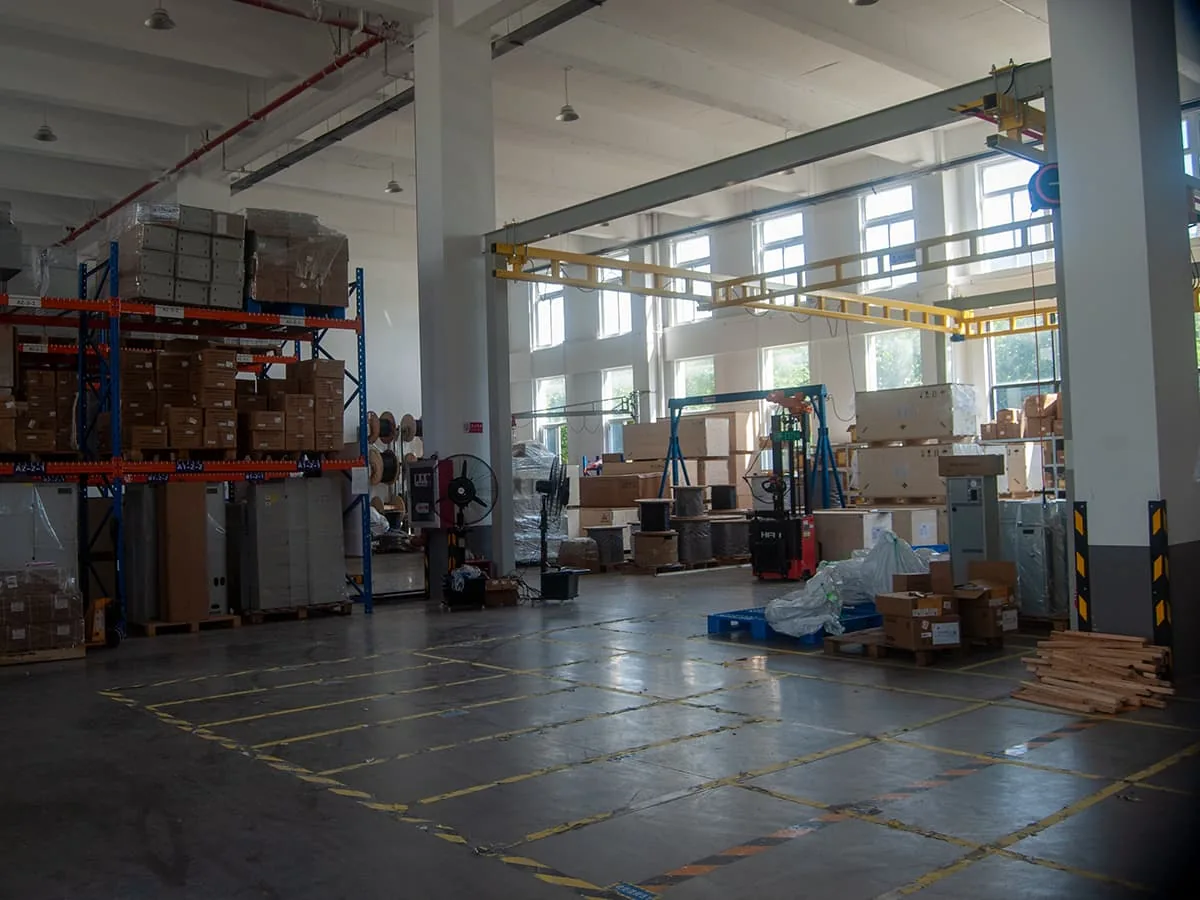
The building programme across Poland, Romania, Bulgaria and the Baltic states has been running at a pace that local supply cannot fully cover, and every buyer who imports elevators to Eastern Europe works against that same constraint. The same is true of the hotel, retail and logistics stock that was commissioned earlier and is now being replaced. which is the reason so many buyers now choose to import elevators to Eastern Europe,
A buyer who imports elevators to Eastern Europe from a Chinese factory is usually working against a fixed handover date, so the deciding factors are lead time, the completeness of the technical file and whether the supplier can supply the whole building rather than a single unit.
BST Express Elevator quotes Eastern European projects as a complete building rather than a unit count, so an order of 8 lifts with 5 different capacities is priced against one shaft drawing set instead of 5 separate ones.
Direct factory purchasing also changes the commercial shape of the order for anyone who plans to import elevators to Eastern Europe rather than buy from a local distributor. A factory that builds passenger, freight, panoramic, hospital and car elevators under one roof can quote a complete project and hold tolerances between units, which matters when a building needs eight lifts with different capacities but one shaft drawing set. BST Express Elevator builds all eight product families in a single Suzhou plant and handles mixed orders that combine several product families in one shipment.
BST Express Elevator, Suzhou, China holds the declaration of conformity and the notified body file for every export project, and the files for a 40HQ order of passenger and freight units are prepared before the box is booked rather than after.
The price gap against European or Japanese equipment is real, but it is not the reason a project succeeds, and it is not what makes it easy or hard to import elevators to Eastern Europe. What decides the outcome on an Eastern European job is whether the file that reaches the buyer matches the machine that was built, and whether the paperwork survives a customs examination in a country whose officials may never have seen that supplier’s documents before.
Where CE Applies When You Import Elevators to Eastern Europe
CE marking is mandatory for any lift placed on the market in the European Union’s 27 member states, and it also applies in the three EEA states – Iceland, Liechtenstein and Norway. Within the region that reaches Poland, Czechia, Slovakia, Hungary, Romania, Bulgaria, Slovenia, Croatia and the three Baltic states, and it is the first thing to settle before anyone imports elevators to Eastern Europe.
Once a lift carries a valid CE marking backed by the correct documentation, it moves between those markets without a further national approval, so a single file covers the whole EU and EEA side of the region. That is what makes it practical to import elevators to Eastern Europe against one certificate rather than one per country.
Outside the union the position changes, and that is where buyers who import elevators to Eastern Europe most often get a surprise, because the answer is no longer a single certificate. The Western Balkans and the states further east each run their own conformity assessment, and a CE certificate is not automatically accepted as the whole answer.
That does not make those markets closed; it makes them a case where the local importer has to say, before the deposit, exactly which document the customs authority will ask for. Buyers who import elevators to Eastern Europe on the non-EU side of the line should treat that sentence as the first question of the order rather than a detail for the freight forwarder.
Turkey sits beside the region and requires CE marking for customs clearance, and Great Britain continues to recognise CE marking backed by a notified body certificate indefinitely, with UKCA remaining an alternative rather than a condition of entry. Both are worth knowing by a buyer who plans to import elevators to Eastern Europe from a European head office. Both are worth knowing because projects in the region are often procured from a European head office that buys for several countries at once.
| Destination | Conformity route | What the buyer must settle first |
|---|---|---|
| EU member states in the region | CE marking under the Lifts Directive 2014/33/EU | The notified body number, the certificate scope and the standard edition cited |
| Iceland, Liechtenstein, Norway | CE marking under the same directive through the EEA | Same as the EU, plus the local installation sign-off route |
| Non-EU states in the region | National conformity assessment | The exact document set the local importer says customs will ask for |
| Turkey | CE marking required for customs clearance | Whether the project is registered under the importer’s own company |
| Great Britain | CE recognised indefinitely; UKCA remains an alternative | Which marking the tender documents actually name |
Step 1 – Confirm the Conformity Route for the Destination Country
Ask one question in writing before you import elevators to Eastern Europe, and get the answer on the importer’s own letterhead: which certificate, issued by whom, will the customs authority at this destination accept. Buyers who import elevators to Eastern Europe and skip this step usually discover it when the container is already on the water.
Where the destination is an EU state, the answer to that question is a CE marking supported by a notified body certificate for the lift type, which is what allows a buyer to import elevators to Eastern Europe into any member state, applied under the rules set out on the European Commission’s CE marking page.
The four-digit number on the certificate has to resolve in the European Commission’s NANDO register, the entry has to name the Lifts Directive, and the procedure printed on the certificate has to sit inside that body’s notification. A body can be notified for lifts and still not cover every procedure.
Where the destination is outside the union, the answer to the same question is normally a document list rather than a single certificate, which is the harder half of a decision to import elevators to Eastern Europe, and the list has to come from someone who files declarations at that border for a living. That is a conversation worth having with the local importer before the deposit rather than with a freight forwarder after shipment.
Step 2 – Match the Certificate to the Exact Model and Configuration
A CE certificate covers a design, not a purchase order, which is why the certificate review has to happen before you import elevators to Eastern Europe, which is the distinction that matters most to a buyer who plans to import elevators to Eastern Europe on a mixed-product order. The model reference, the machine-room or machine-room-less configuration, the capacity band and the rated speed all have to sit inside the scope printed on the certificate, and a certificate issued for a machine-room passenger lift cannot be used to claim conformity for a machine-room-less installation.
The standard edition matters as much as the model. EN 81-20 and EN 81-50, both published through CEN and CENELEC, were reissued in 2020, and the 2014 editions left their transition period on 27 July 2022, so a technical file that still refers to the 2014 editions is citing standards that are no longer current.
A certificate built on a withdrawn edition is the kind of document that passes an importer’s desk review and fails a tender. That is the second check a buyer runs before they plan to import elevators to Eastern Europe, because a tender will name the edition it expects.
Ask for the EU declaration of conformity as well as the certificate whenever you import elevators to Eastern Europe, because the two travel together. The declaration is drawn up and signed by the party placing the lift on the market, and together the two documents are what the installer has to keep available. The wider verification routine is set out under how to check a notified body for elevators, and the technical file itself is covered by the elevator CE certification guide.
Step 3 – Fix Voltage, Frequency and Shaft Constraints Before Drawings
Almost the whole region runs at 50 Hz, with 230 V single phase and 400 V three phase as the standard supply, so the frequency problem that costs money in other markets is smaller here. That removes one decision from an order to import elevators to Eastern Europe.
Voltage stability is not automatically solved by being in Europe: older industrial districts and buildings on long rural feeds can sag during peak hours, and a drive with a narrow input tolerance will trip on undervoltage protection.
The shaft is where the real money is on any order to import elevators to Eastern Europe. Eastern European projects frequently combine a new lift into an existing building, which means the shaft is what it is and the car has to be designed around it rather than the other way round. Settle the pit depth, the overhead clearance and the reaction loads against the actual building survey before the drawings are approved, because a car sized against a nominal shaft will not fit the real one.
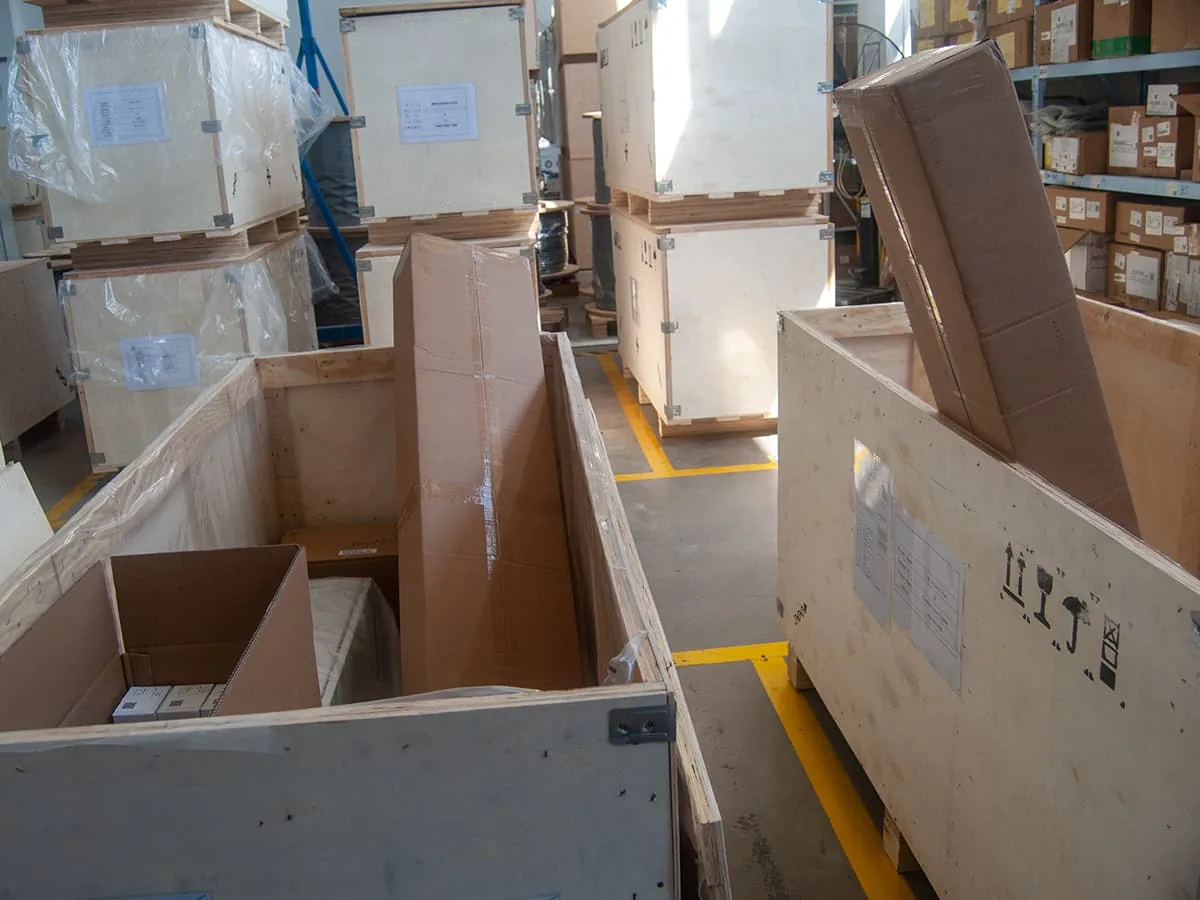
Car geometry itself is set at the design stage, which is why the shaft survey has to arrive before the drawings are approved rather than after a buyer imports elevators to Eastern Europe on a nominal figure. The elevator shaft dimensions and elevator car dimensions guides set out the standard sizes and how the car is fixed against the shaft. Energy efficiency is the other specification worth settling early: ISO 25745-2 classifies a lift from A to G, and green building tenders across the region increasingly ask for the class rather than for a general statement about efficiency.
Step 4 – Choose the Port, the Incoterm and the Transit Plan
Sea freight into the region reaches it through several different doors, and each one changes the landed plan for a buyer who imports elevators to Eastern Europe, and the choice of port is the first thing to settle with the importer. Polish projects usually land at Gdansk or Gdynia, Romanian projects at Constanta, Bulgarian projects at Burgas or Varna, and Baltic projects at Klaipeda or Riga. Adriatic gateways at Trieste and Koper serve the landlocked parts of the region and the projects that were quoted on a delivered basis.
Sailing frequency matters more than distance on an order to import elevators to Eastern Europe, because the schedule decides the float. A weekly service into the right port beats a fortnightly service that is nominally closer, and the choice decides how much float the project has if the factory slips. Confirm the carrier’s actual schedule rather than the transit table on a forwarder’s website.
The Incoterm decides who books the container, who insures the cargo and where risk passes, on an order to import elevators to Eastern Europe just as it does anywhere else, and it is worth agreeing before the deposit rather than at booking. FOB remains the most common term on lift orders because the buyer controls the carrier and the insurance, and because the buyer’s own forwarder can inspect the box before it leaves the terminal. Transit time is a planning figure rather than a commitment, and it should always be confirmed against the schedule.
Step 5 – Budget Duty, VAT, the Customs File and the Installation Plan
Duty depends on the tariff heading and on the origin declared, and value added tax applies on the landed value in the destination country, so anyone who imports elevators to Eastern Europe has to budget both before the equipment price is agreed. Buyer’s duty and VAT are the two lines that most often surprise a first order, because neither appears in the equipment quotation – a first order to import elevators to Eastern Europe often needs a landed-cost budget set aside separately for that reason.
The customs file is a document set rather than a single paper, and it is the part of an order to import elevators to Eastern Europe that is settled entirely in advance, and each document has a different author – a distinction that catches buyers who import elevators to Eastern Europe for the first time. The invoice, the packing list and the bill of lading have to carry the same goods description, because a mismatch between them is the most common single cause of a customs hold. The certificate of origin decides whether a preferential rate applies at all.
Installation is the part that converts equipment into a working lift, and it is the last thing a buyer who imports elevators to Eastern Europe has to arrange. The practical choice is between a local contractor working to supplied drawings with remote engineering support, a factory crew travelling for the first units and training the local team, or a commissioning visit at the end. Which of the three works is a question to settle before a buyer imports elevators to Eastern Europe on a delivery date.
Whichever arrangement is used, spare parts should travel in the same container rather than in a later air shipment, because the failures that occur first are the ones that cost the most to replace at short notice. The commercial stages that run before any of this are set out under how to buy elevators from China. The same applies on the first order to import elevators to Eastern Europe, where a service visit is measured in days rather than hours.
The Export Document Package
A lift shipment travels with a document set, and each document has a different author and a different purpose. The customs broker works from that set, and a single missing page stops the container at the port of entry however well the goods were packed. It is the part of an order to import elevators to Eastern Europe that is finished long before the goods move.
| Document | Who issues it | What it is used for |
|---|---|---|
| Commercial invoice | Supplier | Value declared to customs and payment against the agreed terms |
| Packing list | Supplier | Line-by-line contents, weights and package numbers for unloading |
| Bill of lading | Carrier or forwarder | Contract of carriage and document of title, released against payment |
| Certificate of origin | Chamber of commerce or authority | Preferential duty where a trade agreement applies |
| EU declaration of conformity | The party placing the lift on the market | The signed statement that the lift meets the directive |
| Notified body certificate | The notified body | Evidence behind the CE marking for the lift type |
| Insurance certificate | Buyer’s insurer | Cover from the point risk passes under the agreed Incoterm |
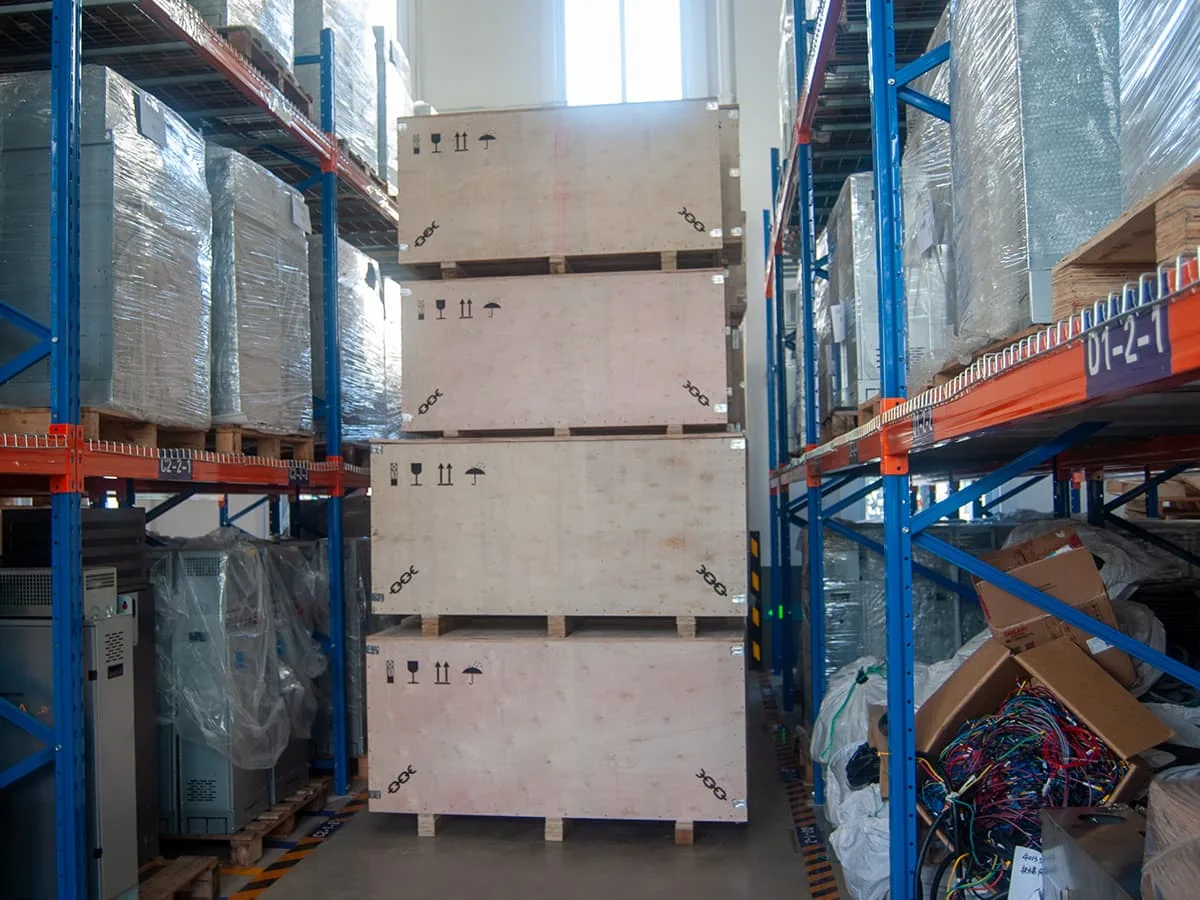
Send the full set before the container sails, which is the habit that separates a clean arrival from a customs hold for anyone importing elevators to Eastern Europe, and it costs nothing at the point it is done.
Amendments requested after departure are slow, and a customs broker cannot fix an invoice description from the quayside. The same discipline applies to the marks on the goods themselves: a shipping mark is read once at the port, while the nameplate has to identify the machine for its whole service life. Packing and packing lists are covered in detail under elevator shipping and container loading. It is the cheapest insurance available to anyone who plans to import elevators to Eastern Europe.
Import Elevators to Eastern Europe: Common Problems and Fixes
The same handful of problems accounts for most of the delays on a project that imports elevators to Eastern Europe, and every one of them is cheaper to prevent than to solve. and every one of them is cheaper to prevent than to solve.
- The certificate covers a different configuration from the one ordered. Ask for the certificate scope before the deposit, not at handover.
- The technical file cites a withdrawn standard edition. Confirm EN 81-20 and EN 81-50 are referenced in their 2020 editions.
- The shaft was measured against a drawing rather than a survey. Fix pit depth and overhead against the building itself.
- Goods descriptions differ between invoice, packing list and bill of lading. Reconcile all three before the goods are released for shipment.
- Spares were ordered after the first fault. Put a first parts kit in the same container.
None of these is a technical problem, and none of them is specific to the region. All of them are sequencing problems, which is why buyers who import elevators to Eastern Europe successfully tend to be the ones who settle the questions in the order above rather than in the order they arrive.
To price a specific project, send the building height, the number of stops, the capacity, the destination country and the port to the BST Express Elevator team, and the reply covers an order to import elevators to Eastern Europe in one document, which returns a dimensional drawing, a specification and a factory-direct quotation with the shipping terms written out.
Frequently Asked Questions
Does CE marking cover every Eastern European country?
No. CE marking is mandatory in the EU’s 27 member states and in the three EEA states, which in this region reaches Poland, Czechia, Slovakia, Hungary, Romania, Bulgaria, Slovenia, Croatia and the Baltic states. Non-EU states in the region run their own conformity assessment, so the destination has to be confirmed before the deposit. which is the answer that decides whether a buyer can import elevators to Eastern Europe on one file or has to treat the destination separately,
Which lift standards do Eastern European projects ask for?
EN 81-20 and EN 81-50 in their 2020 editions, supported by the Lifts Directive 2014/33/EU. The 2014 editions left their transition period on 27 July 2022, so a file that still cites them is referencing withdrawn standards.
What voltage and frequency should a lift for the region be built for?
50 Hz, with 230 V single phase and 400 V three phase as the standard supply. The issue that still costs money is voltage stability rather than frequency, so the tolerance range should be agreed in writing before the drive is specified.
Which ports do shipments usually arrive through?
Gdansk and Gdynia for Polish projects, Constanta for Romania, Burgas or Varna for Bulgaria, and Klaipeda or Riga for the Baltic states. Adriatic gateways at Trieste and Koper serve the landlocked parts of the region.
How long does an order take?
Production of a standard passenger unit normally runs four to eight weeks from approved drawings and deposit, and the sea leg then depends on the port and the number of transhipments. These are planning figures rather than commitments, and every booking should be confirmed against the carrier’s actual schedule. and that is the schedule a buyer works to when they import elevators to Eastern Europe,
An order to import elevators to Eastern Europe is decided by two documents: the one that proves the lift is conformant, and the one that proves it was built to the drawing the buyer approved. Settle both before the deposit and the rest of the sequence is ordinary export work. BST Express Elevator, Suzhou, China prepares the declaration of conformity and the notified body file for every export project, so the documents that reach the buyer describe the lift that was actually built.
[…] the paperwork is not the same. Neither question is settled by the certificate alone, which is why how CE applies across Eastern Europe is worth reading before a tender names the standard […]
[…] in Suzhou before shipment. The route is also the part that changes between destinations, which is the regional difference that catches buyers out when a project spans more than one […]
[…] against the lift serial number before the balance is paid. What that set has to prove depends on where CE applies and where it does not at the […]
[…] container of elevators from China to Africa is loaded, not while it sits in a queue. Buyers face the same question for Eastern Europe, where the line between an EU destination and a non-EU one changes the paperwork rather than the […]
[…] and it is covered in more detail under notified body for elevators and in the regional file for eastern Europe. Price levels for the machine-room-less configuration are compared in elevator price in […]