


To import elevators from China to Africa successfully, two things decide the outcome: the factory you choose and the route the equipment takes to site. Chinese manufacturers supply passenger, freight, hospital, panoramic and escalator units to projects across West, East, Southern and North Africa, and the price gap against European OEMs is usually measured in multiples rather than percentages. Freight and certification are where that saving can quietly disappear.
This guide sets out the sequence we use with African buyers – factory selection, certification, shipping, customs documents, installation and spare parts – and the points where projects most often lose time. Read it alongside our six-step guide to buying elevators from China, which covers the commercial terms in full. Between them, the two run from first enquiry to commissioning for a buyer bringing elevators from China to Africa.
Why African Projects Buy from Chinese Elevator Manufacturers
The economics are straightforward. A CE-certified passenger lift built in Suzhou costs a fraction of the same capacity from a European or Japanese OEM, and the equipment is built to the same EN 81 and ISO 8100 design benchmarks. For a project that is buying ten lifts rather than one, that gap is the difference between doing the building and not doing it. It is also why so many developers buy elevators from China to Africa in series rather than one unit at a time.
What has changed over the last decade is availability. Spare parts, engineering drawings and installation support are now part of the package rather than an afterthought, and buyers in Nairobi, Lagos or Accra can reach a supplier on the same working day. The remaining variables are the ones this guide covers: the factory behind the quotation, the documents that travel with the container, and the terms that decide who fixes a problem in year three. Every buyer of elevators from China to Africa starts with the same advantage and the same three risks.
Import Elevators from China to Africa: What Changes by Market
Africa is not one market, and buyers who import elevators from China to Africa quickly learn that the port, the power supply and the local approval route differ by region. The lift itself rarely changes; the paperwork and the site conditions do. Budget for that variation before the first container of elevators from China to Africa is loaded, not while it sits in a queue. Buyers face the same question for Eastern Europe, where the line between an EU destination and a non-EU one changes the paperwork rather than the lift.
| Region | Main ports of entry | What usually differs |
|---|---|---|
| West Africa | Lagos (Apapa, Tin Can), Tema, Abidjan, Dakar, Cotonou | The busiest lift market on the continent. Expect a conformity assessment before clearance and plan for the longest customs queue of the four regions. |
| East Africa | Mombasa, Dar es Salaam, Djibouti, Port Sudan | Strong demand from commercial and residential towers. Inland delivery to Kenya, Uganda, Rwanda and Ethiopia adds road time, so allow a longer window. |
| Southern Africa | Durban, Cape Town, Walvis Bay, Beira | Tighter product standards than most, with a mandatory approval route for lifts. Budget both time and a local representative. |
| North Africa | Alexandria, Port Said, Casablanca, Tunis, Algiers | Shortest shipping lane to China and the most European-influenced certification practice. Documentation is checked closely against the EN 81 series. |
Two practical consequences follow. First, quote the destination port before the price is fixed – a CIF Lagos figure and a CIF Mombasa figure differ enough to change a budget. Second, check the incoming supply voltage against the specification, because a lift ordered for 380 V will not run happily on a 415 V supply without the right transformer. Buyers who import elevators from China to Africa regularly lose a week at commissioning to exactly this detail. It is the simplest thing on this page to fix, and it costs nothing to fix before you buy elevators from China to Africa.
Step 1 – Choose a Genuine Factory, Not a Reseller
The first decision is also the one hardest to reverse. A trading company can quote lower on paper and still leave you without drawings, spare parts or anyone who knows how the controller was configured. Ask for three things, in this order. First-time buyers who purchase elevators from China to Africa tend to skip this step, because a trading company looks identical on a quotation.
A factory audit trail. Company registration, factory address and a video walkthrough of the production floor, not a stock photo gallery. Any serious supplier will provide this within a day. A reference project on your continent. Not the brand name of a client, but the city, the capacity and the year.
The name of the person who signs the drawings. If drawings come from an unnamed office, the engineering is being outsourced, and every technical question will be answered slowly. That distinction matters more when you buy elevators from China to Africa than in a domestic purchase, where the supplier is a phone call away.
Where does a factory-direct supplier make more sense than a global brand? When the shaft is standard, the documents are in order and you expect to be maintaining the lifts yourself five years from now, a specialist factory is usually the sounder choice. Where a project needs a global service network written into the contract, a major OEM earns its premium.
The mistake is to compare the two on price alone and then expect the service coverage of one with the price of the other. Buyers who purchase elevators from China to Africa are making the first of those two choices, and it should be a deliberate one.
Step 2 – Confirm Certification Before the Deposit
Certification is the part of the purchase that cannot be fixed after shipment. A CE mark on a brochure means nothing; what matters is the certificate itself, the notified body that issued it and the capacity range it covers. Ask for the certificate number and check it against the issuing body – it takes ten minutes and has ended more than one negotiation – worth doing long before you buy elevators from China to Africa at volume. A field-by-field reading of the register entry behind that number is set out under the notified body record behind the number.
Most countries in Africa work from the EN 81 series through their own adoption, and several add a national conformity assessment that has to be completed before the container clears. The exact route depends on the destination, so confirm it with your local import agent while the order is still being negotiated, not when the vessel is three days out. Our elevator CE certification guide explains what each document proves and which one importers most often receive instead of the real thing – a distinction worth understanding before you buy elevators from China to Africa.
Three documents should be in the file before you import elevators from China to Africa at volume: the type examination certificate for the exact model, the declaration of conformity naming your order, and the test report from the factory load test. If a supplier cannot produce the third one, the unit was never tested under full load – and that is not a documentation problem, it is an engineering one. Those three documents are what a customs agent asks for first, and they are what let elevators from China to Africa clear without a hold at the port.
Step 3 – Plan Shipping, Ports and Incoterms
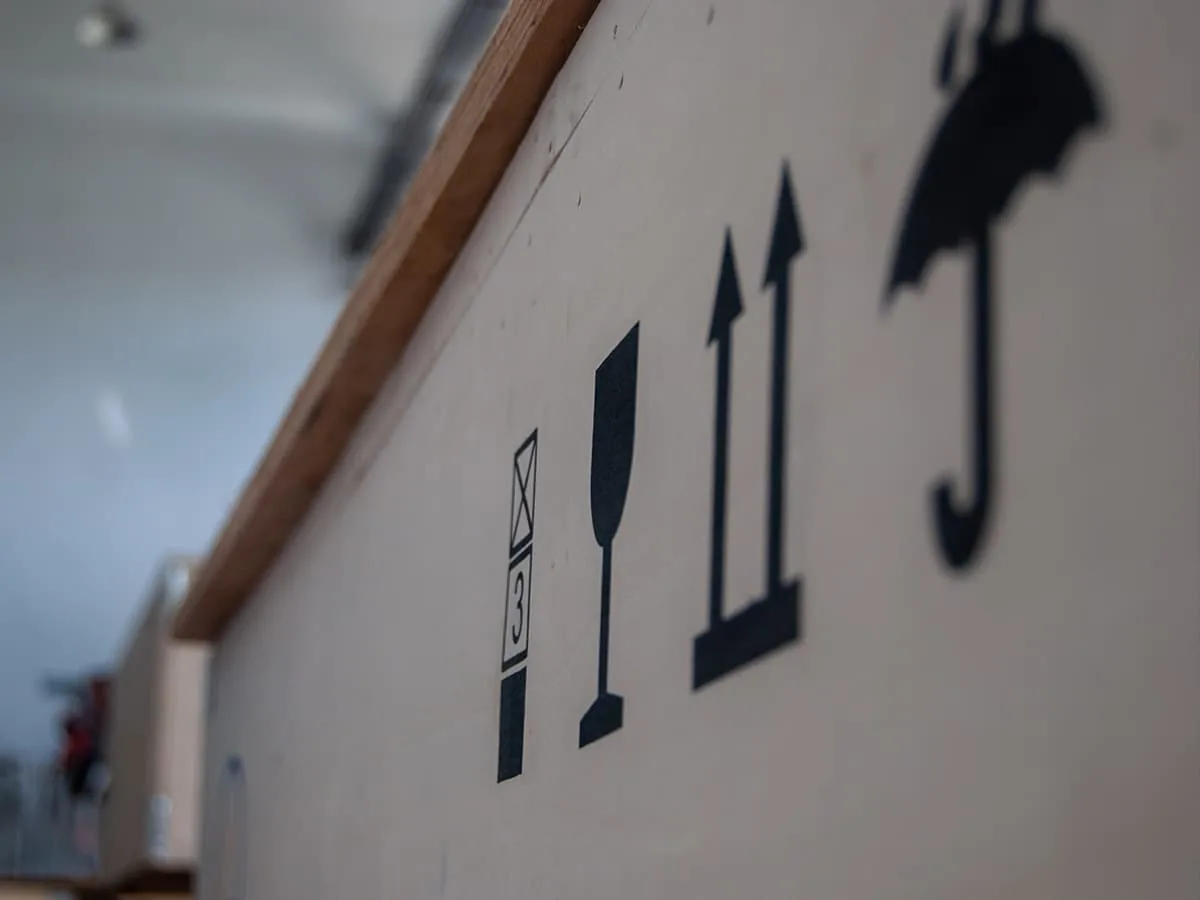
Elevators from China to Africa travel badly if they are packed as an afterthought. Guide rails come in lengths that fit a 40-foot container, the machine and controller ship as separate cases, and the car panels are the parts that arrive damaged when they are not braced. Inspect the packing list against the container before the vessel sails, and photograph the loading – it is the only evidence that exists if a claim is needed.
Packing is not a detail to delegate when you buy elevators from China to Africa; it is the point at which the money is protected. Our guide to loading a lift into a shipping container sets out the crate sizes, the lashing pattern and what to photograph before the doors close.
Freight is the other half of that cost. Surcharges on the China to Africa lanes are charged on the loading date, so a container loaded one day later can cost USD 500 per TEU more, and the October 2026 surcharge figures with what they add per elevator set out the amounts by carrier and by port.
| Incoterm | Who arranges freight | Risk passes | Best for |
|---|---|---|---|
| FOB | You | When goods are on board in China | Buyers with their own freight forwarder and customs agent |
| CIF | Supplier | At the destination port | First-time importers who want one price to the port |
| DAP | Supplier | At the named site | Projects where the site is inland and the route is complex |
| DDP | Supplier | After import clearance | Rarely practical – clearance and duty stay your responsibility in most markets |
One note on DDP. Where a supplier offers it, read the clause carefully: duty and clearance remain the importer of record’s obligation in most African markets, and an agreement that shifts them to the supplier usually hides a delay or a cost somewhere else. When you import elevators from China to Africa, the cleanest structure is FOB plus a forwarder you trust, or CIF to the port with a local agent on standby.
Shipping time for elevators from China to Africa runs roughly 25-40 days to West Africa, 20-30 days to East Africa and 25-35 days to Southern Africa, before customs. Add the clearance queue, the road leg and the site readiness check, and a realistic door-to-site window sits between two and four months. Projects that plan for six weeks and are quoted eight weeks of vessel time are the ones that pay for storage at the port. A two-week buffer is the cheapest insurance available to anyone planning to buy elevators from China to Africa.
Step 4 – Plan Installation and After-Sales
Installation is where a good purchase becomes a working lift, and for elevators from China to Africa it is the part buyers most often leave unplanned. Three models work, and the choice should be made before the order rather than after the container arrives.
| Model | How it works | Best fit |
|---|---|---|
| Supplier team travels to site | Our engineers complete the installation and commission the unit with your electricians assisting. | First lifts in a new market, or where no trained crew exists locally. |
| Local crew, remote supervision | Your fitters install to our drawings; our engineers review progress by video and sign off the commissioning. | Buyers who already install lifts and want to build the capability in-house. |
| Train the local team, then hand over | We commission the first units and train your technicians on the controller, the door operator and the safety circuits. | Developers installing a series of lifts across several buildings. |
After-sales is the term that decides the cost of year three. Agree the spare parts list before shipment – a door operator, a controller board, guide shoe inserts and a set of landing door locks cover most of what fails first – and put the response time in writing. Buyers who import elevators from China to Africa without a spare parts agreement usually discover the cost of air freight on a single board the hard way.
Our own freight elevator and passenger elevator packages ship with a commissioning manual, a wiring diagram set and a recommended spares list. For transit and shopping-centre projects, our escalator range follows the same export documentation. For elevators from China to Africa, that package is prepared before the container is booked, not after. How the factory behind it is selected is covered in the guide to freight elevator manufacturers in China.
The Export Document Package
Missing paperwork costs more time than missing parts. This is the set that should travel with a lift order, and the set a customs agent will ask for. It is also the set that separates a supplier who has exported before from one who has not, and it matters from the moment you decide to buy elevators from China to Africa.
- Commercial invoice and packing list, with HS codes for each case
- Bill of lading, or the original set released against payment where the terms require it
- Certificate of origin, issued and legalised if your market requires legalisation
- Type examination certificate and declaration of conformity for the model supplied
- Factory test report, including the full-load test on the completed unit
- Installation drawings, wiring diagrams and the controller manual
- Recommended spare parts list with part numbers
- Fumigation certificate or ISPM 15 marking on wooden packing
- Insurance certificate, where the term of sale includes it
- A named contact for after-sales, with a response commitment in writing
Ask for the full set in PDF before the container is loaded, and read the packing list against it. When you import elevators from China to Africa, a missing legalisation stamp on the certificate of origin is enough to hold a container at the port for a week, and storage charges are not a negotiation.
Import Elevators from China to Africa: Common Problems and Fixes
None of these are unusual, and all of them are cheaper to prevent than to solve. They are also the problems that delay elevators from China to Africa most often, in roughly this order of frequency.
| Problem | How it shows up | How to prevent it |
|---|---|---|
| Wrong voltage specification | The lift runs but the drive faults at peak hours | State the incoming supply and its normal fluctuation range in the order |
| Shaft built to the wrong dimensions | Equipment arrives and will not fit the opening | Freeze the shaft, pit and headroom on a stamped drawing before the formwork |
| Certification does not cover the model | Customs or the local authority rejects the file | Verify the certificate number and the capacity range before the deposit |
| Missing spare parts on arrival | A single board takes two weeks to replace | Order the recommended spares with the lift, in the same container |
| Concrete pad and power not ready | Commissioning slips by a month and labour is idle | Send the site readiness checklist back signed before the vessel sails |
| Packing damage to car panels | Cosmetic repairs and a delayed handover | Inspect the loading, photograph each case and claim within the window |
The pattern is consistent: delays in this trade come from information that arrived late, not from equipment that arrived broken. A supplier who asks about voltage, shaft drawings and site readiness before quoting is telling you something about how the order will go. Ask for that site readiness checklist before you buy elevators from China to Africa, and treat a vague answer as an answer.
Power Supply and Site Conditions
Most African markets run on 220-240 V at 50 Hz for domestic supply and 380-415 V three-phase for machinery, with voltage that can move further during the day than the nominal figure suggests. A lift is a motor-driven machine with an inverter at its centre, and the inverter is the part that notices. Confirm the range in writing before you buy elevators from China to Africa, and pass it to the drive supplier as a specification line.
Three precautions cover most of the risk. Specify a drive with a wide input tolerance and confirm the range in writing, and settle the elevator power supply against the grid the building actually sits on. Add an automatic voltage stabiliser where the supply is known to swing, and size it to the motor rather than to the building load. And plan for a standby or generator feed on at least one lift in the bank, because a building with no working lift during an outage is a building with a complaint.
Environment matters too. Coastal sites from Lagos to Mombasa need a higher corrosion specification on the car and the landing doors, and dusty inland sites benefit from a controller cabinet with filtered ventilation. Both are specification decisions, and both are cheap at the order stage and expensive afterwards. When you import elevators from China to Africa, state the site conditions – coast, altitude, dust, temperature – on the enquiry form. It is the cheapest line to get right when you buy elevators from China to Africa.
Frequently Asked Questions
How long does it take to import elevators from China to Africa? Allow six to twelve weeks from deposit to arrival at the port, depending on the route, plus one to three weeks of clearance and inland transport. Shanghai to Mombasa is typically around three weeks at sea; Shanghai to Lagos runs longer.
Which Incoterm should I use? FOB if you have a freight forwarder and a customs agent you trust. CIF if you want a single price to the destination port and plan to clear it yourself. DDP sounds convenient but leaves the importer of record obligations in place, so read the clause carefully.
Do I need CE certification for an elevator in Africa? Most markets work from the EN 81 series through their own adoption, and several add a national conformity assessment. The certificate itself matters more than the mark, so verify the type examination certificate and its capacity range before paying a deposit.
Can I install the lift with my own team? Yes. Many of our African buyers install to our drawings with remote supervision, and we commission the finished unit. Where no experienced crew exists, our engineers travel to site and train the local technicians on the first units.
What spare parts should I order with the lift? A door operator, a controller board, guide shoe inserts and a set of landing door locks cover the failures that occur first. Shipping them in the same container costs a fraction of air freight later.
These figures follow the design benchmarks published by the standards bodies: the ISO 8100 series for lift design, EN 81-20 and EN 81-50 through CEN-CENELEC in Europe, and ASME A17.1 in the United States. Cost expectations are set out in our elevator price in China guide, and buyers comparing regions will find the same sequence applied to Southeast Asia, the Middle East and South Asia. Buyers working on Latin America projects can follow the same sequence in our guide to importing elevators to Mexico and Latin America.
Send us the shaft drawings, the number of stops, the capacity you need and the destination port, and we return a dimensional drawing, a specification and a factory-direct quotation with the shipping terms spelled out. We build passenger, freight, hospital, panoramic, escalator and moving walk units as a CE-certified elevator manufacturer in China, and every unit runs under full load on the test bench in Suzhou before it is packed. Ready to price your project? Send your drawings to our export team.
[…] Escalators and ICC Incoterms rules. Buyers shipping to Africa can follow the same six steps in our guide to importing elevators from China to Africa. Ready to start? Send your requirements to our export […]
[…] actual schedule. Buyers working a specific corridor can compare the sequence against the import guide for Africa, which follows the same stages from the letter of credit to the arrival […]
[…] decide more than freight, and the full comparison for an African project sits in importing elevators from China to Africa. The line-item structure that keeps freight and equipment on separate rows is in the elevator […]