


To import elevators to Mexico from China, six decisions decide the outcome: the factory, the certification your market accepts, the power supply the building actually has, the shipping route, the customs file, and the installation plan. BST Express Elevator in Suzhou supplies CE-certified passenger, freight, hospital, panoramic and escalator units to Latin American projects on both 60 Hz and 50 Hz supply, with three to five weeks at sea to a Pacific port.
Latin America is not one market, and treating it as one is the most expensive mistake on the import side. Mexico runs a NOM-based conformity system and buys heavily against ASME A17.1 practice along the northern border. Chile, Argentina, Uruguay and Paraguay run 50 Hz, which changes the motor, the drive parameters and the spare parts list.
Colombia, Peru, Ecuador, Brazil, Central America and the Caribbean run 60 Hz. Get the frequency wrong and a container of equipment arrives that cannot be started – the most expensive lesson available to anyone who wants to import elevators to Mexico without checking the site first.
This guide follows the sequence used with buyers who import elevators to Mexico, Colombia, Peru, Chile and Panama, and it flags the points that differ from a European or Middle Eastern order. For the commercial terms behind these steps, read the seven-step guide to buying elevators from China; for the certification route, the elevator CE certification breakdown.
Why Latin American Projects Import Elevators from China
The economics are not subtle. A CE-certified passenger lift built by BST Express Elevator in Suzhou lands at a fraction of the delivered price of the same capacity from a European or Japanese OEM, and the gap is usually measured in multiples rather than percentages. Latin American demand is concentrated in mid-rise residential, hotel, hospital and shopping-centre work, which is exactly the band where Chinese factories are most efficient.
Local supply is thin. Brazil has domestic manufacturing behind import barriers, and Mexico assembles some equipment for the northern industrial belt, but Central America, the Caribbean, Ecuador, Peru and Bolivia are served almost entirely by imports. That leaves the buyer comparing a European OEM, a Chinese factory, or a regional reseller who marks up a Chinese unit – three very different levels of control over a project that has to import elevators to Mexico and keep it running.
Delivery is the second reason. Standard passenger and freight units are typically ready for shipment in four to eight weeks from drawing approval. To Manzanillo or Lazaro Cardenas the sea leg runs roughly three weeks; Callao, San Antonio and Buenos Aires run longer. A buyer who plans to import elevators to Mexico and the rest of the region is usually safe starting the process three months before handover.
Import Elevators to Mexico and Latin America: What Changes by Market
Mexico is the most regulated market in the region and the one where paperwork moves slowest. The Secretaria de Economia administers a mandatory standards system, the NOM series, published in the Diario Oficial de la Federacion, and building departments in the northern states frequently expect ASME A17.1 practice alongside it. Electrical supply is 127 V single phase and 220 V three phase at 60 Hz, and the conformity route rather than the price is the first thing to confirm when you import elevators to Mexico.
Central America and the Caribbean follow the same 60 Hz pattern with 110-240 V, and most of the region is served by transhipment through Panama, Kingston or Miami rather than direct calls, so a buyer planning to import elevators to Mexico should confirm the final port rather than the regional hub. Peru, Ecuador and Colombia also run 60 Hz. Peru sits in a high seismic zone, so guide rail brackets, counterweight retention and machine fixing have to be engineered for seismic loading rather than copied from a standard layout.
The Southern Cone is where the frequency changes. Chile, Argentina, Uruguay, Bolivia and Paraguay operate at 50 Hz, and Chile combines that with strict seismic design requirements. Brazil is 60 Hz but adds INMETRO conformity marking for products in scope. A single project template cannot be reused across the region, and the table below is the first checkpoint for anyone about to import elevators to Mexico or its neighbours.
| Market | Supply | Frequency | Note |
|---|---|---|---|
| Mexico | 127 / 220 V | 60 Hz | NOM system, ASME practice in the north |
| Panama, Costa Rica, Guatemala | 120 / 240 V | 60 Hz | Transhipment hub for the region |
| Dominican Republic, Honduras | 110 / 220 V | 60 Hz | Voltage sag is common |
| Colombia, Ecuador | 110-120 / 220 V | 60 Hz | Two domestic voltages per country |
| Peru | 220 V | 60 Hz | Seismic design required |
| Brazil | 127 / 220 V | 60 Hz | INMETRO marking in scope |
| Bolivia | 220 V | 50 Hz | Altitude affects motor cooling |
| Chile, Argentina, Uruguay, Paraguay | 220 V | 50 Hz | Chile adds seismic rules |
The table is a starting point, not site data. Confirm the voltage and frequency from the utility bill of the actual building, not from a country profile — the five checks behind an elevator power supply apply to Mexico the same way they apply anywhere else. Multi-unit developments in the same city can be fed differently, and hotels with standby generators add a second source to design around.
Step 1 – Choose a Genuine Factory, Not a Reseller
The first decision is the hardest to reverse. A trading company can quote lower on paper and still leave a buyer without drawings, spare parts or a warranty contact two years later, because the paperwork trail runs to a party that never built the lift.
Five checks separate a factory from a reseller, and they matter most when a project has to import elevators to Mexico without an engineer on the buyer’s side. Production video on a live call showing the assembly area, the control cabinet line and the test tower. A business licence matching the name on the quotation.
Component suppliers named by brand – controller, door operator, traction machine – rather than described as high quality. A reference installation in the region that can be called. And a serial number format that can be checked against the units delivered on a previous order, which is how a buyer who intends to import elevators to Mexico confirms that the reference exists.
Ask what happens to the drawings. A factory issues approved shop drawings, wiring diagrams and a layout marked with pit depth, overhead clearance and reaction loads. A reseller forwards something produced elsewhere and cannot revise it – a supplier in that position should not be trusted to import elevators to Mexico on your behalf.
Step 2 – Confirm Certification and Market Access Before the Deposit
Certification is the part of the purchase that cannot be fixed after shipment, and it is the first thing a serious buyer checks before deciding to import elevators to Mexico from any supplier. A CE mark printed on a brochure means nothing on its own; what counts is a type examination certificate issued by a notified body for a specific model, quoting current standards.
The European route runs through the EN 81-20 and EN 81-50 series, published by CEN-CENELEC, and assessed by a notified body whose scope still covers lifts for Directive 2014/33/EU. Verify the body on the EU register, verify that the certificate names the model being bought, and verify that the Declaration of Conformity quotes the same certificate number.
Where the project sits in the northern Mexican industrial belt, expect the consultant to ask for ASME A17.1 compliance as well. What each of those three checks is really testing, and what it does not cover, is set out in the guide to what a notified body actually certifies.
Then check national market access. Mexico requires conformity assessment for products in scope of its NOM standards, administered by the Secretaria de Economia. Brazil requires INMETRO marking for regulated products. Neither is satisfied by a CE certificate alone, and neither can be obtained retroactively once the equipment has sailed – which is why market access belongs before the deposit on any project that will import elevators to Mexico.
One more date matters if any component carries machinery. Regulation (EU) 2023/1230 replaces the Machinery Directive from 20 January 2027, which affects how components are certified for European resale. It has no direct effect on Latin American projects, but a supplier that is only now discovering it is a supplier with weak regulatory tracking. The documents that let you import elevators to Mexico are issued against a model, not against an order, so every check belongs before the deposit.
Step 3 – Match the Power Supply, Frequency and Voltage Stability
This is the step that separates a smooth start-up from a warranty dispute, and it is the one most often skipped because the quotation form asks for capacity and travel but not for frequency. When you import elevators to Mexico, the frequency on the utility bill matters as much as the travel height.
A 60 Hz motor running on 50 Hz supply loses roughly a sixth of its speed, and a drive programmed for one frequency will not deliver the rated travel speed on the other. Motors, drives, brake coils, door operators and even speed governors are frequency-specific. The order has to state the destination country, the voltage, the number of phases, the frequency and the rated capacity, not just the building height – a requirement on every project that would import elevators to Mexico or anywhere else in the region.
Voltage stability is the second half of the problem. In parts of the Caribbean, Central America and the Andean region, supply can sag well below nominal during peak hours, and a lift that trips on undervoltage protection is a lift that strands passengers. For those sites, specify a voltage tolerance range, add a phase failure relay, and consider an automatic voltage regulator on the control circuit.
Where a standby generator exists, confirm its capacity covers the starting current of the traction machine. BST Express Elevator sizes the drive and the protection for the supply the buyer reports, which is why the site data sheet matters more than the brochure specification.
Step 4 – Plan Shipping, Ports and Incoterms
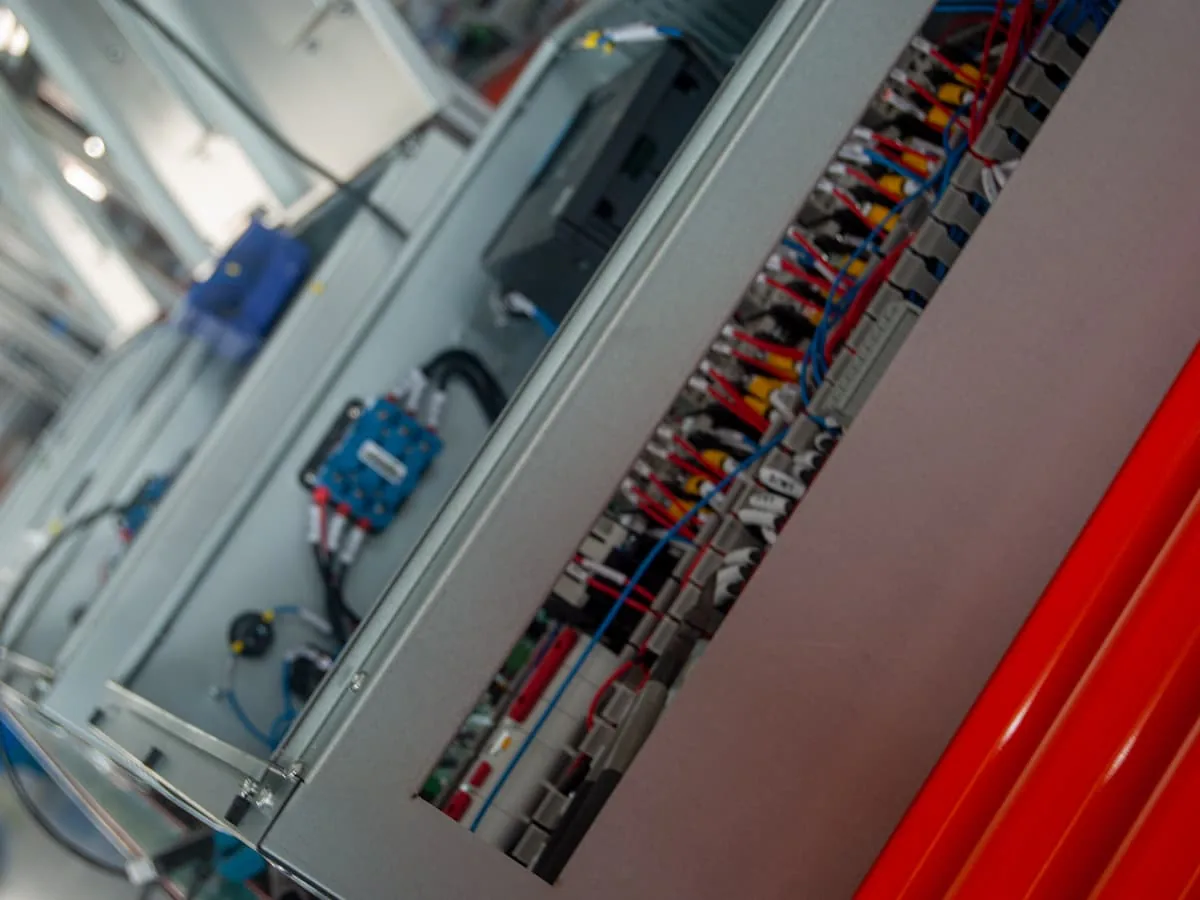
Elevators ship badly when packing is treated as an afterthought, and packing is the part of a shipment that buyers who import elevators to Mexico most often underestimate. Guide rails are cut to fit the internal length of a 40-foot high cube, which is a little over twelve metres, and every crate has to be braced against the loads that come with a Pacific crossing and a road leg on a mountain route – the leg that decides whether equipment ordered to import elevators to Mexico arrives fit to install.
Mexican receivers use Manzanillo and Lazaro Cardenas on the Pacific side, and Veracruz or Altamira on the Gulf side. Central American and Caribbean buyers usually tranship through Balboa, Colon or Kingston. South American west coast cargo lands at Callao in Peru and San Antonio or Valparaiso in Chile; Atlantic side cargo lands at Cartagena or Buenaventura in Colombia, Santos in Brazil and Buenos Aires in Argentina. Ask for the transit time to the actual port of discharge, not to the region, when you import elevators to Mexico or the wider continent.
On terms, FOB suits a buyer with a forwarder and a customs broker already appointed. CIF gives one price to the destination port and leaves clearance to the importer. DDP is where buyers lose control: the named importer of record is still the buyer, and the duty estimate inside the price is rarely reconcilable afterwards, which is why most experienced buyers who import elevators to Mexico keep the clearance in their own name.
Wooden packing has its own rule. Most Latin American countries enforce ISPM 15 for solid wood packaging, so crates need heat treatment or fumigation and the IPPC stamp on each piece. A container rejected at the port for unmarked wood costs more than the treatment ever would, and it is the fastest way to turn a plan to import elevators to Mexico into a demurrage bill. Crate dimensions, bracing and the closing document set are covered in our guide to the elevator shipping container stage.
Step 5 – Budget Duties, IVA and the Customs File
Landed cost is not the price on the proforma invoice, and the difference is large enough to change a project’s viability – most of all for a buyer who has never had to import elevators to Mexico before.
Mexico charges a general import duty by tariff heading plus value added tax, and the importer has to be registered before the first shipment. BST Express Elevator issues the invoice, packing list and certificate of origin in the format each market requires.
Registration runs through the tax authority, which issues the RFC and the importer registry entry needed to file a customs declaration, and every shipment is cleared against a formal customs declaration filed by a licensed broker. A buyer without an RFC and importer registration cannot clear a lift, and the equipment will sit at the port accruing storage. That single rule stops more first attempts to import elevators to Mexico than any technical issue on this list.
Tariff treatment then depends on origin and on free trade agreements, which in this region vary sharply and decide the final cost of every order placed to import elevators to Mexico. China has agreements with Chile, Peru, Costa Rica and Ecuador, so equipment can enter those markets at preferential rates when the origin documentation is correct.
Mexico, Brazil and Argentina have no such agreement with China, so the general duty applies in full. The same lift therefore lands at materially different cost in Lima and in Mexico City – a point worth confirming with a broker before quoting a project, because the tariff line is what changes the arithmetic when you import elevators to Mexico rather than Peru.
Two documents decide whether the preference is granted: a certificate of origin in the correct format, and a commercial invoice that names the goods consistently with it. Slight mismatches between invoice description, packing list and bill of lading description are the most common cause of clearance delay in the region.
Step 6 – Plan Installation, Spare Parts and After-Sales
Installation is where a good purchase becomes a working lift. Labour standards vary widely across the region, so the practical question is not whether local technicians exist but whether they have installed this equipment before – the point at which two projects that import elevators to Mexico can start up months apart.
Three arrangements work. A local contractor installs to supplied drawings with remote engineering support from BST Express Elevator and a commissioning visit at the end. A factory crew travels for the first one or two units and trains the local team on site. Or a regional partner takes the installation scope as a package. The choice affects the price and the schedule, so it belongs in the enquiry rather than in a later negotiation.
Spare parts should ship in the same container, not in a later air freight. A door operator, a controller board, a set of guide shoe inserts, landing door locks and a brake coil cover the failures that occur first, and their freight cost inside a container is negligible compared with a courier shipment at short notice. For remote sites in Peru, Bolivia or Central America, that first parts kit is what keeps a lift running through the warranty period.
The Export Document Package
Missing paperwork costs more time than missing parts, and the set that travels with a lift order is predictable – it is also the set a customs broker will ask for when you import elevators to Mexico.
- Commercial invoice, packing list and bill of lading, with consistent goods descriptions across all three.
- Certificate of origin, in the format required for any preferential tariff claim.
- CE type examination certificate and Declaration of Conformity, naming the model supplied.
- Test reports for the traction machine, door operator and safety gear.
- ISPM 15 treatment certificate or the IPPC stamp record for wooden packing.
- Insurance certificate and, where the contract requires it, an inspection certificate.
- Installation drawings, wiring diagrams and the maintenance manual with the parts list.
Send the full set electronically before the container sails, because a buyer who has to import elevators to Mexico cannot fix an invoice description from the quayside. Amendments requested after departure, particularly to the invoice description, are slow, and in Mexico they can interrupt clearance outright.
Import Elevators to Mexico and Latin America: Common Problems and Fixes
| Problem | Cause | Prevention |
|---|---|---|
| Lift will not reach rated speed on site | 50 Hz motor or drive supplied to a 60 Hz market, or the reverse | State country, voltage, phases and frequency on the enquiry, and confirm them on the approved drawing |
| Drive trips during peak hours | Undervoltage from a weak or overloaded supply | Specify a voltage tolerance range, add a phase failure relay, consider an AVR on the control circuit |
| Certificate rejected by a consultant | Type examination certificate names a family, not the model purchased | Require the model number on the certificate and on the Declaration of Conformity |
| Container held at the port | Wooden packing without ISPM 15 marking | Treat all solid wood packaging and keep the treatment record |
| Clearance delayed for weeks | Invoice, packing list and bill of lading descriptions do not match | Use one goods description across all three documents |
| First breakdown becomes a three week outage | Spare parts were not shipped with the order | Ship a starter parts kit inside the container |
None of these are unusual, and all of them are cheaper to prevent than to solve. They are also the reasons a lift that is perfectly serviceable in one market becomes a problem in another, and the problems that most often delay projects which import elevators to Mexico and the rest of the region.
Frequently Asked Questions
How long does it take to import elevators to Mexico from China? Plan on about three months. Production runs four to eight weeks from approved drawings and deposit, the sea leg to Manzanillo is around three weeks, and clearance and inland transport add one to three weeks. Peru, Chile and Argentina take longer at sea. A three month lead time is a reasonable planning figure.
Can elevators be imported to Mexico with a CE certificate alone? No. CE certification supports the technical file, but Mexico applies its own mandatory standards system, and certain electrical and safety items require conformity assessment under that system. Confirm the requirement with a Mexican customs broker and a NOM-approved laboratory before the order is placed, because it cannot be completed after shipment.
Do elevators for Latin America need 60 Hz or 50 Hz equipment? It depends on the country, and it is the first question to settle before you import elevators to Mexico. Mexico, Central America, the Caribbean, Colombia, Ecuador, Peru and Brazil run 60 Hz. Chile, Argentina, Uruguay, Bolivia and Paraguay run 50 Hz. Motor, drive, brake and door operator are all frequency-specific, so the frequency must be stated on the order and verified in the building.
Who pays import duty and VAT in Mexico? The importer of record does, and in Mexico that requires an RFC number and importer registration before the first shipment. Duty depends on the tariff heading, and value added tax applies on the landed value. Because China has free trade agreements with Chile, Peru, Costa Rica and Ecuador but not with Mexico, Brazil or Argentina, the same lift can land at very different cost across the region, and the tariff treatment is the largest single variable when you import elevators to Mexico.
Can BST Express Elevator supply installation and spare parts in Latin America? BST Express Elevator supplies installation drawings, remote engineering support, a first parts kit inside the container, and commissioning visits or on-site training for the first units. Buyers who import elevators to Mexico and the rest of the region typically install with a local contractor and take the first commissioning from the factory.
To price a specific project, send the building height, capacity, speed, destination city and the frequency on the utility bill to the export team. Related reading: elevator price in China, importing elevators from China to Africa, to Southeast Asia, to the Middle East and to South Asia. Product lines: passenger elevator, freight elevator, hospital elevator and escalator, from a CE-certified elevator manufacturer in China.
[…] elevators from China to Africa. Buyers shipping to Latin America can use the same six steps in our guide to importing elevators to Mexico. Ready to start? Send your requirements to our export […]
[…] The equipment figure is rarely the whole project. Budget separately for sea freight and insurance, import duty and clearance, civil work for the pit and shaft, a crane or hoist for unloading, the electrical supply to the machine room, and installation labour. In most markets those items add 20–40% to the landed cost, and considerably more in remote or island destinations. Where duty and power supply differ, the gap widens further – see how duty and frequency shift the Mexico landed cost. […]