


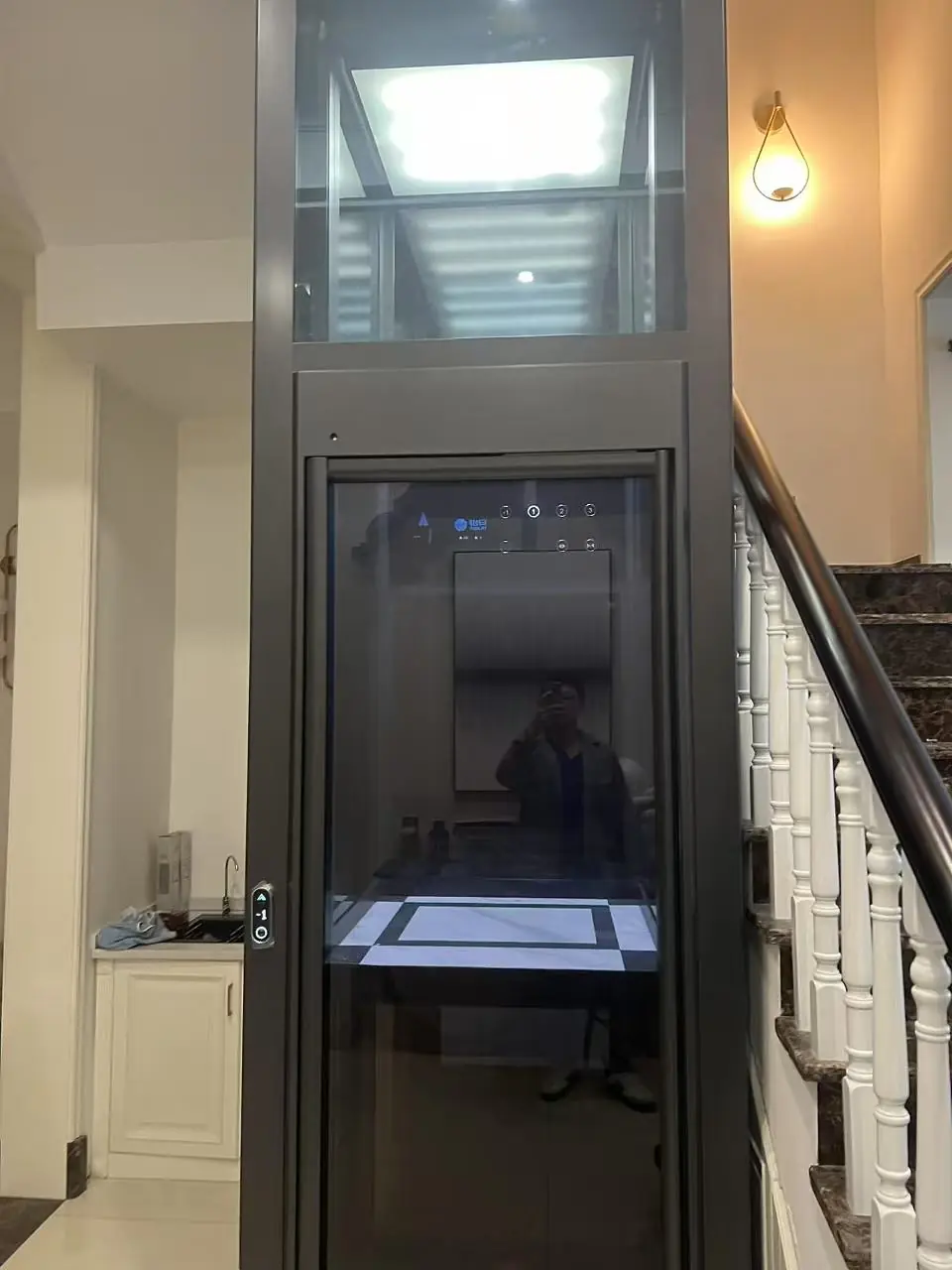
Residential elevators are no longer a luxury reserved for skyscrapers. If you are new to the category, start with how elevators work and the eight main types. More and more villa owners, homeowners and property developers are installing them for elderly family members, daily convenience and property value. Choosing the right residential elevator manufacturer in China is the first and most important step, because the equipment will run inside your home for 20 years or more.
Why Choose a Residential Elevator Manufacturer in China
Chinese factories supply compact home lifts at factory-direct pricing, typically 30-50% below European and Japanese brands, with CE certification available on every model. A good residential elevator manufacturer in China offers full customization of load, cabin style, glass and finishes, and ships to more than 60 countries with complete technical documentation.
Step 1 – Define Cabin Size and Load Capacity
Most home elevators carry 250 kg to 630 kg, which suits 2 to 6 persons plus a wheelchair or a small goods trolley. The cabin size depends on your shaft or the space you reserve between floors. Before you ask for a quote, tell the residential elevator manufacturer in China your clear width, depth and travel height, so the proposal matches the real shaft instead of a generic model.
Step 2 – Choose the Drive System
Traction drives are the most popular choice for villa elevators because they are energy efficient, quiet and allow machine-room-less layouts. Hydraulic drives suit higher loads and lower travel heights. If you have no space for a deep pit or a machine room, ask the residential elevator manufacturer in China for a shallow-pit or pit-less design, which many suppliers now offer as standard for existing homes.
Step 3 – Check Safety Features and Certification
Home lifts must meet the same safety logic as commercial units: CE certification or the equivalent local code, door interlocks, overload protection, emergency lighting, battery lowering during a power cut and a child lock. Industry standards such as ASME A17.1 and EN 81-41 for residential lifts are good benchmarks when you compare suppliers. A reputable residential elevator manufacturer in China supplies the full CE technical file and safety certificates with every order.
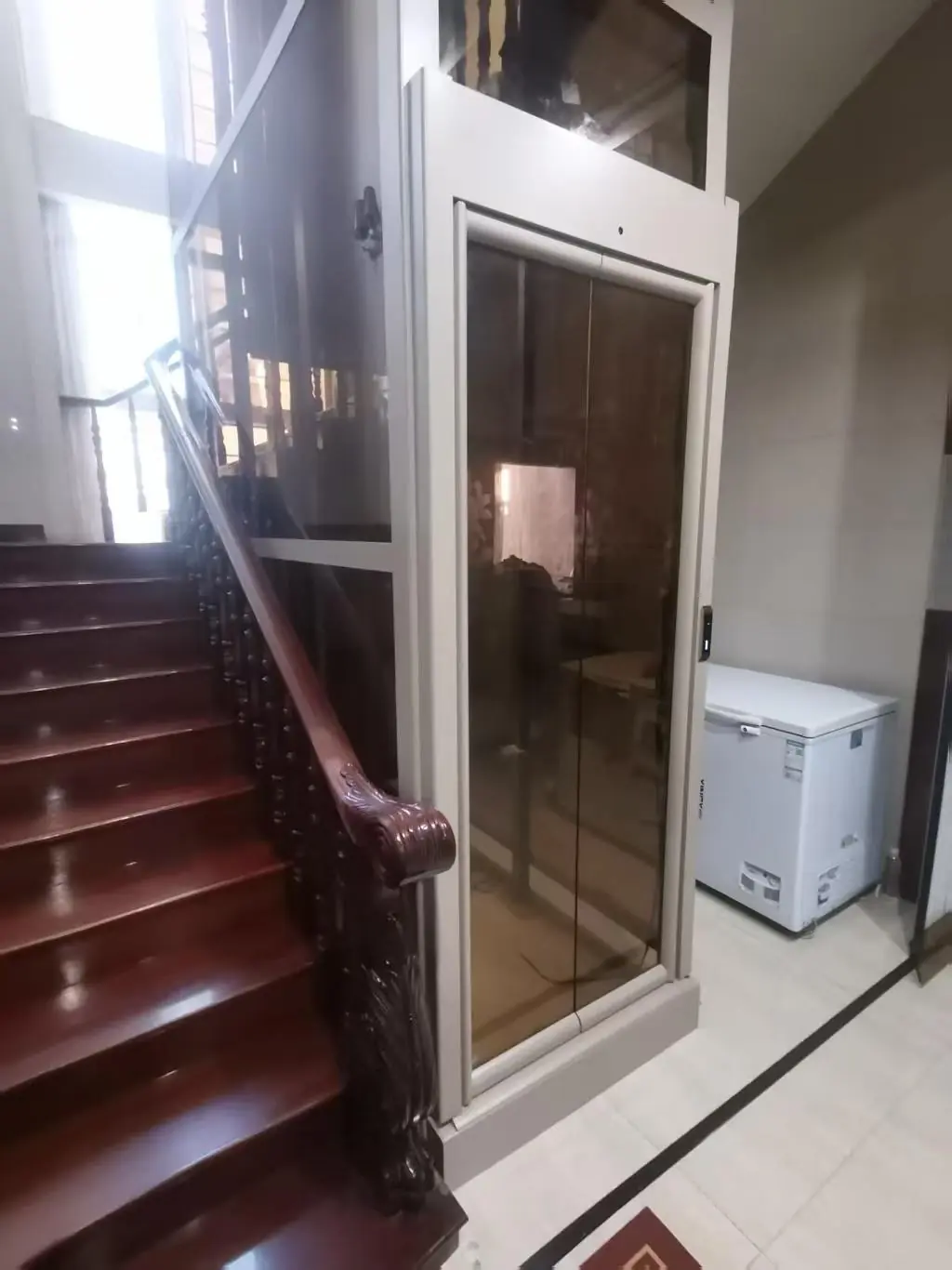
Step 4 – Match the Cabin to Your Home Style
The lift should look like part of the house, not an industrial machine. Choose glass panoramic cabins for stairwells and hallways, stainless steel or wood-texture cladding, LED ceiling lighting, mirrors and custom handrails. Tell the residential elevator manufacturer in China the architectural style of your villa, and ask for real photos of similar completed projects before you decide.
Step 5 – Verify the Factory and Compare Pricing
Ask for a live video factory tour before payment and check that the CE certificate names the exact model you plan to buy – our CE certification guide for lifts shows exactly what to ask for. Confirm the shaft numbers first – our home elevator shaft dimensions guide lists the standard pit, headroom and car sizes. Compare at least three quotations, and confirm what is included: cabin, doors, control system, installation drawings and commissioning support. A trustworthy residential elevator manufacturer in China itemizes the price transparently and shares references from projects in your region. For the underlying cost drivers, see our guide to elevator prices in China.
Step 6 – Plan Installation and After-Sales
On-site installation for a home elevator usually takes 5 to 12 days after the shaft is ready, depending on travel height and site conditions. Confirm who supplies the installation drawings, whether remote commissioning support is included, and how spare parts and technical support are delivered after warranty. The best residential elevator manufacturer in China supports the full lifecycle, not just the first sale.
Why Choose BST Express Elevator
Bsite Express Elevator Co., Ltd. is a genuine elevator manufacturer and factory in China based in Suzhou, Jiangsu. As a residential elevator manufacturer in China, we design compact home lifts from 250 kg to 630 kg with CE certification, glass and wood-tone customization, shallow-pit options and export support to 60+ countries. Our passenger elevator range covers villa, apartment and commercial buildings, and our engineers provide drawings, installation guidance and after-sales service for every project. Contact the BST Express team for a quotation and delivery time for your country.
FAQ
What load capacity do I need for a home elevator? A 300-400 kg unit comfortably carries 3-4 persons; choose 400-630 kg if you also move wheelchairs or furniture.
Can a residential elevator be installed without a pit or machine room? Yes – many villa lifts now offer shallow-pit or pit-less traction designs that fit existing buildings.
How long does installation take? Typically 5-12 days on site once the shaft is ready, plus 1-2 days for testing and handover.
Do you provide CE certification? Yes – a complete CE technical file and safety certificates are supplied with every residential elevator manufacturer in china order.
How do I verify a residential elevator manufacturer in China? Ask for a live video factory tour, CE files naming your exact model, and references from completed villa projects in your region.
What about maintenance and spare parts? Every order includes a maintenance schedule and spare-parts list; long-term technical support is available after the warranty period.
For international elevator manufacturer references and home lift solutions, visit Otis Elevator.