


What is an elevator, exactly? In simple terms it is a machine that lifts people or goods between the floors of a building inside a guided car. British English calls the same equipment a lift, and the word itself comes from the Latin elevare, meaning “to raise”. This guide explains what is an elevator in practice: the parts it is built from, how the machinery moves it, the main types in service today, a short history, and the countries that build most of the world’s lifts.
Understanding what is an elevator matters more than it sounds. Architects, developers, facility managers and importers all reach different conclusions depending on the building, and the single word “elevator” covers everything from a small restaurant dumbwaiter to a 20 m/s machine in a supertall tower. Knowing the categories makes it far easier to specify the right equipment – and to compare quotations from different suppliers on equal terms. To put those quotations on the same footing, start with what an elevator price in China actually includes.
What Is an Elevator Made Of? The Four Core Parts
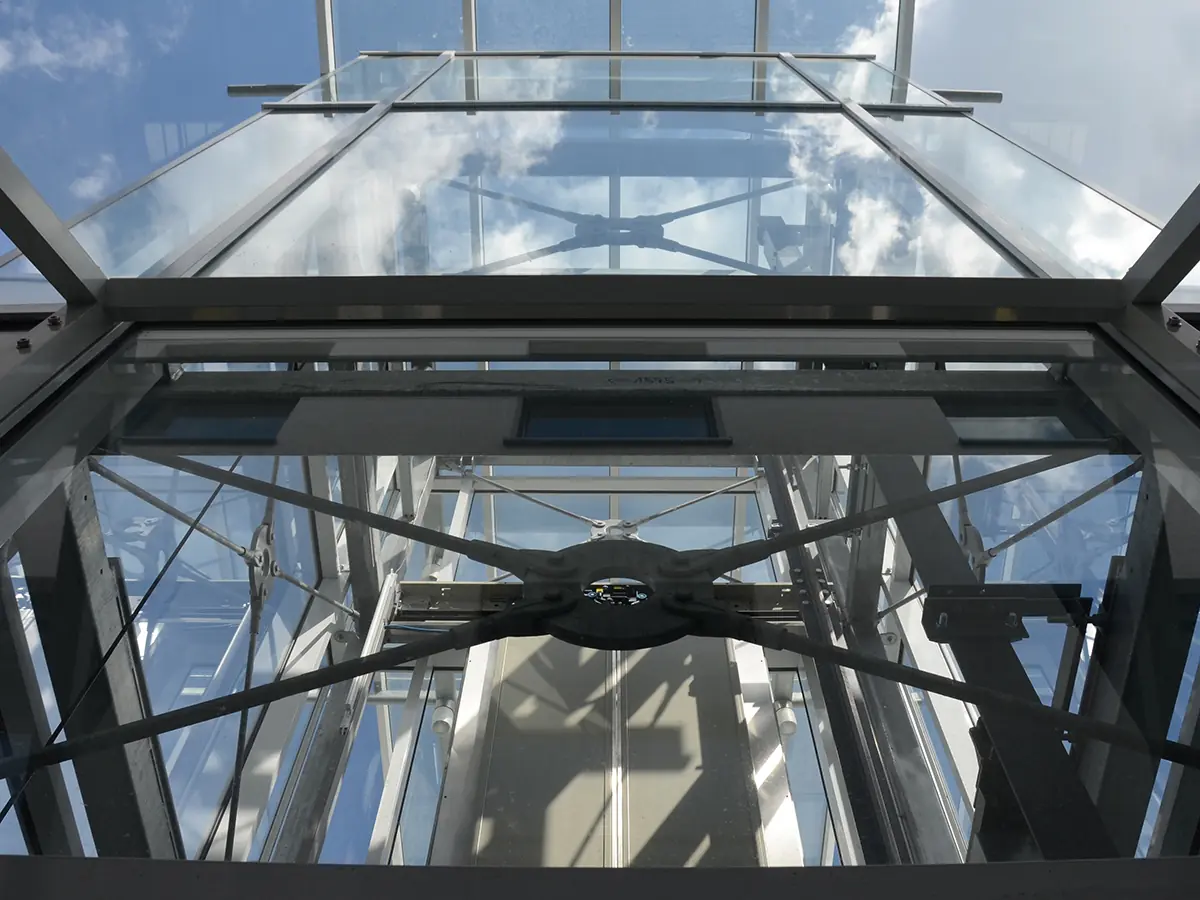
Knowing what is an elevator is built from makes it far easier to read a specification sheet. Every traction elevator, from a villa lift to a skyscraper shuttle, is a system of four cooperating parts:
- The car (cabin). The enclosed platform that carries passengers or goods. Its size, capacity and finish are the first thing buyers choose.
- The shaft, or hoistway. The vertical space the car travels through, fitted with guide rails that keep the car and counterweight aligned.
- The drive system. A traction machine with ropes or belts and a counterweight, a hydraulic ram, or a gearless strong-drive unit in compact shafts.
- The control system. The controller, landing buttons, car operating panel and sensors that decide where the car goes, when doors open, and how the lift responds to a fault.
Safety devices are built into all four: an overspeed governor and safety gear that grip the guide rails if the car ever exceeds its rated speed, an electromagnetic brake on the drive, door interlocks that prevent movement with a door open, and buffers at the pit floor.
How Does an Elevator Work? Drive Systems Explained
A traction elevator works like a counterweighted pulley. Steel ropes or steel belts run over a traction sheave at the top of the shaft, with the car on one side and a counterweight on the other. Because the counterweight balances most of the car’s weight, the motor only has to move the difference – which is why modern traction lifts are efficient and smooth.
Hydraulic elevators use a piston instead: a power unit pushes a ram that raises the car directly. They are simple and need no machine room above the shaft, but they are slower and best suited to low-rise buildings and heavier loads. Different as they are, all three answers to what is an elevator drive comes down to the same goal: a smooth, safe ride. A third option, the strong-drive (or machine-room-less strong drive) design, removes the counterweight entirely and uses a compact gearless machine – a popular choice where the available shaft is small and headroom is limited.
Modern lifts add electronics on top of the mechanical basics: variable-frequency drives that convert energy back into the building supply, automatic rescue devices that bring the car to the nearest floor after a power failure, and connected controllers that report faults to a service centre before a passenger notices.

What Is an Elevator Used For? The Eight Main Types
There is no single answer to what is an elevator used for in practice – the term covers eight families of equipment, each engineered for a different job. Each type also answers a different version of what is an elevator used for in a specific building.
- Passenger elevators – the everyday vertical transport for apartments, offices and hotels, typically from 400 kg up to 2,500 kg. See passenger elevator specifications.
- Panoramic and observation elevators – glass cars that turn the ride itself into an experience for hotels, malls, showrooms and atriums. Explore panoramic elevators.
- Hospital elevators – stretcher-sized cars, wide doors and quiet operation below 55 dB for clinics and medical buildings. Hospital elevator details.
- Freight elevators – reinforced cars and wide openings for pallets, trolleys and loads from 500 kg to 5,000 kg. Freight elevator range.
- Car elevators – vehicle lifts rated around 3 to 5 tonnes for parking garages, showrooms and private residences. Car elevator systems.
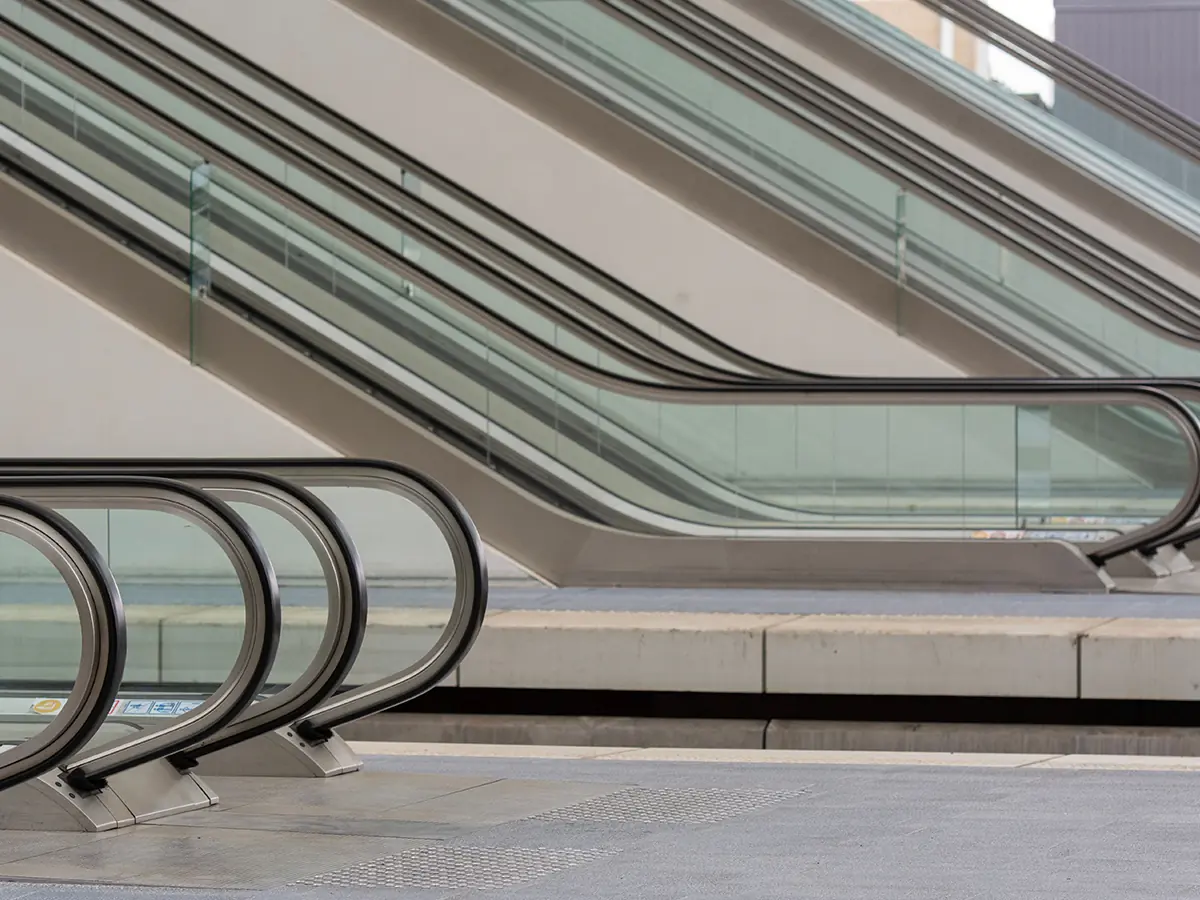
- Escalators – continuous inclined transport in 30 and 35 degree configurations with step widths of 600, 800 or 1000 mm. Escalator models.
- Moving walks – flat or inclined passenger conveyors for airports, transit hubs and large retail floors. Moving walk options.
- Dumbwaiters – compact service lifts of roughly 50 to 300 kg that carry meals, linen and documents between floors. Dumbwaiter solutions.

Elevator History: From Roman Hoists to Smart Lifts
Long before anyone asked what is an elevator in engineering terms, builders were already hoisting loads vertically. The Colosseum in Rome used more than twenty man-powered hoists to lift animals and gladiators into the arena, and medieval mines relied on rope hoists driven by humans, horses or water wheels. None of them could safely carry passengers, because a single broken rope meant a fall.
The turning point came in 1853, when the American engineer Elisha Otis demonstrated a safety brake at the New York Crystal Palace: if the rope failed, a spring-loaded device gripped the guide rails and stopped the platform. That single invention made tall buildings practical, and the first passenger elevator went into service in a New York store in 1857. In 1880 Werner von Siemens built the first electric elevator in Germany, and by 1889 gearless traction machines were lifting passengers in New York office buildings.
The twentieth century added automation rather than new physics: automatic push-button control in the 1950s, microprocessor group control in the 1980s, and machine-room-less designs in the 1990s that freed the rooftop space older lifts needed. Today’s machines add regenerative drives, destination dispatch and remote diagnostics, while the fastest production elevators travel at around 20 m/s – and the safety gear Elisha Otis demonstrated is still there, doing the same job.
Elevator Manufacturing Countries: Who Builds the World’s Lifts
For buyers, the practical question behind what is an elevator supply chain is simple: who can deliver certified equipment on time, and at what cost. Industry data gives a clear picture of where that capacity sits.
- China is the world’s largest producer and market, accounting for roughly 60% of new elevator installations worldwide, with output projected at more than 2.3 million units and an estimated 800 manufacturers. Electric elevator production clusters around Shanghai and Suzhou, while Jinan is known for hydraulic models.
- Japan – Mitsubishi, Hitachi and Toshiba are associated with high-speed and precision engineering.
- Europe – KONE in Finland, Schindler in Switzerland, TK Elevator in Germany and Orona in Spain supply premium and energy-efficient systems.
- United States – Otis, where the safety elevator was invented, remains a global reference brand.
- Korea and India – Hyundai and other Korean makers export widely, while India is expanding both demand and local manufacturing.
The global elevator and escalator market is estimated at around USD 145 billion in 2026, with Asia-Pacific taking close to half of demand. In North America and Europe, where new construction has slowed, modernisation of existing fleets now represents roughly a third to 40% of all projects. Because machinery must satisfy local codes, manufacturers build to EN 81-20/50 in the European Union, ASME A17.1 in the United States, GB 7588 in China and the ISO 8100 series internationally. For the European side, our guide to elevator CE certification explains what importers must verify.
Which Type Fits Your Building?
Once what is an elevator specification for a project is confirmed, the choice usually follows a short decision path. Start with traction, which suits most buildings and is the most economical to run. If the available shaft is compact, or the building is a duplex that needs a smaller car, a strong-drive model removes the counterweight and reduces the pit and headroom required. Where a dedicated machine room is impossible, machine-room-less designs are the standard answer.
Send the shaft width, depth, pit depth and headroom to a factory and you will get a model recommendation, a dimensional drawing and a factory-direct quotation. Our own home elevator shaft dimensions guide explains the standard figures, and how to buy elevators from China walks through the buying, testing and shipping process step by step.
Frequently Asked Questions
What is an elevator used for? Two things: moving people and moving goods. Passenger and panoramic lifts carry people, hospital lifts carry patients on stretchers, freight and car lifts handle goods and vehicles, and escalators and moving walks move large numbers of people horizontally or between levels.
What is an elevator shaft, and how much space does it take? The shaft (or hoistway) is the vertical space in which the car travels. Its footprint is normally 100-200 mm larger than the car on each side, with additional space for the door frame and travelling cables.
What is an elevator machine room, and do modern lifts need one? Traditionally a rooftop or basement room housing the drive machine and controller. Machine-room-less designs move those components into the shaft itself, freeing the space entirely.
What is an elevator’s typical speed and capacity? Passenger lifts usually run at 1.0-2.5 m/s, with capacities from 400 kg for small residential cars up to 2,500 kg for commercial buildings. Hospital and freight lifts are slower and heavier; ultra-high-speed units exceed 10 m/s.
What is an elevator’s expected service life? A well-maintained machine typically serves 20 to 25 years before major modernisation, and the steel structure and guide rails often last far longer.
What is an elevator safety gear, and how does it work? Safety gear is the pair of wedges beneath the car that grip the guide rails when the overspeed governor trips. It is the direct descendant of the device Elisha Otis demonstrated in 1853.
Now that what is an elevator covers in practice is clearer, the next step is matching a type, capacity and shaft to your own building. BST Express Elevator builds all eight product families in Suzhou and exports them with CE certification, complete technical files and factory-direct pricing – send us your project details and we will recommend the right model within 24 hours.
References and Further Reading
Standards and industry sources: ASME A17.1 Safety Code for Elevators and Escalators, ISO standards for lifts and escalators. A closer look at how lifts are built is in our elevator factory tour.