


Most attempts to verify an elevator factory fail for the same reason: the buyer looks at the machine and not at the paper. A clean line proves a clean line. It does not prove the unit you are quoted comes off that line, and it does not prove the file will clear your customs.
To verify an elevator factory, work through three layers in order: the legal entity and its production address, the certificates that can be looked up in a public register, and the shop floor itself, raw video first and on site second. Each layer is cheap to fake on its own; all three together are expensive to fake. BST Express Elevator has opened all three to overseas buyers since 2012.
- What Verification Actually Proves
- Factory or Trading Company: Settle This Before Price
- The Desk Check: Four Documents You Can Look Up Yourself
- The Video Audit: Ask for Raw Footage, Not a Tour Film
- The Shop Floor Walk: Six Stations, Six Questions
- From Sample to Mass Production: The Consistency Test
- The Twelve Checks That Decide It
- Red Flags That Should End the Conversation
- What BST Express Elevator Opens to Buyers
- Frequently Asked Questions
What Verification Actually Proves
A factory verification answers three narrow questions and no more. Does the company that signs the contract operate a plant at the address it gives you? Does that plant run the processes your product needs? Do the certificates and reports it hands over exist in a register you can open without asking permission?
Everything else a buyer hopes to learn from a visit, price fairness, delivery reliability, after-sales behaviour, is a contract question. Those are settled by terms, penalties and payment stages, not by walking a shop floor. Keeping the two apart is what stops a verification from turning into a tour.
| What verification establishes | What it does not establish |
|---|---|
| The quoting company is a legal entity that operates a plant at the stated address | That the plant is efficient, or that its price is the lowest you could obtain |
| The processes needed for your product exist in that plant | That the unit you receive is identical to the one you saw. That is sampling work |
| The certificates and test reports exist in a public register | That every future batch will be tested to the same standard |
| The paperwork can support customs clearance and local approval | That installation will be carried out correctly in your building |
| There is a real party to pursue if the order goes wrong | That the agreed delivery date will hold |
The reason to verify an elevator factory in this order is cost. The desk check is free and takes an afternoon. A video audit costs a phone call. A site visit costs a flight. Buyers who fly first and read later usually come home impressed and uninformed.
BST Express Elevator runs eight product lines in one plant in Suzhou, so a mixed order for a single project, passenger lifts, a freight unit and an escalator, is built and inspected by the same quality team under one CE technical file. That structure is itself checkable: the plant address on the licence, on the ISO scope and on the export declaration should be the same address.
Factory or Trading Company: Settle This Before Price
This is the first fork in the road, and it changes what the rest of the work means once you set out to verify an elevator factory. A trading company is not automatically a bad supplier, but it cannot show you a production line it does not own, and it cannot control the lead time or the inspection record of the plant behind it. When the supplier is a trader, verify the producer as well, because the contract and the production sit in two different companies.
| Signal | What to ask for | What a trader shows |
|---|---|---|
| Legal scope | The business licence, with the 18-character unified social credit code and the registered scope | A scope of trade, import and export, or sales, with no manufacturing item in it |
| Production address | The plant address in writing, compared with the ISO certificate scope and the export declaration | An office address, or a plant address that belongs to a company it does not own |
| Customs status | The customs registration number that appears on the export declaration, and a sample declaration | A freight forwarder’s name in place of its own registration |
| Order book | How many units are in work in progress this week, and which of them is yours | Delivery dates that require a phone call to answer |
The licence check is free. The unified social credit code is the search key on the National Enterprise Credit Information Publicity System at gsxt.gov.cn, which returns the establishment date, registered capital, scope, and any entry in the abnormal operations list. A company that appears in that list, or whose scope has no manufacturing item, has explaining to do before you discuss price.
One caution about addresses, and the point where most desk attempts to verify an elevator factory stall. The address printed on a Chinese business licence is the registered address, which is often an office or a registered park, not the workshop. Ask for the production address as a separate written statement and compare it with the site address on the ISO 9001 certificate and on the export declaration. Three documents naming one plant is a reasonable standard of proof. Three documents naming three addresses is not.
The Desk Check: Four Documents You Can Look Up Yourself
Four documents carry almost the whole desk check when you verify an elevator factory from a desk, and three of them can be confirmed against a public register rather than against the supplier’s word. Ask for the files as PDFs, not as photos of a screen, and check the numbers, not the logos.
| Document | What to open | What fails the check |
|---|---|---|
| Business licence | Credit code, establishment date, registered scope, abnormal operations list | No manufacturing item in the scope; company younger than the export history it claims |
| ISO 9001 certificate | Certificate number, standard edition, scope wording, site address, certification body, accreditation body | A certificate that cannot be found in IAF CertSearch, or a scope that names a different site |
| EU declaration of conformity and technical file | The directive cited, the standards listed, the model and serial range, the signatory | An escalator declared against 2014/33/EU, or a lift declared against 2006/42/EC |
| Test reports | Laboratory name, report number, sample description, test date, test loads | A report for a different model, an expired report, or a lab that cannot be identified |
For the ISO 9001 certificate, the useful tool is IAF CertSearch, the register maintained by the International Accreditation Forum. It performs a three-way check that a scanned certificate cannot: the certificate is valid, the certification body was accredited to issue it, and the accreditation body is a recognised IAF member. A certificate that is absent from that register is not an accredited certificate, however professional the PDF looks.
For the declaration of conformity, the directive is the tell, and it is the fastest single check available when you verify an elevator factory. Escalators and moving walks sit under the Machinery Directive 2006/42/EC; lifts sit under the Lifts Directive 2014/33/EU. A declaration that names the wrong one was assembled by somebody who did not read the file, which is a fair warning about the rest of the paperwork. Our guide to elevator CE certification lists the documents a technical file must contain.
If a notified body is claimed anywhere in the file, take the four-digit number and resolve it in the Commission’s notified body database. The number must map to a body, the body must be notified for the right directive, and the scope must cover the product. CE marking itself is a self-declaration in most machinery cases, which is exactly why the file, not the mark, is the evidence.
The same logic applies to the mark on the machine. The European Commission’s CE marking rules make the manufacturer responsible for the technical file and for keeping it available, so a supplier who cannot produce the file on request has already answered the question.
The Video Audit: Ask for Raw Footage, Not a Tour Film
Every serious exporter has a tour film, and it is the weakest evidence you will be offered when you verify an elevator factory remotely. It is edited, it is lit, and it proves nothing, because the same film can be licensed from a stock library or shot in a partner plant. What cannot be staged as easily is unedited phone footage with a fixed reference in frame: a hand-held clock, the day’s newspaper, or a sheet of paper with your company name written on it.
Ask for one continuous take that starts at the gate, shows the sign and the street number, and walks into the shop without cutting. Then ask for the seven shots below, each thirty to sixty seconds, no editing.
| Shot | What it proves | What staging looks like |
|---|---|---|
| Gate, sign and street number in one take | The plant exists at the address on the licence | A cut between the gate and the shop, or a sign that appears only in a still |
| Raw material store, with batch labels on coils or sheets | Material is bought in lots and traceable, not bought per order from a street trader | Clean shelves with no labels, or material that arrives only for the shoot |
| Cutting and bending, machine running | The first two processes are in-house | An idle machine with no offcuts and no operator |
| Welding and the frame jig, a part clamped in place | Car frames are built against a fixture, so squareness repeats | A jig with no wear marks, or tack welding on the floor |
| Control cabinet, wiring and terminal numbering | Electrical assembly is done in-house and documented | A cabinet with no ferrules, no drawings and no component brands |
| Test area, a load test or door test in progress | Units are tested before packing, not only at the customer’s site | A test rig that is never shown running |
| Packing area and a container being loaded | Packing and loading are done by the same team that will invoice you | Cartons with no shipping marks, loaded by a third party at a port warehouse |
One cheap test of authenticity, and the one most buyers never think to run when they verify an elevator factory: ask for two of those shots again a week later, without warning. A staged visit produces the same tidy cell twice, which is itself suspicious. A working plant produces different work in progress, different material, and a different shift on the floor.
The Shop Floor Walk: Six Stations, Six Questions
By the time you walk the floor to verify an elevator factory on site, the paperwork should already have settled most of the outcome. Walk the process backwards. Start at packing and finish at the material store, because the end of the line shows what a plant thinks of its own output and the beginning shows what it thinks of its inputs. Six stations are enough, and each one has a single question that separates a working plant from a showroom.
| Station | The one question | What a weak answer sounds like |
|---|---|---|
| 1. Material store | Show me the batch label on this coil and the mill certificate that goes with it | The labels are at the office; the certificates arrive with the invoice |
| 2. Cutting and bending | Which machine made this part, and when was it last maintained | A machine that is idle for the whole visit, with no offcuts beside it |
| 3. Welding and frame jigs | How do you hold the car frame square, and where is the fixture | Frames tacked on the floor and squared with a tape measure |
| 4. Paint and assembly | How many units are in work in progress this week, and which one is mine | A number that has to be confirmed by someone who is not on site |
| 5. Test area | Show me the insulation test and the door test on a finished unit | A rig that exists but is never run during the visit |
| 6. Packing and loading | Show me this packing list against these cartons, line by line | Cartons packed by a third party at a port warehouse |
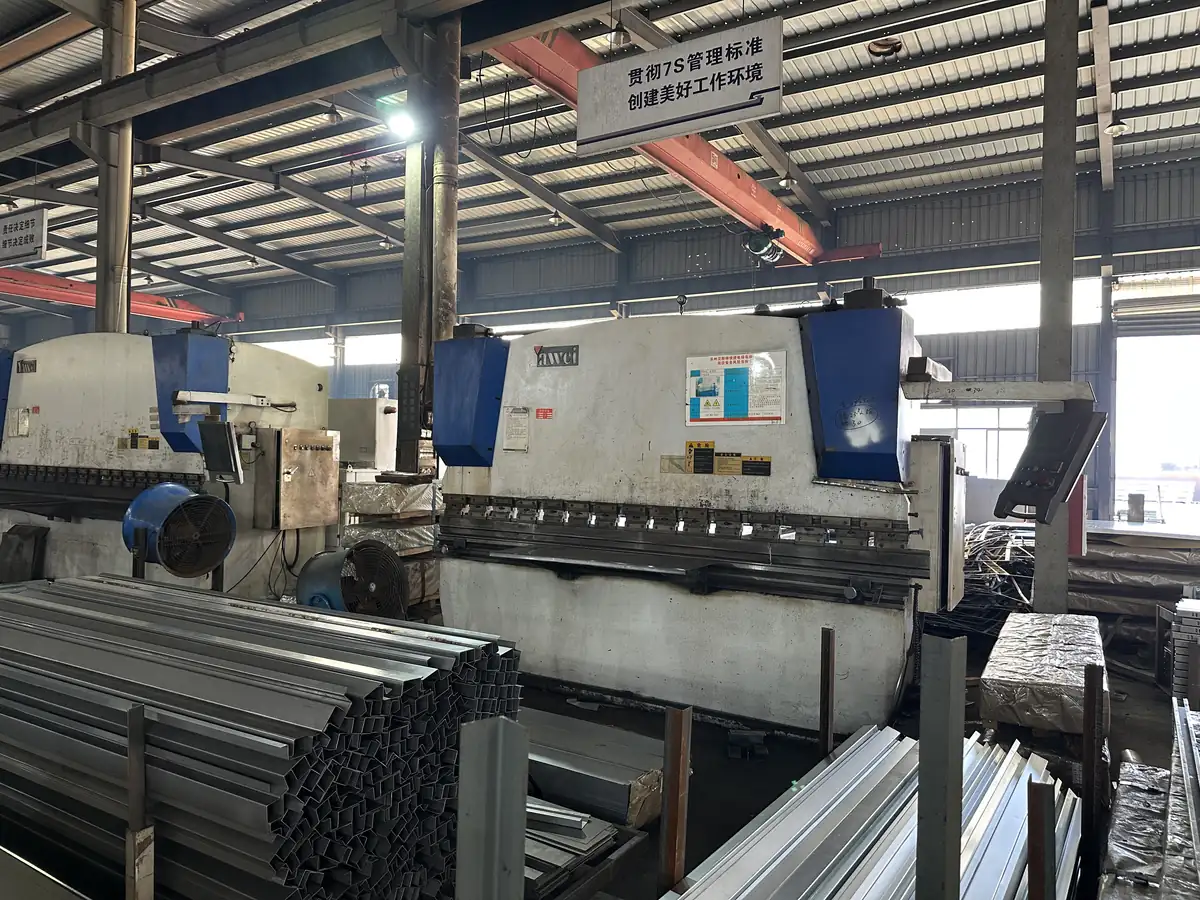
Sheet metal department at the BST Express Elevator plant in Suzhou: two press brakes set up for car panels and door profiles, with formed parts stacked by operation.
At station two, the useful evidence is not the machine but the queue in front of it. Formed parts waiting in labelled stillages means the schedule is real. A machine surrounded by nothing means either the plant is empty this week or the visit was arranged around a quiet day, and both answers change how you read the delivery date.
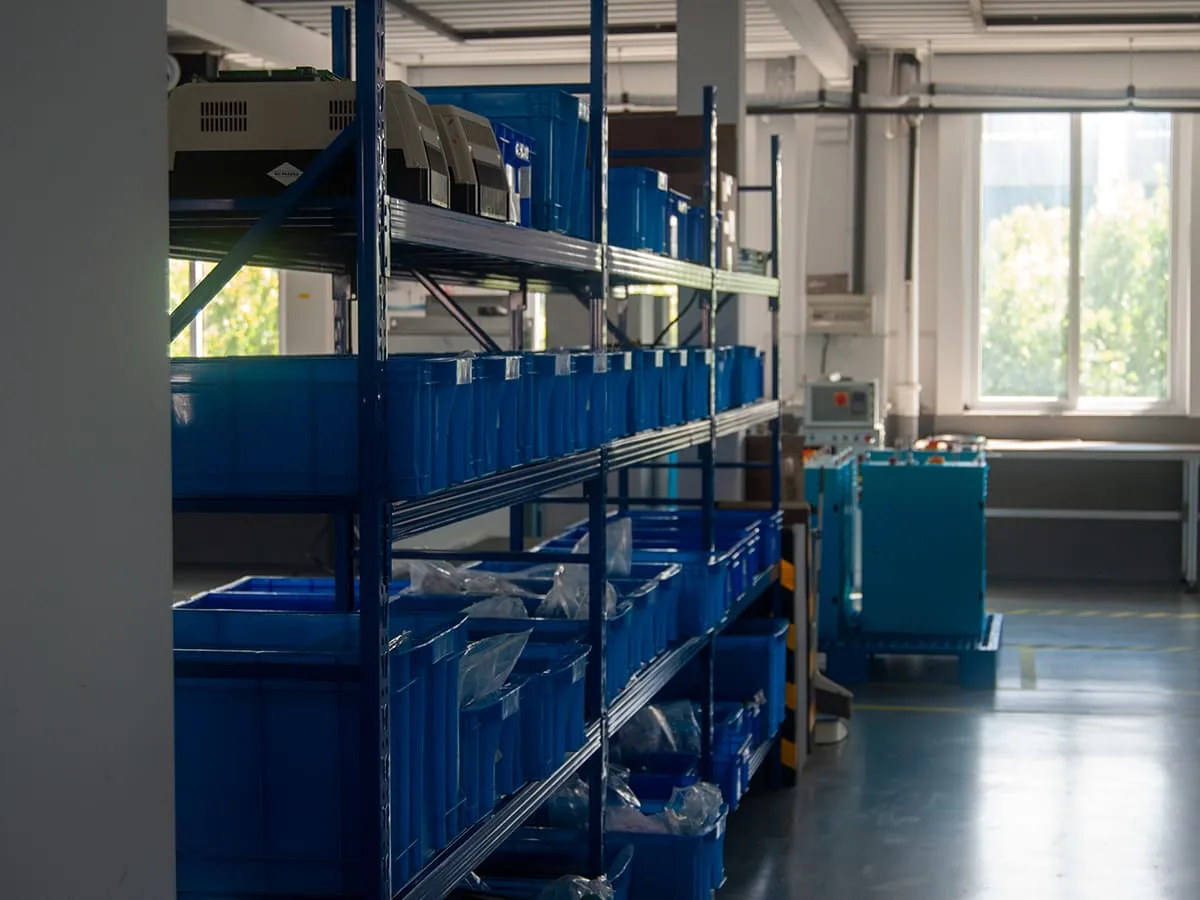
Components picked by project: numbered bins on the assembly floor, with the control cabinet for the same unit built alongside.
Station four is where a buyer learns the most for the least effort when they verify an elevator factory in person. Ask to see the bins for your order, then ask what happens to the leftovers when the order ships. A plant that keeps component bins per project can tell you which door operator, which traction machine and which drive went into your unit two years later. A plant that picks from open shelves cannot, and that is the difference between a warranty claim that gets resolved and one that gets argued.
From Sample to Mass Production: The Consistency Test
To verify an elevator factory properly, the visit has to end with a decision rather than a feeling. What you are deciding is whether the plant can repeat the unit you approved, thirty times, across a year, with the same components. That is a paperwork problem more than a machinery problem, and it is settled before the deposit rather than after the first complaint.
- A sealed sample. Sign and date the approved configuration, photograph it, and keep one copy with the factory and one with you. The sample is the reference for every later argument about finish, clearance and component make.
- A component annex to the contract. List the brand and model of the door operator, traction machine, drive, controller, ropes and the stainless grade. Substitution is the single most common surprise in an imported lift, and it is invisible until something fails.
- First-article approval. The first unit of the batch is photographed against the sealed sample before the rest are built, and the photos are sent to you for written approval.
- In-process records. Ask which inspection points are recorded, and ask to see one completed record from a previous order, redacted if the factory prefers.
- Pre-shipment test evidence. A load test report naming your model, the test loads and the date, plus photographs of the unit under test.
- Serial numbers that join the dots. The nameplate serial on the unit should be the same serial on the test report, the packing list and the declaration of conformity. If those four documents cannot be reconciled, the file is decorative.
None of this requires a third party to verify an elevator factory; it requires the documents to agree with each other. A pre-shipment inspection and a factory audit answer different questions: the audit asks whether the plant is capable, the inspection asks whether this particular shipment is correct. Buyers who commission only the second often discover a capable plant that shipped the wrong door operator.
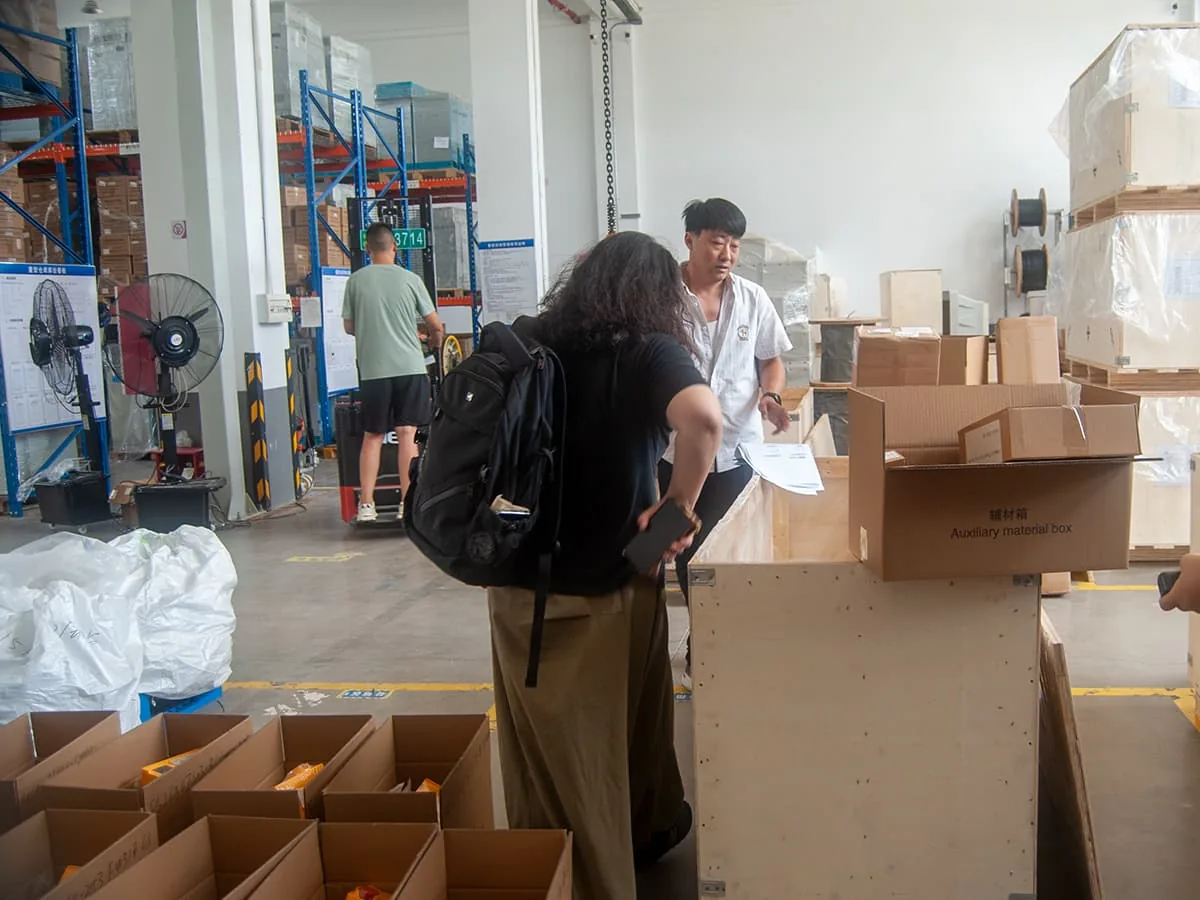
Checking cartons against the packing list on a buyer visit, before the container is closed.
The commercial terms that make all of this enforceable belong in the quotation, not in the visit notes. Our quotation checklist sets out the twelve items a quote needs before it can be compared with another, and container loading covers what happens after the unit passes its test.
The Twelve Checks That Decide It
This is the list we would use to verify an elevator factory if we were buying instead of selling. Twelve items, each with a pass criterion you can write into a file and hand to a colleague.
| # | Check | Pass criterion |
|---|---|---|
| 1 | Legal scope covers manufacturing | The business licence lists production of the quoted product, and the company predates the export history it claims |
| 2 | One address across three documents | Production address matches the licence scope, the ISO certificate site and the export declaration |
| 3 | ISO 9001 certificate resolvable | Found in IAF CertSearch, with the certification body accredited and the scope naming this site |
| 4 | Declaration cites the right directive | 2006/42/EC for escalators and moving walks, 2014/33/EU for lifts, with the model range listed |
| 5 | Notified body number resolvable | Any four-digit number in the file maps to a real body, notified for that directive, covering that product |
| 6 | Test report matches your model | A named laboratory, a report number, the same model and capacity, and a date inside the current certificate cycle |
| 7 | Raw video of the seven shots | Continuous footage with a fixed reference in frame, not an edited tour film |
| 8 | Material traceability on site | Batch labels on coils and sheets, with a mill certificate that can be produced on request |
| 9 | Work in progress answers the order book | A specific count of units in build this week, and a specific one of them identified as yours |
| 10 | Component brands fixed in writing | Door operator, traction machine, drive and stainless grade named in the contract annex |
| 11 | Pre-shipment evidence before packing | Load test report and photographs sent to you while the unit is still accessible |
| 12 | Four documents agree on one serial | Nameplate, test report, packing list and declaration carry the same identifier |
Ten of the twelve can be completed from a desk. Only the material store and the work-in-progress count need a plane ticket, which is why it makes sense to verify an elevator factory in that order and to fly only when the paperwork has already survived.
Red Flags That Should End the Conversation
Every item below is something a real factory can resolve in an afternoon, which is what makes them useful tests when you verify an elevator factory. A supplier who cannot resolve it is telling you what the next twelve months will feel like.
| What happens | What it usually means |
|---|---|
| Refuses unedited video, offers a finished tour film | The film belongs to another plant, or to a distributor’s marketing library |
| Only a showroom or an office is offered | Trading company, or a factory with a partner relationship it has not disclosed |
| Certificate scans too blurry to read the number | The number cannot be checked, which is the point |
| A CE certificate from a company with no accreditation | The document has no legal effect, whatever it is called |
| A quote with no model, configuration or component brands | The price will be adjusted after the deposit, item by item |
| Delivery dates that always need a call to the workshop | No control of the line, so the date is a hope |
| 100 per cent payment before production | The risk of a bad batch has been moved entirely to you |
| An invitation to a partner factory instead of their own | The contracted company and the producing company are different, so verify the producer separately |
Two of these deserve a second chance. A trading company that discloses itself, names the plant and lets you audit it is workable, provided the contract carries the component annex and the pre-shipment inspection. A supplier whose certificate has expired but whose recertification audit is booked is also workable, provided the audit date is in writing.
What BST Express Elevator Opens to Buyers
We are the plant that gets audited when buyers verify an elevator factory, so our interest is in making the process quick rather than impressive. Four things are available on request, before any deposit: a raw video against the seven shots above, a work-in-progress count for the current week, the ISO and CE file with the certificate numbers readable, and the name and location of the plant on the licence.
During production, each unit is load tested before it is packed, and the report carries the serial that later appears on the nameplate and the packing list. Photographs of packing and container loading are sent while the container is still open, which is the only moment they are worth anything. A CE technical file, electrical schematic and installation manual travel with the shipment.
BST Express Elevator builds eight product lines in one plant in Suzhou, has shipped to more than 60 countries since 2012, and answers a request for quotation within 24 hours. Buyers who want to compare that against the alternative can do the desk check first: three documents, three public registers, one afternoon. The six-step buying process puts this audit in its place in the wider order, and inside a working elevator factory walks the same plant stage by stage.
Frequently Asked Questions
What does it mean to verify an elevator factory?
It means confirming three things in order: that the company operating the plant is a legal manufacturer at the address it gives, that the certificates and test reports it supplies exist in a public register, and that the production processes for your product run in that plant. Price, delivery and after-sales are contract terms, not verification findings.
Can I verify an elevator factory without visiting China?
Yes, and about ten of the twelve checks on this page need no travel. The business licence, the ISO 9001 certificate in IAF CertSearch, the declaration of conformity, the notified body number and the test reports can all be confirmed from a desk. A raw video audit covers the shop floor at low cost; the site visit is the last step, not the first.
How do I check whether a Chinese elevator factory is real?
Search the 18-character unified social credit code from its business licence on the National Enterprise Credit Information Publicity System at gsxt.gov.cn. That returns the establishment date, registered scope and any abnormal operations entry. Then compare the production address on the licence with the site address on the ISO certificate and on the export declaration.
Is ISO 9001 certification enough on its own?
No, but it is the cheapest signal to test. A valid certificate proves the plant has a documented quality system audited by an accredited body, not that a particular unit was built correctly. Check the certificate number in IAF CertSearch, then ask for one completed in-process inspection record from a previous order.
What is the difference between a factory audit and a pre-shipment inspection?
To verify an elevator factory is to ask whether the plant can make the product repeatedly; a pre-shipment inspection asks whether this particular shipment matches the order. They are different questions asked at different times, and a buyer who commissions only the inspection can still receive a correctly built unit with the wrong door operator.
How long does it take to verify an elevator factory?
The desk check takes one afternoon and the raw video audit a few days, depending on how quickly the supplier films. A site visit needs three to four hours on the floor, plus travel. Most of the elapsed time is spent waiting for documents, which is itself a useful signal about how the supplier will behave after the deposit.
Should I pay for a third-party inspection?
It is worth paying when the order value is large enough that a substitution would hurt, or when you cannot travel to verify an elevator factory yourself. Ask the inspection company to work from the twelve checks above rather than a generic checklist, and insist that the report photographs the nameplate serial and the component labels on the units being shipped.
Can a trading company be a safe supplier?
Yes, if it discloses that it is a trader, names the plant, and lets you audit that plant directly. The contract then needs the component annex and the pre-shipment inspection, because the trader controls the invoice while the plant controls the goods. What is never safe is a trader presenting another company’s factory as its own.
[…] how a real audit works in our elevator factory tour. Before that call, run the twelve-check audit guide, which covers the four documents to request and the seven video shots that cannot be staged. […]
[…] Production starts with certified steel sheet and profiles. Raw coils and plates are stored in a dry warehouse, then cut, bent and welded into car panels, door frames and machine bases. A real factory keeps material traceability records; ask to see how incoming steel is checked before it enters the line, and whether batch records can be traced back to the supplier certificate. The full sequence, with one question for each station on the floor, is set out in how to verify an elevator factory. […]
[…] The document trail behind a European order is summarised in elevator CE certification, the body that issued any certificate can be looked up in IAF CertSearch, and the EU notified body register shows whether that body is authorised for lifts. In the UK, the Health and Safety Executive sets the duty that keeps a lift in service legally, and the on-site version of the same audit is set out in how to verify an elevator factory. […]